
Loading, please wait...
LOT 1636
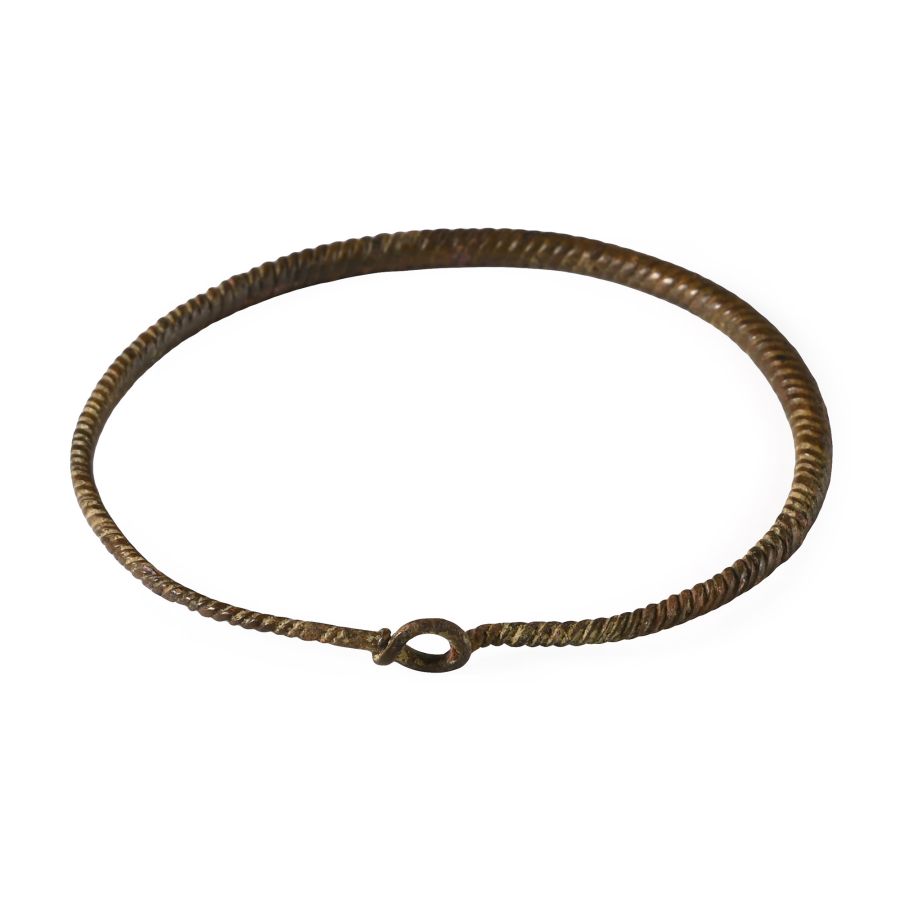
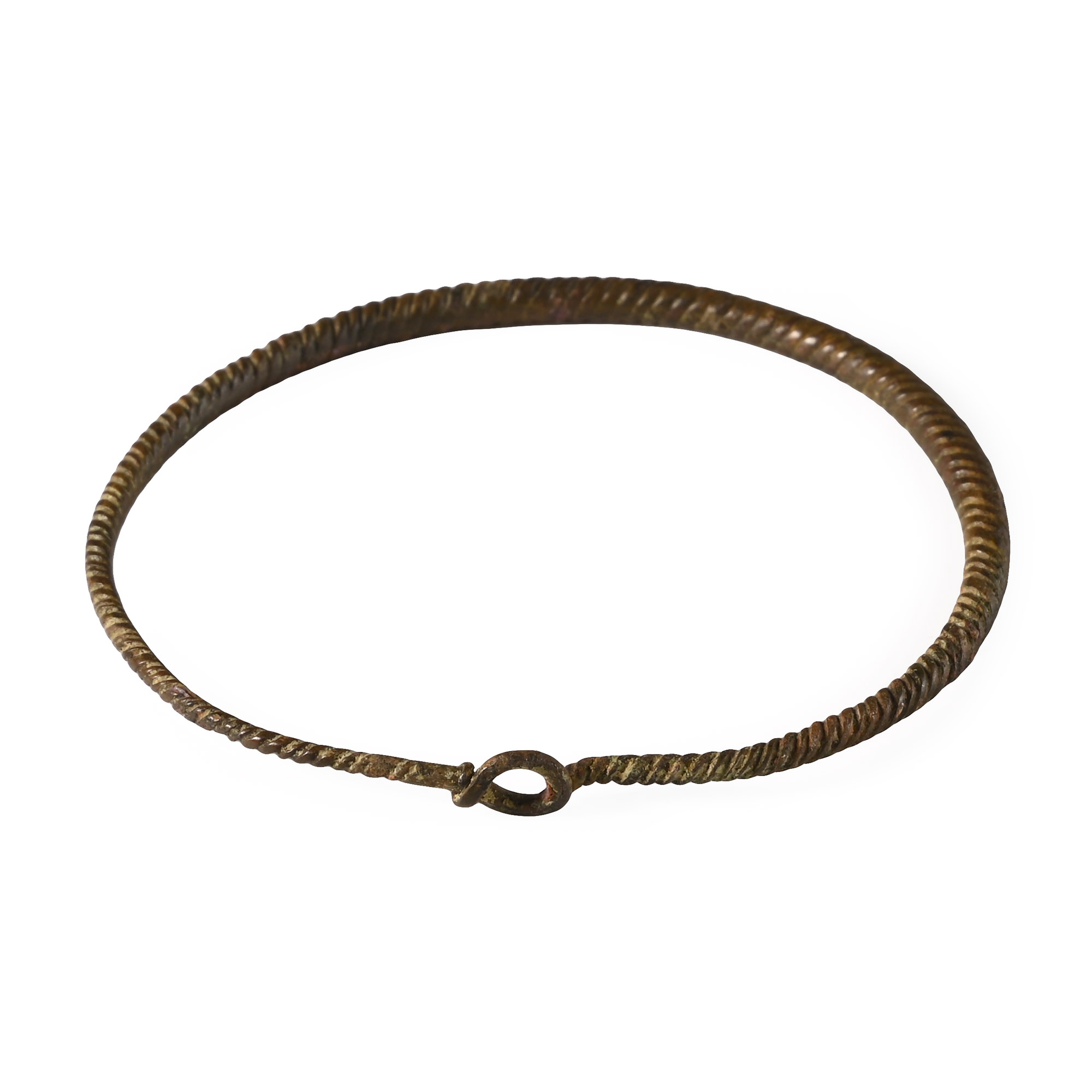
Viking Age Twisted Bronze Bracelet
CIRCA 9TH-11TH CENTURY A.D.
2 1/4 in. (6 grams, 58 mm).
Penannular in form with hook-and-eye closure, twisted shank. [No Reserve]
ProvenanceAcquired on the UK art market in the late 20th century A.D.
From the private collection of the late David King (1940-2024), Hoddesdon, Hertfordshire, UK.
TimeLine Auctions follows a vetting process to ensure the authenticity and legality of all items, reinforcing our commitment to integrity and responsible trading. Each antiquity, antique, and coin lot undergoes thorough examination by a vetting committee of at least ten external specialists, professional trade association members, scientists, and archaeologists: Our Vetting Process
AUCTIONS:
TimeLine is a leading auction house specialising in antiquities, ancient art, collectables, natural history, coins, medals, and books. Our auctions offer museums, collectors, historians, and enthusiasts the opportunity to acquire unique and historically significant pieces.
-
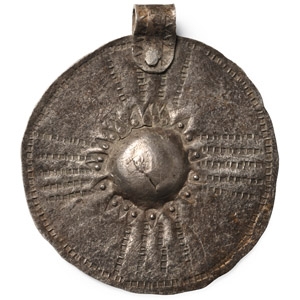
Viking Silver Stamped Shield Pendant
8th-10th century A.D.Sold for (Inc. bp): £468
A horse harness pendant executed in repoussé technique, a dome to the centre with punched annulets and other details; applied loop. 6.38 grams, 46 mm
From the private collection of a London gentleman, from his grandfather's collection formed before the early 1970s. -
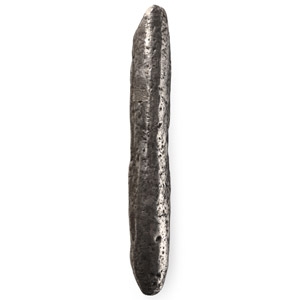
Viking Period Silver Trade Ingot
Circa 800-1000 A.D.Sold for (Inc. bp): £325
Sub-rectangular in plan and ovate in section, tapering to a rounded point at each end, some areas hammered flat in antiquity and displaying numerous striations and casting bubbles, nine triangular peck marks along the flat underside, but otherwise undecorated. 84 grams, 97 mm
From a private Tyneside collection, formed since the early 2000s. Accompanied by a copy of a previous illustrated catalogue sheet.
Cuerdale Viking silver hoard from Lancashire which includes similar long, narrow examples and was deposited circa 905-910 (J. Graham-Campbell, 2011, The Cuerdale Hoard and related Viking-Age silver and gold from Britain and Ireland in the British Museum, London, pl. 3, 1: 17-18). -
.jpg)
Viking Age Bronze Sword Scabbard Chape Collection
10th-12th century A.D.Sold for (Inc. bp): £780
Comprising: a small and narrow type (Paulsen's Gruppe I 2, Untergruppe d) with an openwork panel to each face filled by a cross-shaped motif with curved cross-bar, and a dentilled upper edge to the mouth; a tongue-shaped type (Paulsen's Gruppe I 1) with an openwork centre and Ringerike style bird formed with looped bands, pellets to the pinions, a triangular in plan head joined to the inner faces of the ropework border forming the upper edge of the chape, with a wolf's head at the apex and stepped knop finial (apex and lower end of the chape damaged); two of the same type (Gruppe I 1) with a pair of scrolls in the central void and a 'knot' to the apex', one with ropework detailing and a wolf's head; a broad D-shaped plaque with a plain reverse plate riveted in place, guilloche band to the outer edge and interlaced vines to the centre. 118 grams total, 46-75 mm
From the collection of a North American gentleman, formed in the 1990s.
The chape with the dentilled upper edge bears a cross motif on which only the curvature of the cross-piece indicates its origin in the raven/eagle figure found more commonly on this type; as its ornament has developed a long way from its original form, it should be dated to the 11 or 12th century. The D-shaped plaque with the plain reverse is not in Paulsen's typology but appears to be derived from the smaller types in his Gruppe VII.
