
Loading, please wait...
LOT 1741
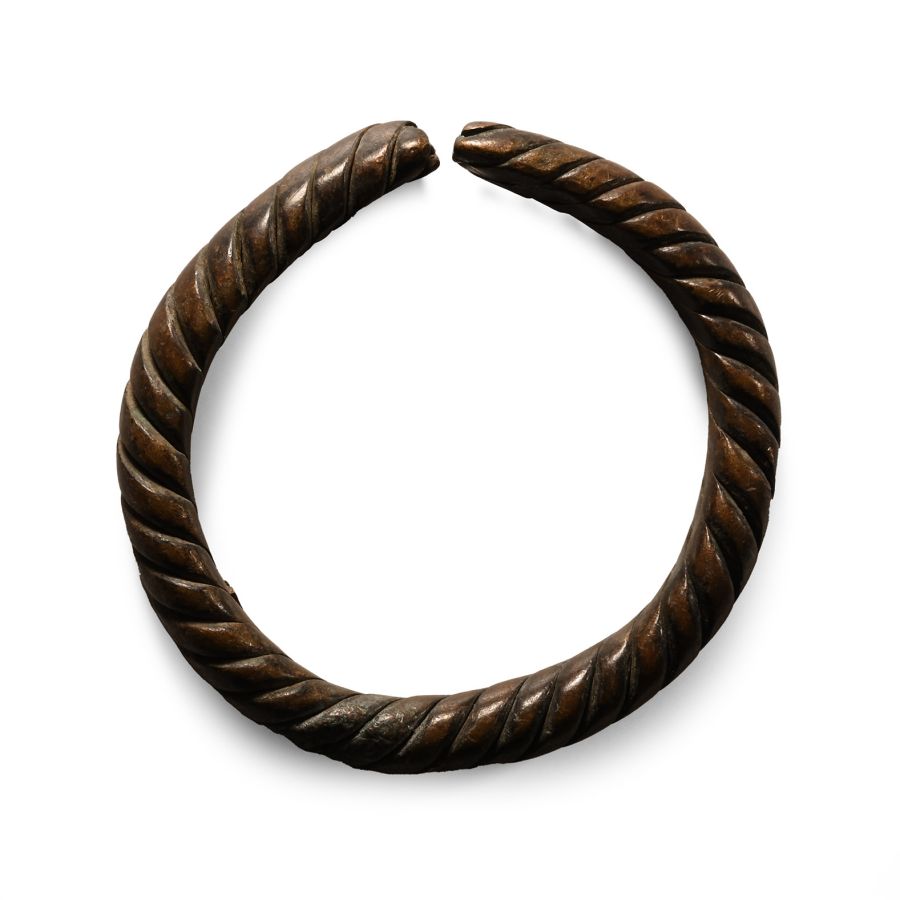
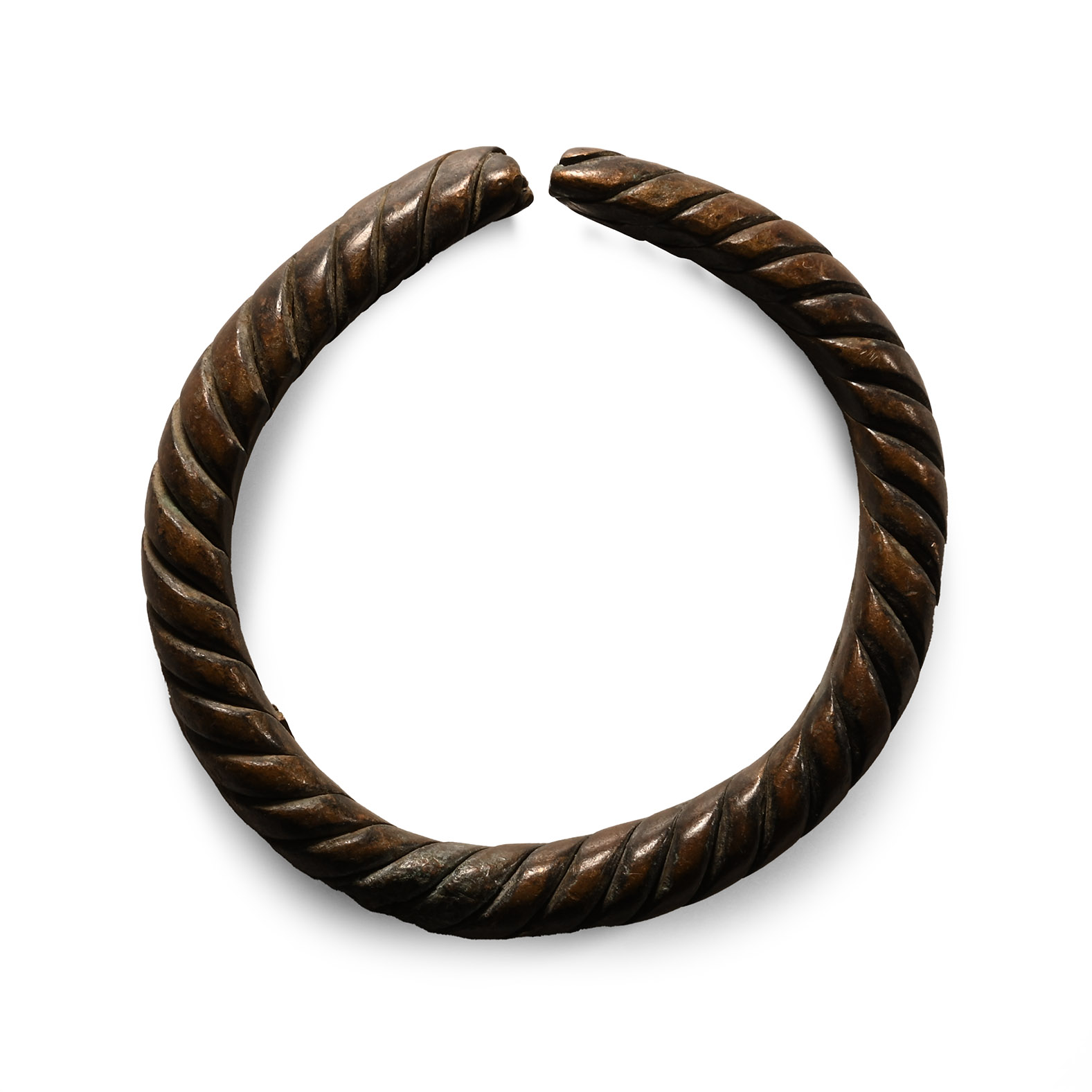
Viking Age Twisted Bronze Bracelet
CIRCA 9TH-11TH CENTURY A.D.
2 7/8 in. (97.9 grams, 72 mm).
Formed from three round-section rods twisted around each other; clubbed ends. [No Reserve]
ProvenancePrivate collection, Arundel, West Sussex, UK, 1975-late 1990s.
LiteratureCf. twisted bracelets in the Alvara hoard, Öland, Sweden in Hårdh, B., Silver in the Viking Age. A Regional-Economic Study, Acta Archaeologica Lundensia, no.25, Stockholm, 1996, p.159.
CONDITIONTimeLine Auctions follows a vetting process to ensure the authenticity and legality of all items, reinforcing our commitment to integrity and responsible trading. Each antiquity, antique, and coin lot undergoes thorough examination by a vetting committee of at least ten external specialists, professional trade association members, scientists, and archaeologists: Our Vetting Process
AUCTIONS:
TimeLine is a leading auction house specialising in antiquities, ancient art, collectables, natural history, coins, medals, and books. Our auctions offer museums, collectors, historians, and enthusiasts the opportunity to acquire unique and historically significant pieces.
-
.jpg)
Large Viking Age Silver Bucket with Animal Figures
8th-9th century A.D.Estimate: £30,000 - 40,000 (+bp*)
Opening Bid: £15,000
A spectacular Sogdian sheet-silver bucket with drum-shaped body, narrow discoid repoussé base, bands of repoussé foliage to the body beneath a raised collar and fluted neck and rim; handle held by two securing hoops formed as miniature rams. 1.2 kg, 26.5 cm wide
From an old private collection. with Oxus Fine Arts Pte. Ltd, Singapore. Acquired by the current owner in London, 2012. This lot has been checked against the Interpol Database of stolen works of art and is accompanied by a search certificate number no.12288-220840.
Dr. Grigoriev, in his studies on Sogdian silver artworks, has traced specific Sogdian features of metalwork prototypes on the basis of the ceramic replicas. Some of these features were distinguished on gold and silver vessels which possess many other characteristics bringing them together. In our bucket, the style and the decoration of the flowers resemble those of the bucket with deer from Shirokovskoe (Perm, see Marshak, 1971, T,35), while the bands of repoussé foliage to the body beneath the raised collar and fluted neck and rim recall the decoration of the dish with deer from Rep’evka, in Samara Province (Darkevich, 1976, n.12). -
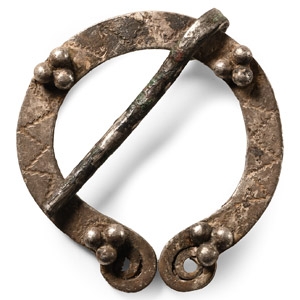
Viking Period Silver Penannular Brooch
10th-12th century A.D.Sold for (Inc. bp): £72
Flat-section with pointillé zigzag to the obverse, coiled finials, four granule cluster, sturdy round-section pin. 4.71 grams, 30 mm
UK private collection before 2000. Acquired on the UK art market. Property of a London gentleman. -
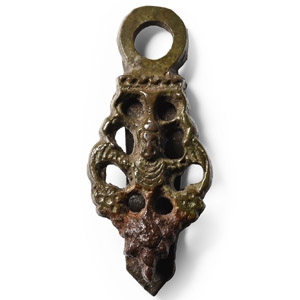
Anglo-Scandinavian Viking Bronze Bound Loki Suspension Mount
10th-11th century A.D.Sold for (Inc. bp): £520
Belt mount with loop above and strap to reverse; openwork frame with rosettes and central facing mask. 3..25 grams, 32 mm
Acquired in Germany after WWII. Ex property of a lady living in Kent, UK; formerly part of her grandfather's collection. From an old private collection of Norfolk, UK, gentleman, formed since 1998.
The image is often interpreted as the trickster-god Loki bound to a rock, as he was said to be in Norse myth (e.g. the poem Völuspá, verse 35).
