
Loading, please wait...
LOT 1663
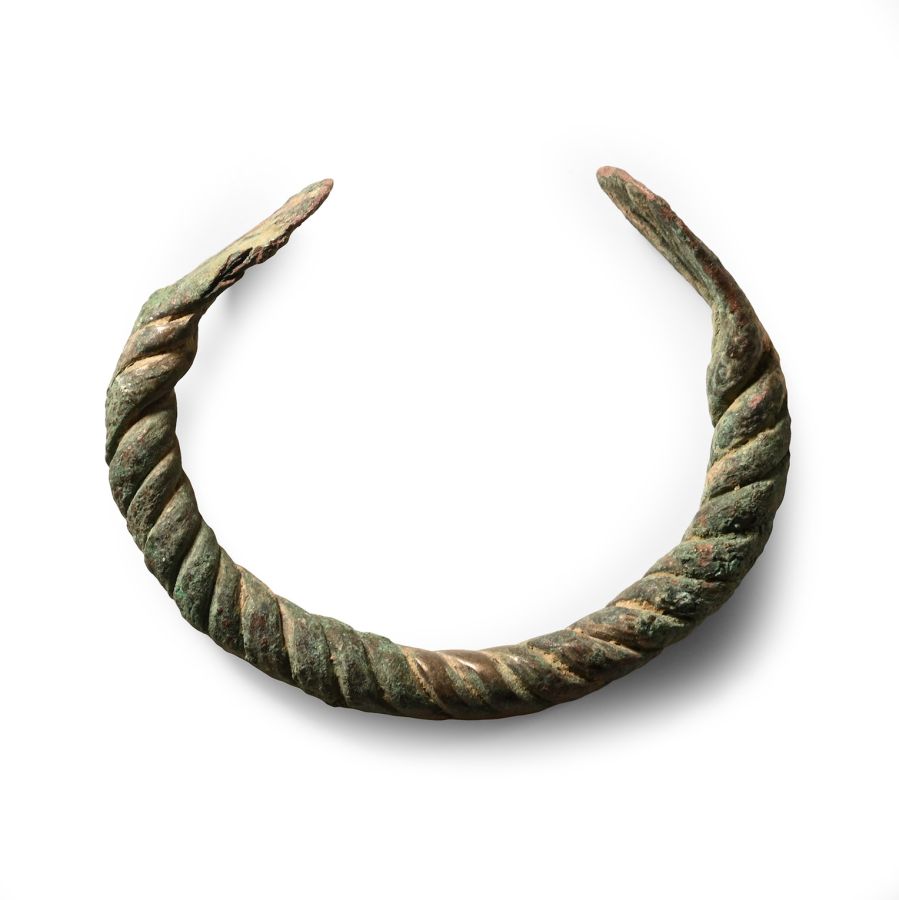
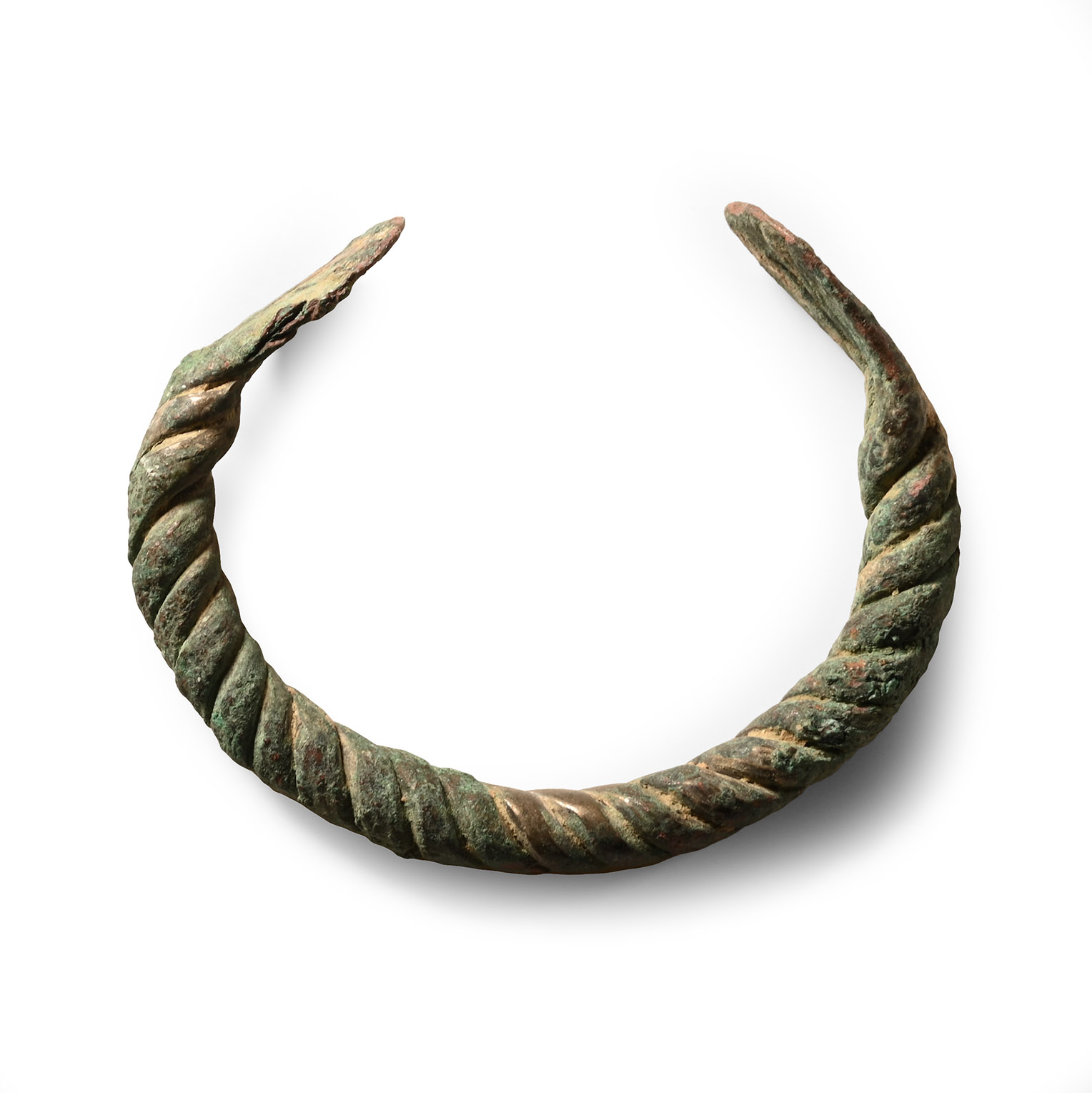
Viking Age Twisted Bronze Bracelet
CIRCA 9TH-11TH CENTURY A.D.
2 5/8 in. (42.1 grams, 66 mm).
Comprising thick twisted rods, and flattened crescent plate finials with punched pellet detailing [No Reserve]
ProvenancePrivate collection, Arundel, West Sussex, UK, 1975-late 1990s.
LiteratureSee Shetelig, H. (ed), Viking Antiquities in Great Britain and Ireland, Part VI, Oslo, 1954, fig.85, for type.
CONDITIONTimeLine Auctions follows a vetting process to ensure the authenticity and legality of all items, reinforcing our commitment to integrity and responsible trading. Each antiquity, antique, and coin lot undergoes thorough examination by a vetting committee of at least ten external specialists, professional trade association members, scientists, and archaeologists: Our Vetting Process
AUCTIONS:
TimeLine is a leading auction house specialising in antiquities, ancient art, collectables, natural history, coins, medals, and books. Our auctions offer museums, collectors, historians, and enthusiasts the opportunity to acquire unique and historically significant pieces.
-

Anglo-Scandinavian Viking Bronze Stirrup Mount with Howling Beast
11th century A.D.Sold for (Inc. bp): £208
Heater-shaped in profile with trefoil knop above and fixing pin; high-relief profile wolf with head thrown back and one forepaw raised; ledge to reverse with ferrous stud; Williams's Class A, type 11. 27 grams, 48 mm
Found Norfolk, UK. From an old private collection of Norfolk, UK, gentleman, formed since 1998. -

Viking Period Tinned Bronze Twisted Bracelet
Circa 9th-11th century A.D.Sold for (Inc. bp): £111
Substantial penannular type with looped finials. 124 grams, 70 mm
Ex private North American collection, California, USA, 1970s-1990s. -
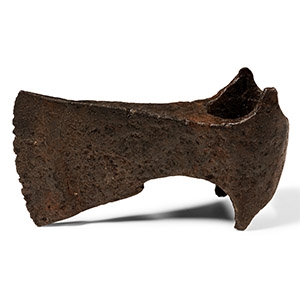
Viking Age Finno-Ugrian Socketted Axe Head
10th-13th century A.D.Sold for (Inc. bp): £286
A Finno-Ugrian or Baltic hand-forged iron axehead with triangular-section narrow blade widening to a broad bevelled edge with square chin and spur to the rear, socket with flanges to the rear. 694 grams, 14.2 cm
From the private collection of a London gentleman, from his grandfather's collection formed before the early 1970s.
During the mid 13th century, the axes were favourited by Baltic people. For instance, the Curonian army included lightly armed soldiers who fought with spears, shields, fighting knives and axes. A heavily armed soldier could also carry a sword, a helmet, a shield and a wide bladed axe.
