
Loading, please wait...
LOT 1322
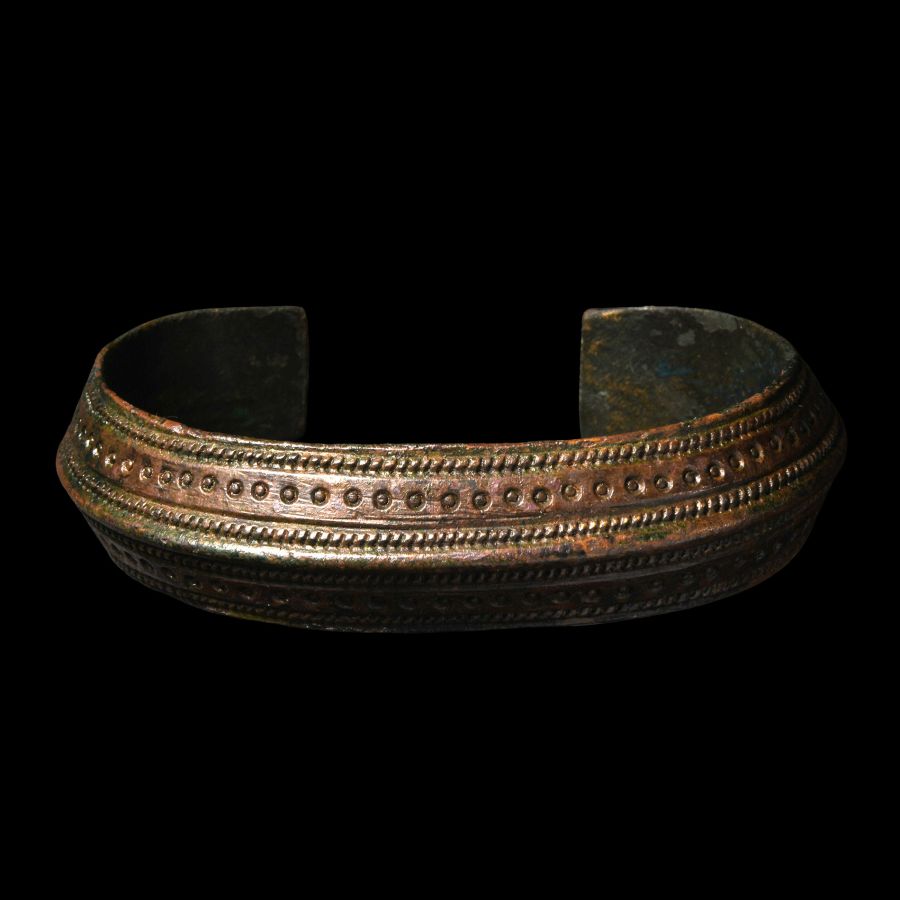
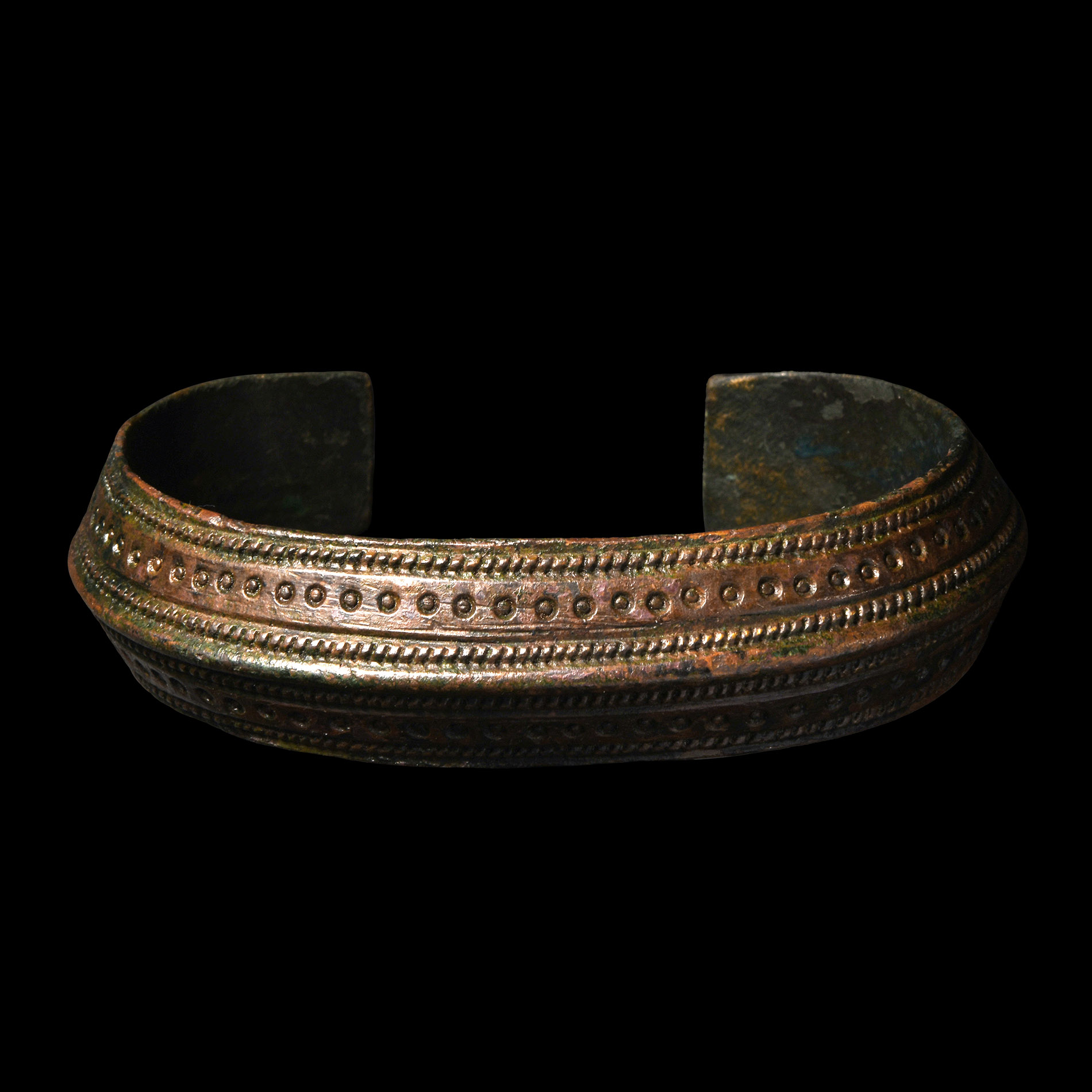
Viking Age Stamp-Decorated Bronze Bracelet
9TH-11TH CENTURY A.D.
3 in. (79 grams, 75 mm wide).
With a carinated outer face with stamped annulets and faux ropework above and below raised rib to the equator, transverse grooves to the terminals. [No Reserve]
ProvenanceFrom the collection of a North American gentleman, formed in the 1990s.
CONDITIONTimeLine Auctions follows a vetting process to ensure the authenticity and legality of all items, reinforcing our commitment to integrity and responsible trading. Each antiquity, antique, and coin lot undergoes thorough examination by a vetting committee of at least ten external specialists, professional trade association members, scientists, and archaeologists: Our Vetting Process
AUCTIONS:
TimeLine is a leading auction house specialising in antiquities, ancient art, collectables, natural history, coins, medals, and books. Our auctions offer museums, collectors, historians, and enthusiasts the opportunity to acquire unique and historically significant pieces.
-
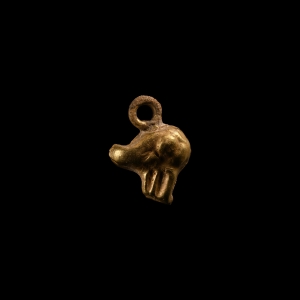
Viking Age Gold Pendant with Bird Head
Circa 10th century A.D.Estimate: £150 - 200 (+bp*)
Opening Bid: £75
Displaying bifacial eye and neck detailing; suspension loop above. 1.19 grams, 15 mm
Acquired 1970-2010. From the collection of a late Japanese gentleman. -

Large Viking Age Bronze Twisted Torc
9th-12th century A.D.Sold for (Inc. bp): £182
Comprising overlapping arms and loop terminals. 457 grams, 23.5 cm
From the collection of a North American gentleman, formed in the 1990s. -
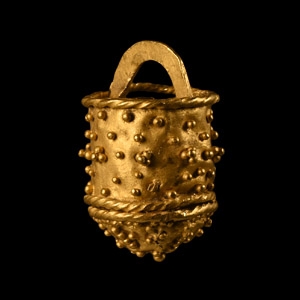
Pre-Viking Gold Filigree Aroma Bucket Pendant
4th-7th century A.D.Sold for (Inc. bp): £546
Adorned with granule clusters to the sidewall and a granulated cross to convex base. 1.40 grams, 14 mm
From the collection of a North American gentleman, formed in the 1990s.
Pendants in the form of miniature buckets have been found in a number of pagan Anglo-Saxon and Viking contexts and are generally made of bronze or iron, with gold examples being rare; three gold examples were found with the hoard from Hoen, Norway. Bronze bucket amulets have been found at Driffield in Yorkshire, and Vimose bog in Denmark, among other places. In form they represent wooden buckets bound with bronze or iron bands which have been found in Anglo-Saxon and Viking graves and are believed to have held mead or ale and were used to replenish the cups from which warriors drank. As amulets they probably represent the ecstatic power of alcoholic drink and the role of women as the dispensers of these precious beverages.
