
Loading, please wait...
LOT 0373
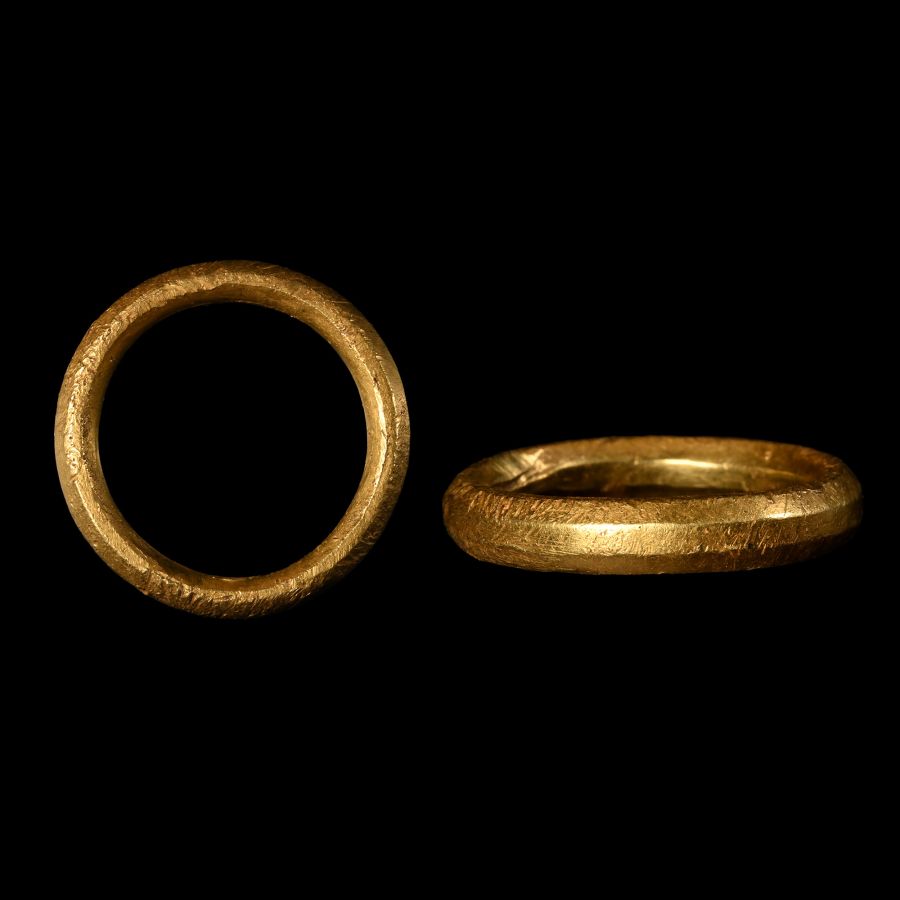
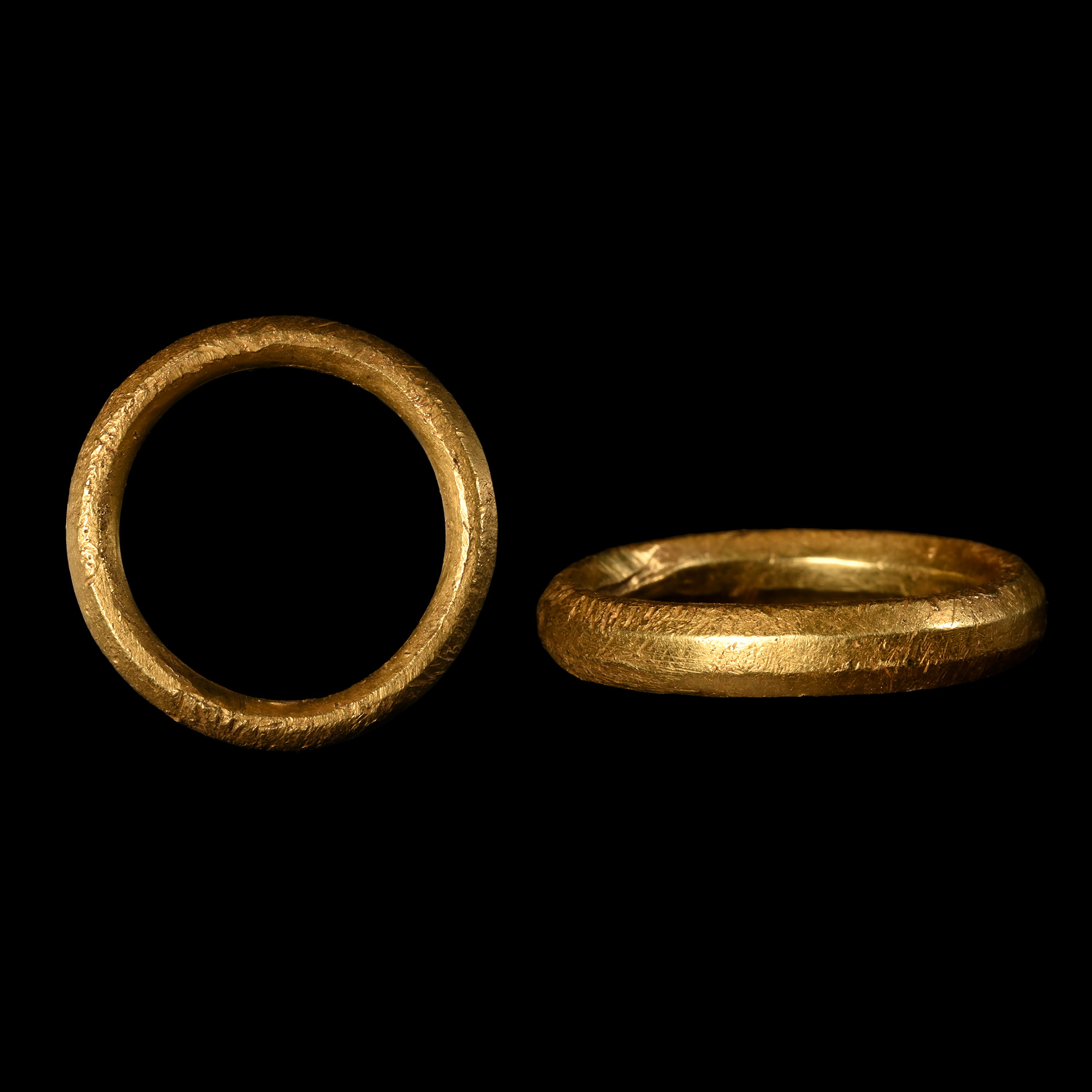
Viking Age Solid Gold Ring
CIRCA 9TH-11TH CENTURY A.D.
7/8 in. (8.94 grams, 22.64 mm overall, 17.07 mm internal diameter (approximate size British M 1/2, USA 6 1/4, Europe 13.09, Japan 12)).
Octagonal in section with multiple abrasions to all faces. [No Reserve]
ProvenanceProperty of a Cambridgeshire, UK, collector.
From his private collection since the 1970s; thence by descent circa 2000.
Ex private collection of a Bedfordshire gentleman.
This lot is accompanied by an illustrated lot declaration signed by the Head of the Antiquities Department, Dr Raffaele D'Amato.
The polygonal section of the ring suggests a date of manufacture in Late Anglo-Saxon or Anglo-Scandinavian culture. This feature was noted in respect of some items in the Cuerdale Hoard of 9th-10th century date, for example a ring-fragment (British Museum accession no.1841,0711.508).
CONDITIONTimeLine Auctions follows a vetting process to ensure the authenticity and legality of all items, reinforcing our commitment to integrity and responsible trading. Each antiquity, antique, and coin lot undergoes thorough examination by a vetting committee of at least ten external specialists, professional trade association members, scientists, and archaeologists: Our Vetting Process
AUCTIONS:
TimeLine is a leading auction house specialising in antiquities, ancient art, collectables, natural history, coins, medals, and books. Our auctions offer museums, collectors, historians, and enthusiasts the opportunity to acquire unique and historically significant pieces.
-
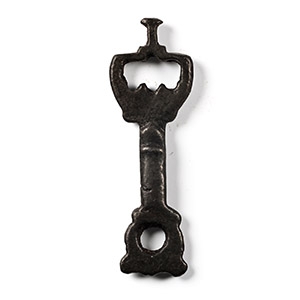
Late Anglo-Scandinavian Viking Bronze Casket Key
10th-13th century A.D.Sold for (Inc. bp): £46
For a slide lock, the shaft with an open circular projection to one end and a larger openwork rectangular projection to the other end terminating with a T-shaped extension. 7.67 grams, 54 mm
Acquired on the UK art market circa 2005. From an old North Country, UK, collection. This lot is accompanied by an illustrated lot declaration signed by the Head of the Antiquities Department, Dr Raffaele D'Amato.
There is much discussion among the scholars on such slide keys, known popularly as 'Viking' keys. According to Kevin Leahy '...they do look something like the keys that come from Viking graves and from Viking sites but I have never seen an example that had the 'T' shaped extension for the end of the bit and I can't actually see how this would have functioned in a slide lock.' An iron example was found at Coppergate in York, in a 12th to 13th century context. -
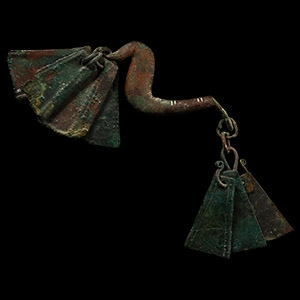
Viking Bronze Pendant with Decorated Dragon
Early 9th-11th century A.D.Sold for (Inc. bp): £234
Comprising a S-shaped hollow bar with inlaid silverstrips and ring-and-dot motifs, cluster of trapezoidal dangles to head and tail. 34.3 grams, 15.5 cm
Acquired on the London art market, 1990s. Private collection, London. This lot is accompanied by an illustrated lot declaration signed by the Head of the Antiquities Department, Dr Raffaele D'Amato. -
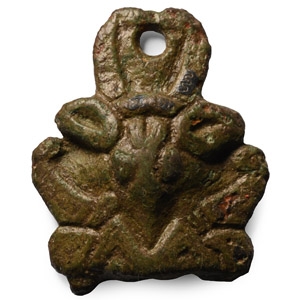
Anglo-Scandinavian Viking Stirrup Apex Mount with Mask
10th-11th century A.D.Sold for (Inc. bp): £234
Curved in section with pierced loop and facing bears(?) mask with splayed ellipsoid ears. 11.3 grams, 35 mm
Found Cambridgeshire, UK. This lot is accompanied by an illustrated lot declaration signed by the Head of the Antiquities Department, Dr Raffaele D'Amato.
