
Loading, please wait...

LOT 1759
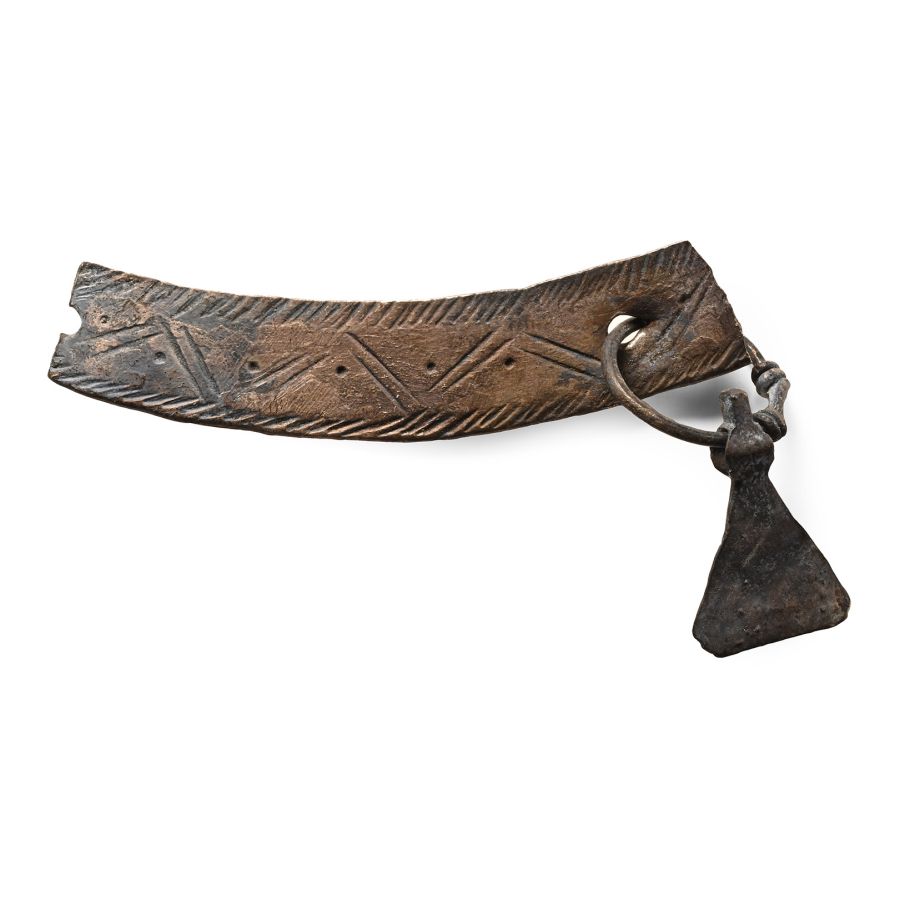
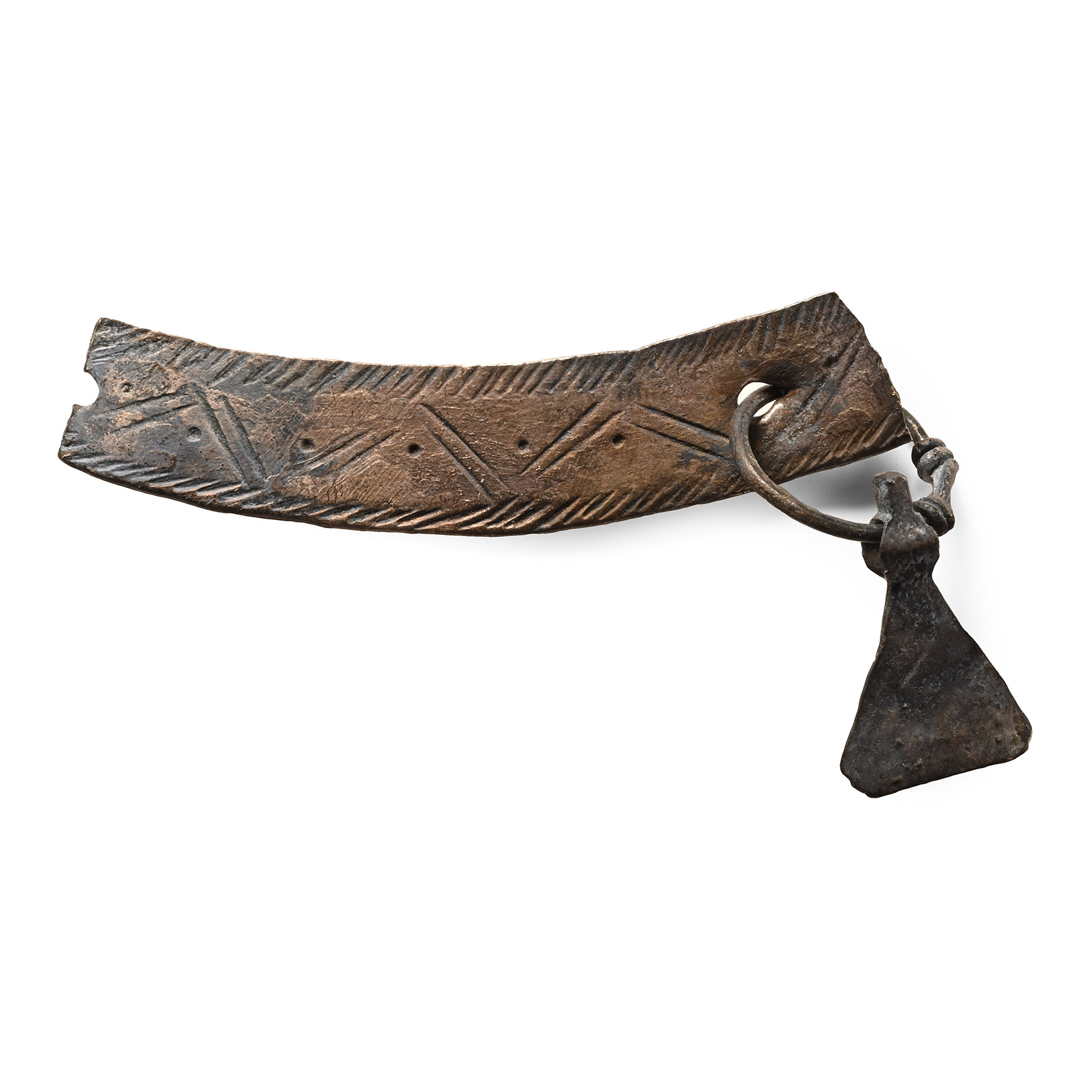
Viking Age Silver Torc Section with Axehead Pendant
9TH-11TH CENTURY A.D.
2 1/2 in. (6.27 grams, 65 mm).
Curved flat-section fragment with hatched edges and incised bilinear running zigzag motif, pierced to accept a suspension ring with miniature axehead dangle bearing a ring-and-dot motif and hatched borders. [No Reserve]
ProvenanceFrom a collection acquired on the UK art market from various auction houses and collections mostly before 2000.
From an important Cambridgeshire estate; thence by descent.
TimeLine Auctions follows a vetting process to ensure the authenticity and legality of all items, reinforcing our commitment to integrity and responsible trading. Each antiquity, antique, and coin lot undergoes thorough examination by a vetting committee of at least ten external specialists, professional trade association members, scientists, and archaeologists: Our Vetting Process
AUCTIONS:
TimeLine is a leading auction house specialising in antiquities, ancient art, collectables, natural history, coins, medals, and books. Our auctions offer museums, collectors, historians, and enthusiasts the opportunity to acquire unique and historically significant pieces.
-
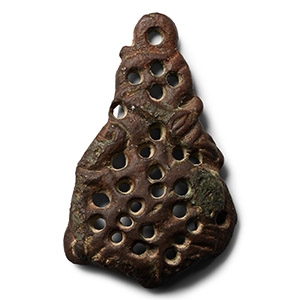
Anglo-Scandinavian Viking Bronze Urnes Pendant
11th century A.D.Estimate: £2,000 - 3,000 (+bp*)
Opening Bid: £400
Triangular in profile with openwork Urnes Style interlace, attachment pins to lower corners (one absent). 11.2 grams, 41 mm
Found near York, UK. From an old private collection of Norfolk, UK, gentleman, formed since 1998.
The design is clearly based on the contemporary stirrup mount style with dense openwork interlace and attachment points; the item lacks the rear ledge and attachment stud of the true mounts. -
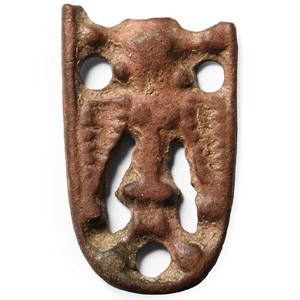
Anglo-Scandinavian Viking Bronze Strap End
10th-11th century A.D.Sold for (Inc. bp): £111
Tongue-shaped with openwork design, median figure of a bird with wings spread, domed bosses to the frame. 10.8 grams, 39 mm
Found Norfolk, UK. From an old private collection of Norfolk, UK, gentleman, formed since 1998. -
.jpg)
Anglo-Scandinavian Viking Bronze Wolf-Head Strap End
10th-11th century A.D.Sold for (Inc. bp): £221
Elongated plate with longitudinal split and rivet; openwork scrolled tendril motif developing to a wolf-head. 14.6 grams, 55 mm
Found Norfolk, UK. From an old private collection of Norfolk, UK, gentleman, formed since 1998.
The head is sometimes attributed to Fenrir the cosmic wolf which will break free from the bonds the gods placed on it and destroy the world at the end of time.
