
Loading, please wait...
LOT 1588
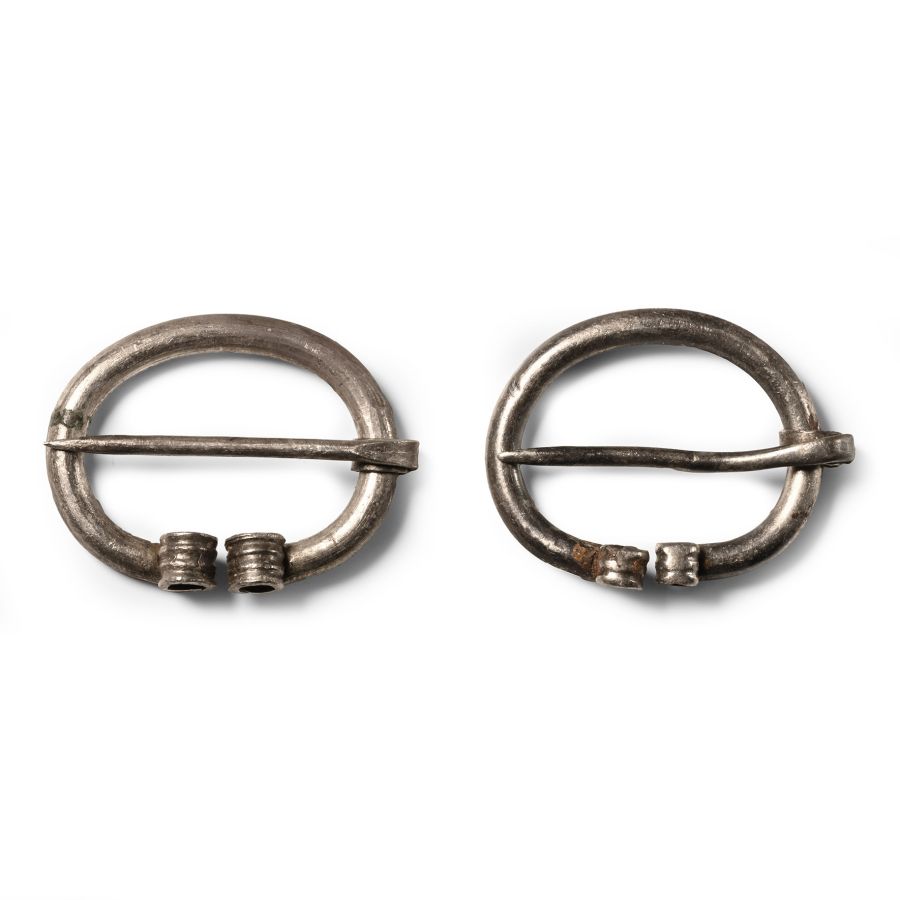
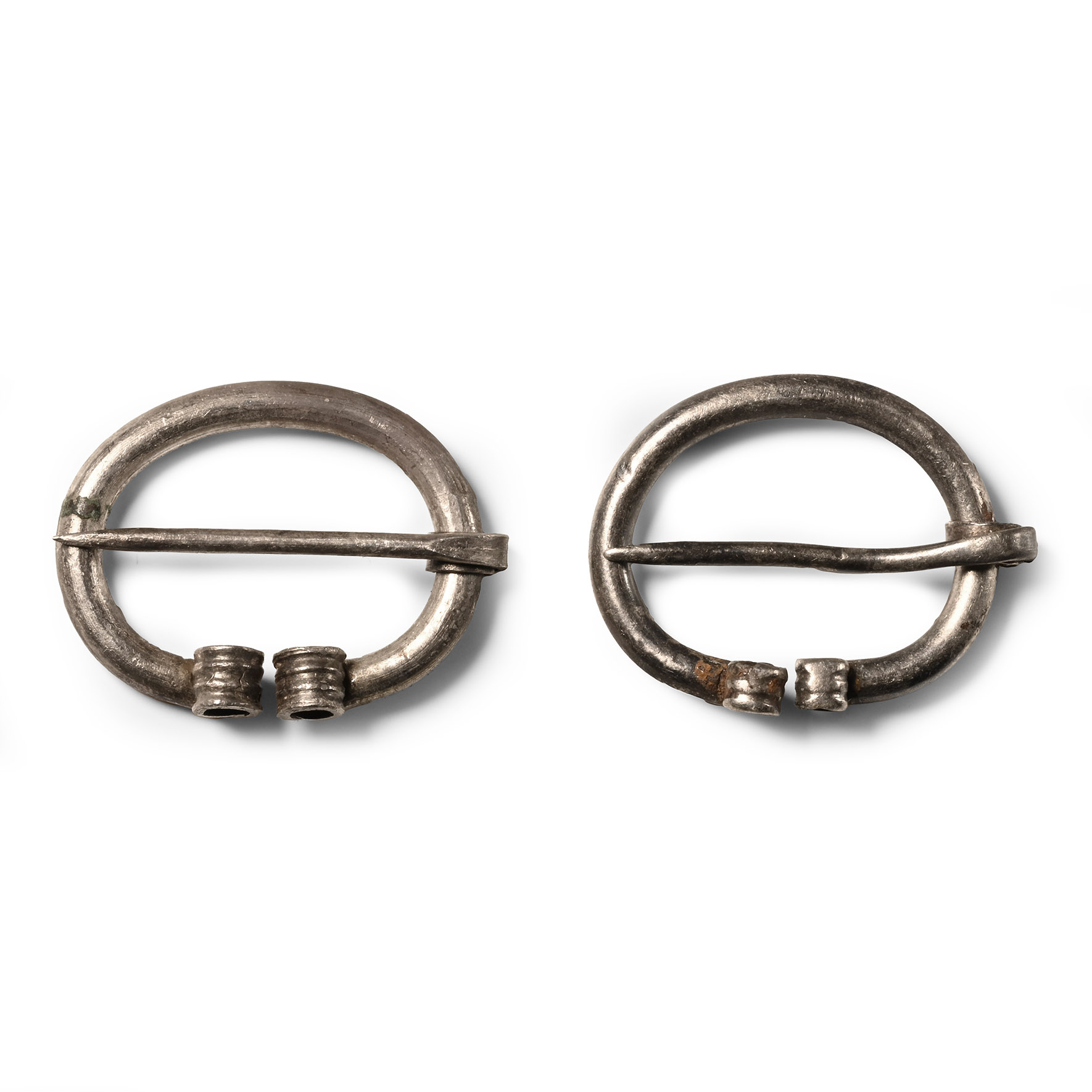
Viking Age Silver Penannular Brooch Pair
9TH-11TH CENTURY A.D.
1 1/4 - 1 3/8 in. (18.1 grams total, 32-34 mm).
Each a round-section shank with the ends flattened, ribbed and coiled, and with a tapering movable pin. [2, No Reserve]
ProvenancePrivate collection, Arundel, West Sussex, UK, 1975-late 1990s.
CONDITIONTimeLine Auctions follows a vetting process to ensure the authenticity and legality of all items, reinforcing our commitment to integrity and responsible trading. Each antiquity, antique, and coin lot undergoes thorough examination by a vetting committee of at least ten external specialists, professional trade association members, scientists, and archaeologists: Our Vetting Process
AUCTIONS:
TimeLine is a leading auction house specialising in antiquities, ancient art, collectables, natural history, coins, medals, and books. Our auctions offer museums, collectors, historians, and enthusiasts the opportunity to acquire unique and historically significant pieces.
-
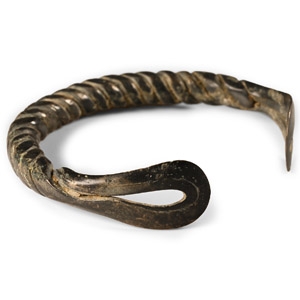
Viking Age Bronze Twisted Bracelet
9th-11th century A.D.Sold for (Inc. bp): £130
Twisted penannular shank with flattened loop finials. 26.4 grams, 59 mm
Private collection, Arundel, West Sussex, UK, 1975-late 1990s. -
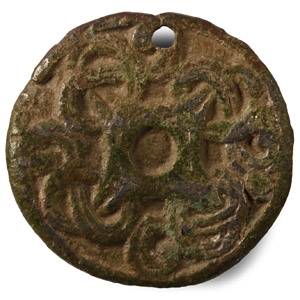
Anglo-Scandinavian Viking Bronze Borre Knot Disc Brooch
11th century A.D.Sold for (Inc. bp): £117
Disc brooch with low-relief Borre style looped tendrils motif; catch broken and disc pierced for use as a pendant. 8.76 grams, 29 mm
Acquired on the UK art market in the 1980s. From an East Anglian private collection. -
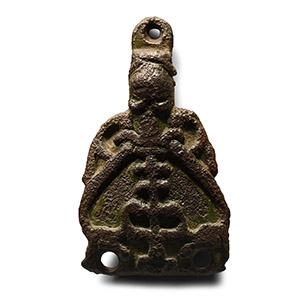
Anglo-Scandinavian Viking Bronze Skeletal Stirrup Apex Mount
11th century A.D.Sold for (Inc. bp): £351
A well-defined Williams's Class A Type 6 mount comprising a D-shaped plaque with high-relief central tree or skeleton, a serpent to each lateral edge with divided tail coiled over the 'tree's' trefoil finial, head at the tree's base; beast-head finial with loop above; shallow ledge to the reverse, two circular piercings above. 31.4 grams, 50 mm
Found Kings Lynn, Norfolk, UK. From an East Anglian private collection.
