
Loading, please wait...
LOT 1465
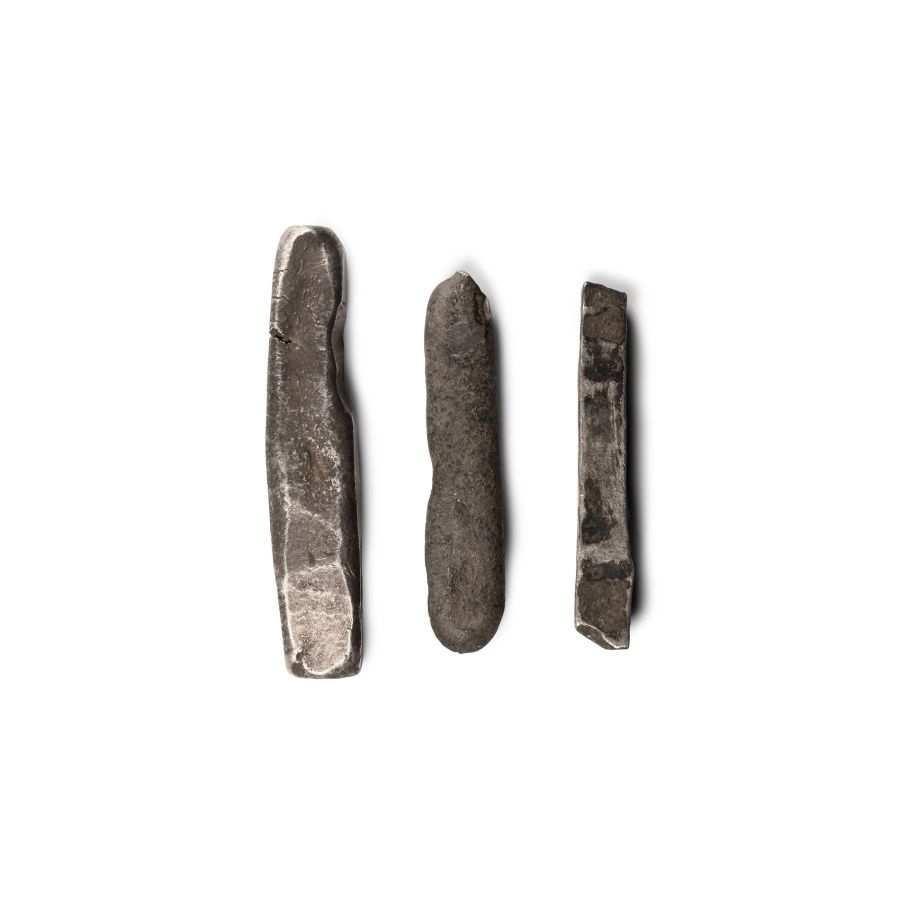
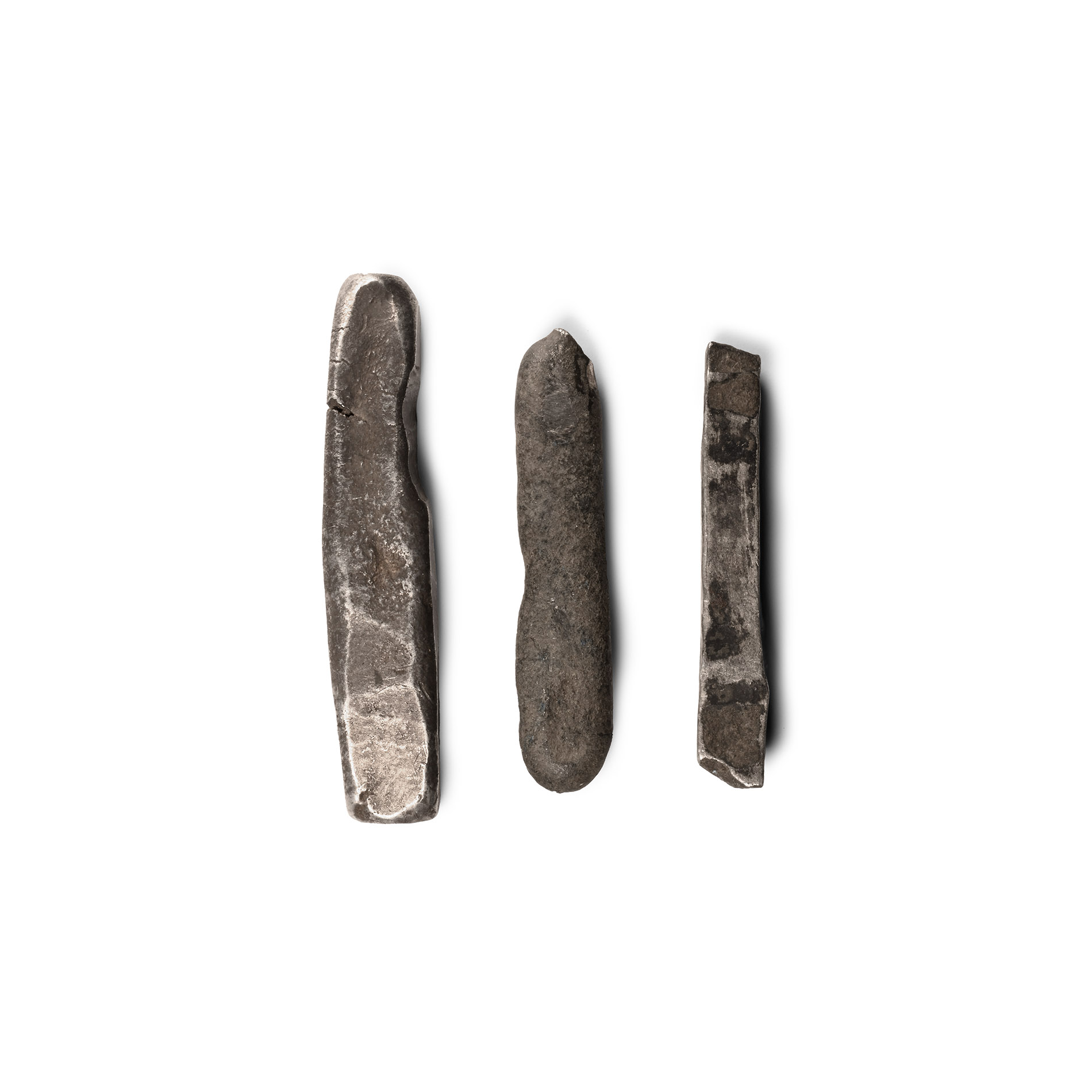
Viking Age Silver Ingot Group
9TH-10TH CENTURY A.D.
1 3/4 - 2 1/4 in. (62.5 grams total, 45-56 mm).
The trio comprising ingots of different lengths, weights and cross-sections. [3, No Reserve]
ProvenanceAcquired on the London art market, 1980s-1990s.
LiteratureCf. The British Museum, museum numbers 1841,0711.27, 1841,0711.19 and 2006,1203.3, for comparable examples.
CONDITIONTimeLine Auctions follows a vetting process to ensure the authenticity and legality of all items, reinforcing our commitment to integrity and responsible trading. Each antiquity, antique, and coin lot undergoes thorough examination by a vetting committee of at least ten external specialists, professional trade association members, scientists, and archaeologists: Our Vetting Process
AUCTIONS:
TimeLine is a leading auction house specialising in antiquities, ancient art, collectables, natural history, coins, medals, and books. Our auctions offer museums, collectors, historians, and enthusiasts the opportunity to acquire unique and historically significant pieces.
-
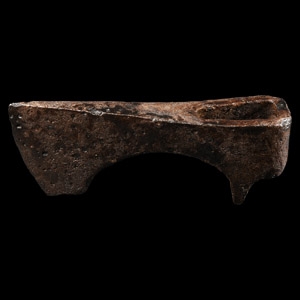
Viking Age Iron Bearded Axehead
11th-13th century A.D.Sold for (Inc. bp): £130
Finno-Ugrian with curved blade, swept rear edge, square chin, socket with downwards flanged sides. 602 grams, 16.5 cm
Acquired 1971-1972. From the collection of the vendor's father. Property of a London, UK, collector.
This type of bearded axe seems to correspond to the category of Eastern Axes inside the Viking axe classification. Usually these bearded axeheads (skeggöks) had a longer edge, designed to split tree trunks into planks and beams. Some of the bearded axes were known as halfÞynna öx; the neck on such 'half thin axe' was thinly forged, to make it lighter. Bearded axes of this type appear also in the weaponry of people from the Baltic. -
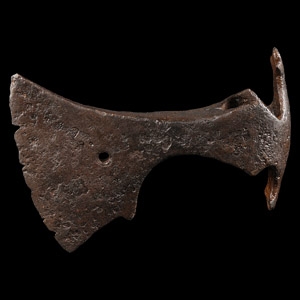
Viking Age Iron Bearded Axehead
9th-11th century A.D.Sold for (Inc. bp): £546
Composed of a convex cutting edge, tapering cheeks with bearded lower edge and an oval-shaped socket with lozengiform flanges and roughly rectangular extensions to the butt, hole inside the blade. 567 grams, 15.5 cm
Acquired 1971-1972. From the collection of the vendor's father. Property of a London, UK, collector.
Iron axeheads of this typology, diffused especially in the regions of the Baltic Sea where they were imported from Scandinavia, show a sub-trapezoidal asymmetrical blade, often perforated through the centre. They are characterised by two projections spurs from the top and the bottom of the back of the shaft-hole. -
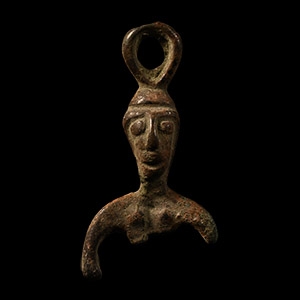
Viking Age Bronze Freya Pendant
9th-11th century A.D.Sold for (Inc. bp): £195
Complete with a large suspension loop and stylised facial details in relief with the indication of breasts below. 9.28 grams, 50 mm
London art market before 2000. Property of an Essex gentleman.
