
Loading, please wait...


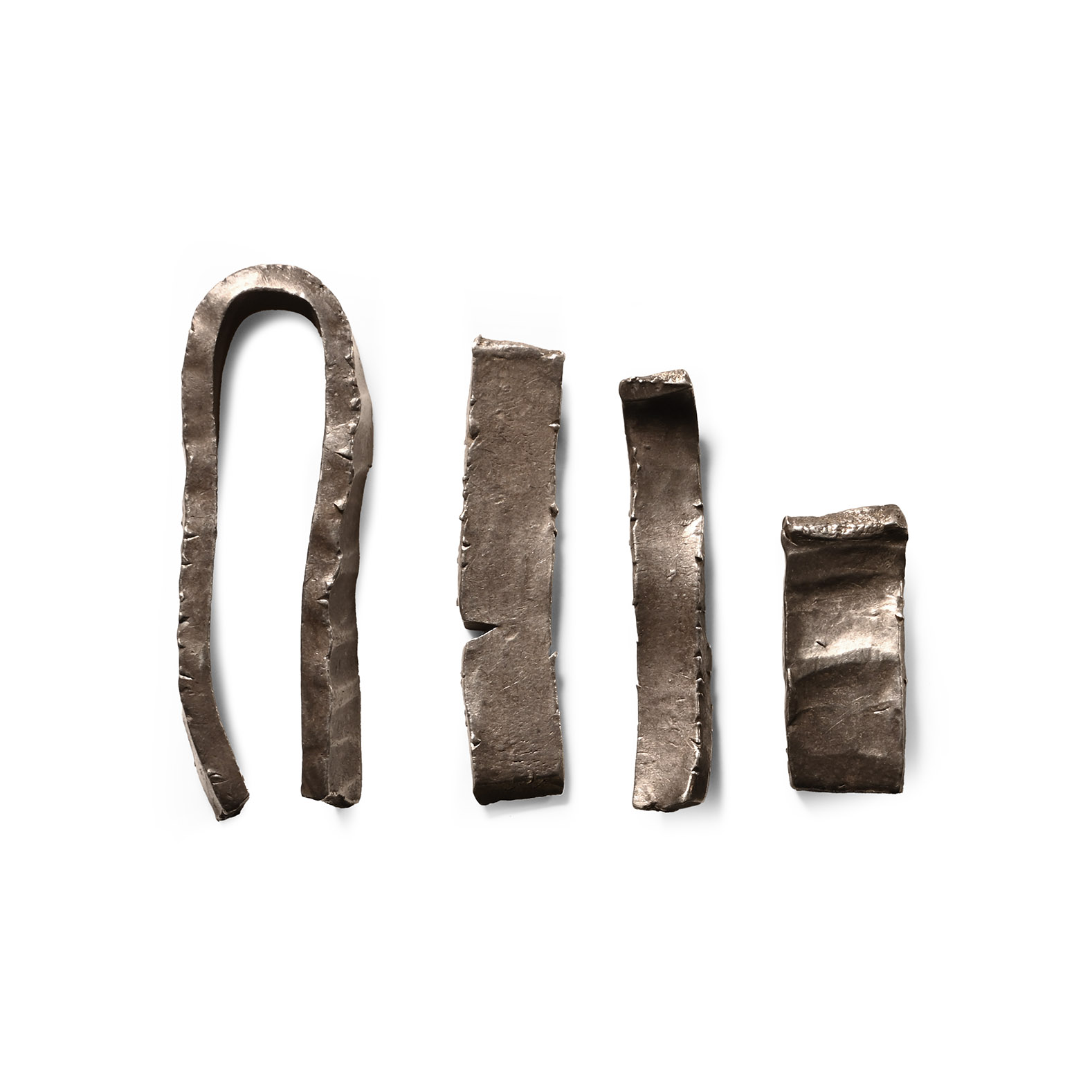
LOT 1718
Viking Age Silver 'Hack Money' Bar Ingot Group
9TH-11TH CENTURY A.D.
1 -2 in. (50.3 grams total, 26-50 mm).
Rectangular- and flat-section bar sections with test nicks and burred edges. [4, No Reserve]
ProvenanceEx Spink and Sons, London, UK.
Ex Nigel Mills, London, UK, 2014.
See Hårdh, B., Silver in the Viking Age. A Regional-Economic Study, Acta Archaeologica Lundensia no.25, Stockholm, 1996.
CONDITIONTimeLine Auctions follows a vetting process to ensure the authenticity and legality of all items, reinforcing our commitment to integrity and responsible trading. Each antiquity, antique, and coin lot undergoes thorough examination by a vetting committee of at least ten external specialists, professional trade association members, scientists, and archaeologists: Our Vetting Process
AUCTIONS:
TimeLine is a leading auction house specialising in antiquities, ancient art, collectables, natural history, coins, medals, and books. Our auctions offer museums, collectors, historians, and enthusiasts the opportunity to acquire unique and historically significant pieces.
-
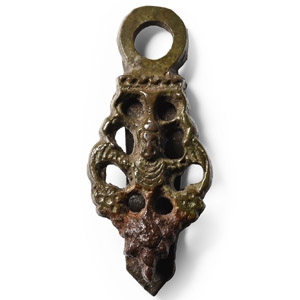
Anglo-Scandinavian Viking Bronze Bound Loki Suspension Mount
10th-11th century A.D.Sold for (Inc. bp): £520
Belt mount with loop above and strap to reverse; openwork frame with rosettes and central facing mask. 3..25 grams, 32 mm
Acquired in Germany after WWII. Ex property of a lady living in Kent, UK; formerly part of her grandfather's collection. From an old private collection of Norfolk, UK, gentleman, formed since 1998.
The image is often interpreted as the trickster-god Loki bound to a rock, as he was said to be in Norse myth (e.g. the poem Völuspá, verse 35). -
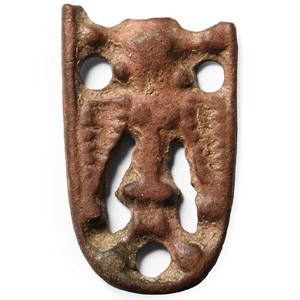
Anglo-Scandinavian Viking Bronze Strap End
10th-11th century A.D.Sold for (Inc. bp): £111
Tongue-shaped with openwork design, median figure of a bird with wings spread, domed bosses to the frame. 10.8 grams, 39 mm
Found Norfolk, UK. From an old private collection of Norfolk, UK, gentleman, formed since 1998. -
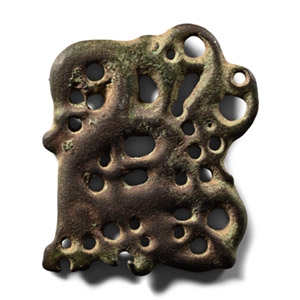
'The Stratton Strawless' Anglo-Scandinavian Viking Bronze Urnes Beast Mount
11th century A.D.Estimate: £500 - 700 (+bp*)
Opening Bid: £200
Openwork interlace plaque with Urnes Style stag and serpent, attachment points at outer edge. 14 grams, 39 mm
Found Stratton Strawless, Norfolk, UK. From an old private collection of Norfolk, UK, gentleman, formed since 1998. Accompanied by a copy of the British Museum's Portable Antiquities Scheme (PAS) report no.NMS-E92C94.
The motif of the stag and the serpents is associated especially with Urnes Style objects.
