
Loading, please wait...
LOT 0388
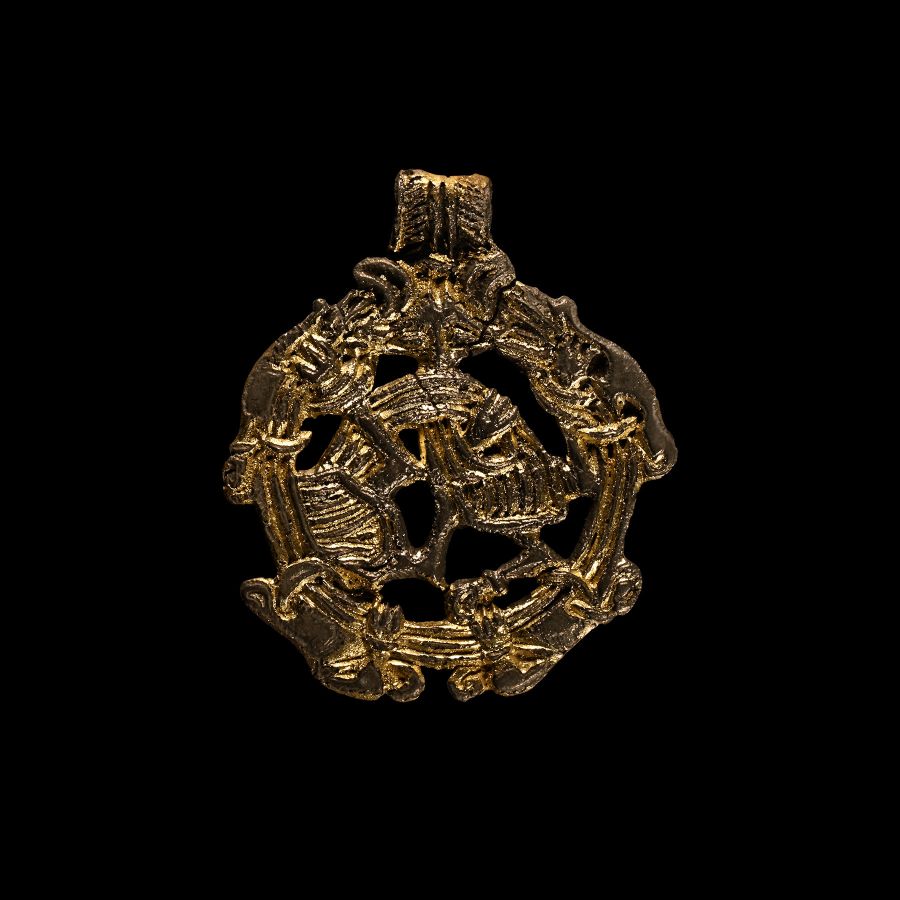
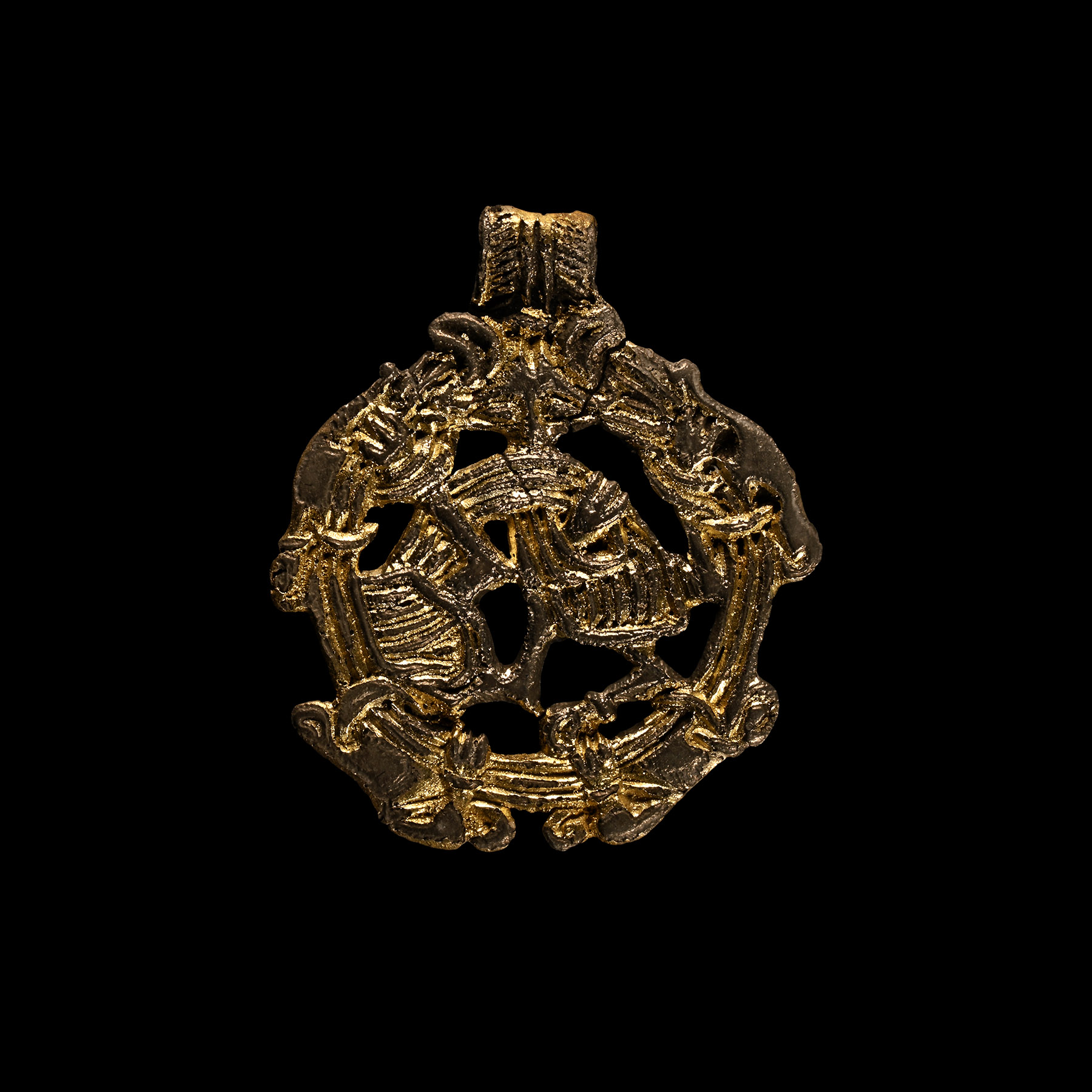
Viking Age Silver-Gilt Oseberg Contorted Beast Pendant
CIRCA 10TH-11TH CENTURY A.D.
1 3/4 in. (6.29 grams, 39.51 mm).
Openwork disc pendant with Oseberg Style disjointed body, facing mask, pierced suspension lug above.
ProvenanceAcquired on the German art market before 2000.
From a London W1, UK, collection.
See Korshyn, V.E. Yazicheskiye Priveski Drevniye Rysi X-XIV Vekov, Moscow, 2013, items K.1.02 - 04.
FootnotesThere is a class of discoid pendants with banded borders and contorted figures found in the hinterland of the Baltic region, associated with the influence of Scandinavian settlers. The design of these items recalls specific elements of Scandinavian art - for example, the 'gripping hands' motif is a feature of the Oseberg Style named after the famous Norwegian ship-burial. Oseberg Style is associated with the beginnings of the Viking age, and was current in the 9th century when Scandinavian settlers began to establish centres of trade and political control in the area of the rivers Dnieper and Volga. The motif has been interpreted as a horse and linked with various legends and mythic figures.
CONDITIONTimeLine Auctions follows a vetting process to ensure the authenticity and legality of all items, reinforcing our commitment to integrity and responsible trading. Each antiquity, antique, and coin lot undergoes thorough examination by a vetting committee of at least ten external specialists, professional trade association members, scientists, and archaeologists: Our Vetting Process
AUCTIONS:
TimeLine is a leading auction house specialising in antiquities, ancient art, collectables, natural history, coins, medals, and books. Our auctions offer museums, collectors, historians, and enthusiasts the opportunity to acquire unique and historically significant pieces.
-
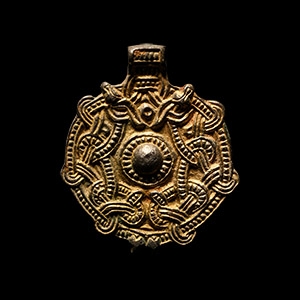
Viking Age Scandinavian Silver-Gilt Pendant with Interlaced Beasts
Circa 10th century A.D.Sold for (Inc. bp): £780
Discoid with integral loop; obverse with applied filigree Terslev ornament of three radiating looped knots and interstitial loops, boss to the centre. 13.9 grams, 42 mm
Private collection formed in Europe in the 1980s. Westminster collection, central London, UK. -

Viking Age Silver-Gilt Oseberg Contorted Beast Pendant
Circa 10th-11th century A.D.Sold for (Inc. bp): £364
Openwork disc pendant with Oseberg Style disjointed body, facing mask, pierced suspension lug above. 6.29 grams, 39.51 mm
Acquired on the German art market before 2000. From a London W1, UK, collection.
There is a class of discoid pendants with banded borders and contorted figures found in the hinterland of the Baltic region, associated with the influence of Scandinavian settlers. The design of these items recalls specific elements of Scandinavian art - for example, the 'gripping hands' motif is a feature of the Oseberg Style named after the famous Norwegian ship-burial. Oseberg Style is associated with the beginnings of the Viking age, and was current in the 9th century when Scandinavian settlers began to establish centres of trade and political control in the area of the rivers Dnieper and Volga. The motif has been interpreted as a horse and linked with various legends and mythic figures. -
.jpg)
Viking Age Scandinavian Silver Pendant with Odin and his Ravens Huginn and Muninn
Circa 9th-10th century A.D.Sold for (Inc. bp): £1,170
With integral loop, border enclosing a low-relief image of a male facing mask between two birds embraced at the necks. 1.96 grams, 20 mm
Private collection formed in Europe in the 1980s. Westminster collection, central London, UK.
