
Loading, please wait...
LOT 0339
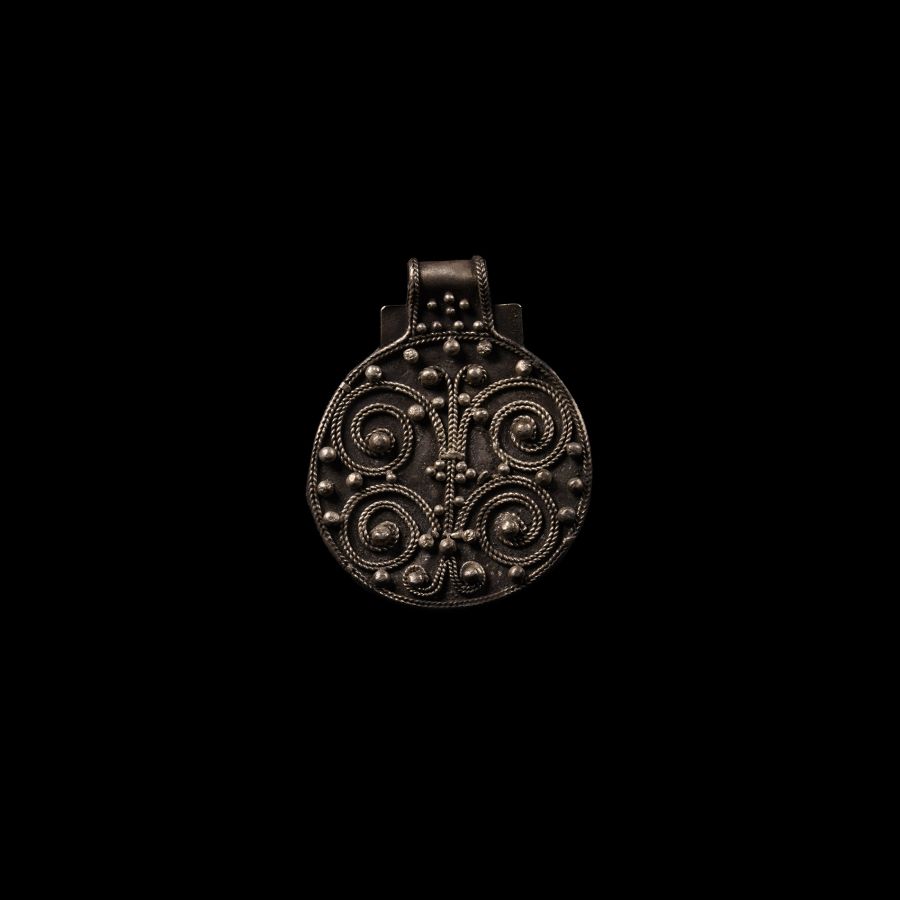
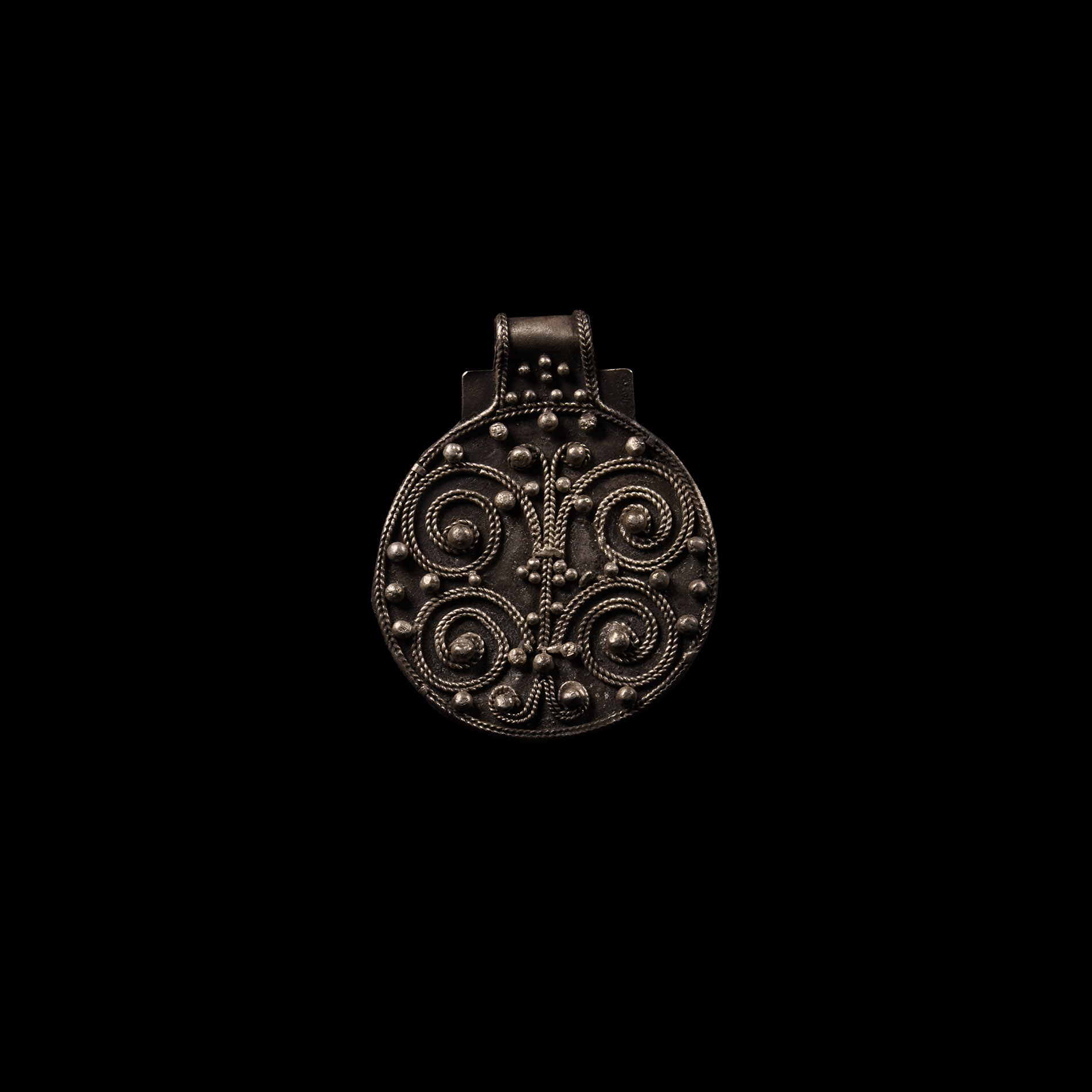
Viking Age Silver Filigree Pendant
9TH-11TH CENTURY A.D.
1 1/2 in. (5.57 grams, 40 mm).
Flat disc with integral suspension loop, applied granules and filigree ropework detailing. [No Reserve]
ProvenancePrivate collection formed in Europe in the 1980s.
Westminster collection, central London, UK.
Cf. Arbman, H., Birka I: Die Gräber, Uppsala, 1940, pl.98(15).
CONDITIONTimeLine Auctions follows a vetting process to ensure the authenticity and legality of all items, reinforcing our commitment to integrity and responsible trading. Each antiquity, antique, and coin lot undergoes thorough examination by a vetting committee of at least ten external specialists, professional trade association members, scientists, and archaeologists: Our Vetting Process
AUCTIONS:
TimeLine is a leading auction house specialising in antiquities, ancient art, collectables, natural history, coins, medals, and books. Our auctions offer museums, collectors, historians, and enthusiasts the opportunity to acquire unique and historically significant pieces.
-
Viking Age Bronze Dagger Pommel with Expanding Cross
Circa 11th century A.D.Sold for (Inc. bp): £46
The side faces with geometric motifs, attachment lug to one face; pommel with facetted body. 21.7 grams, 20 mm
From the collection of a North American gentleman, formed in the 1990s. -
.jpg)
Viking Age Gilt Bronze Openwork Roundel with Interlaced Snakes
10th-12th century A.D.Estimate: £400 - 600 (+bp*)
Opening Bid: £160
With rilled edge and pierced hub, the field a network of dense interlaced tendrils. 48.9 grams, 70.7 mm
Fine condition.
Acquired 1971-1972. From the collection of the vendor's father. Ex property of a London, UK, collector. -
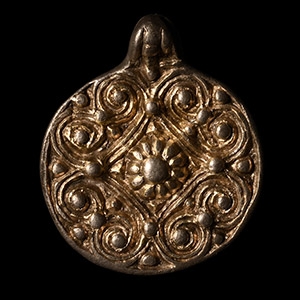
Viking Silver-Gilt Pendant with Scrolls
10th-12th century A.D.Sold for (Inc. bp): £234
In filigree coils and granules, central rosette; integral suspension loop. 3.1 grams, 24 mm
From the family collection of a London gentleman; formed in the late 1940s-1950s; thence by descent.
