
Loading, please wait...
LOT 1309
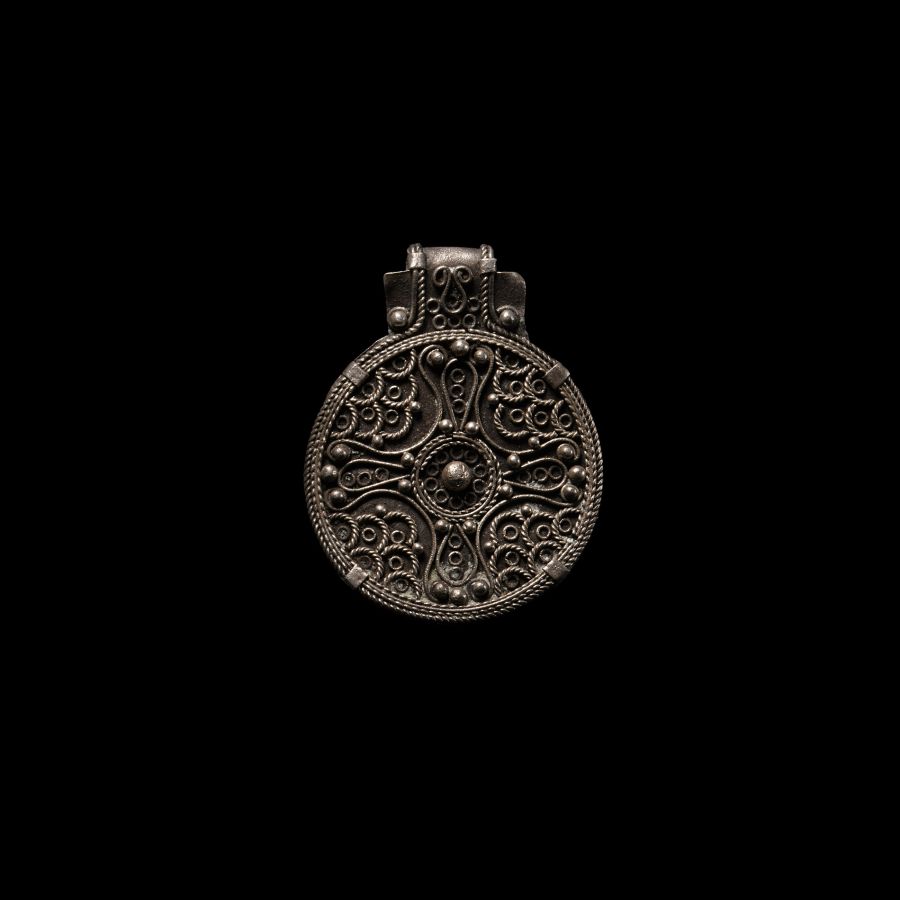
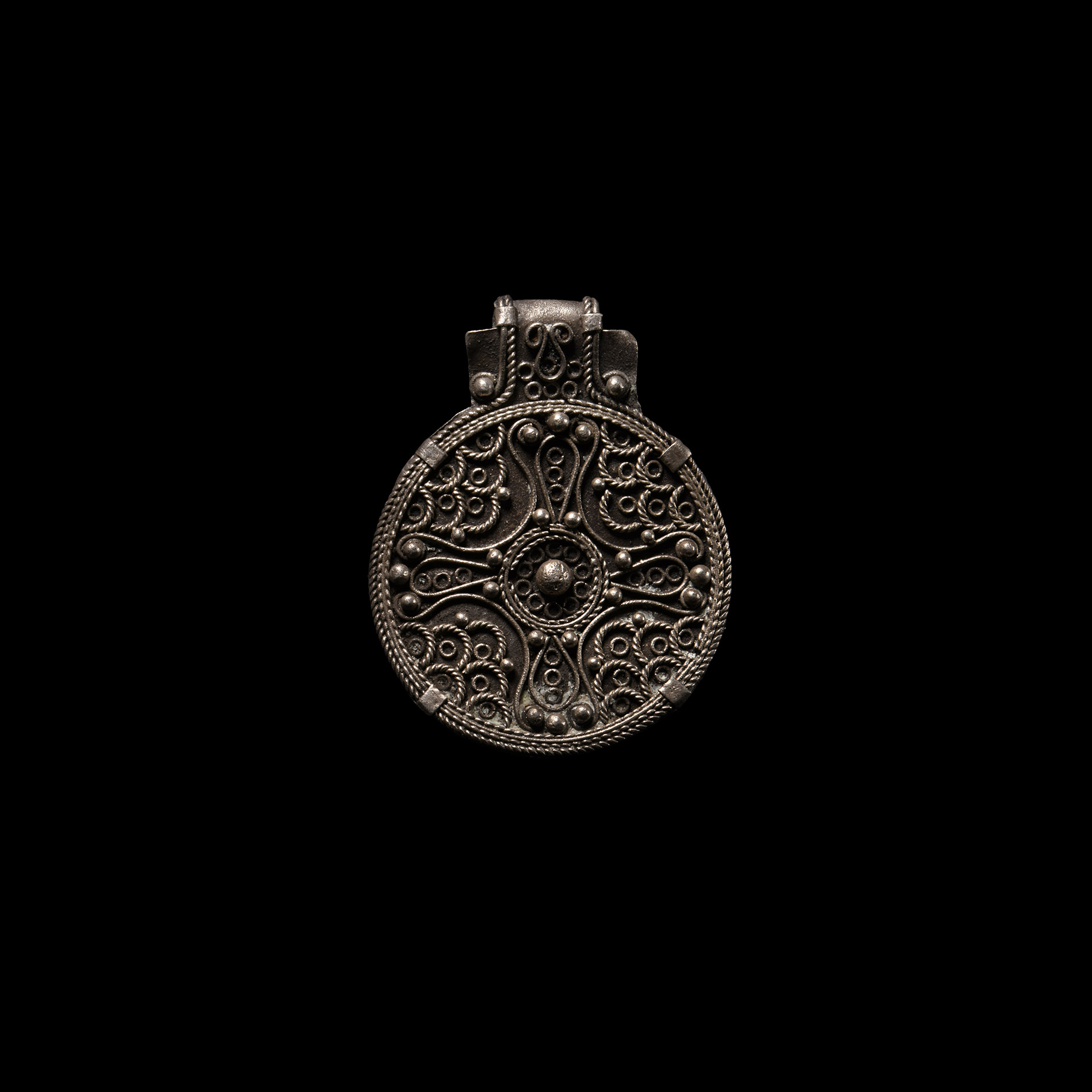
Viking Age Silver Filigree Pendant
9TH-11TH CENTURY A.D.
1 3/8 in. (3.52 grams, 34 mm).
Disc pendant with integral suspension loop, applied granules and filigree rings and loops. [No Reserve]
ProvenancePrivate collection formed in Europe in the 1980s.
Westminster collection, central London, UK.
Cf. Arbman, H., Birka I: Die Gräber, Uppsala, 1940, pl.98(11).
CONDITIONTimeLine Auctions follows a vetting process to ensure the authenticity and legality of all items, reinforcing our commitment to integrity and responsible trading. Each antiquity, antique, and coin lot undergoes thorough examination by a vetting committee of at least ten external specialists, professional trade association members, scientists, and archaeologists: Our Vetting Process
AUCTIONS:
TimeLine is a leading auction house specialising in antiquities, ancient art, collectables, natural history, coins, medals, and books. Our auctions offer museums, collectors, historians, and enthusiasts the opportunity to acquire unique and historically significant pieces.
-
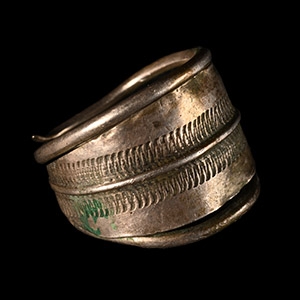
Viking Silver Ring with Engraved Design
9th-12th century A.D.Sold for (Inc. bp): £176
Composed of a coiled body with expanded central section decorated with a raised medial rib and punched zigzags above and below. 4.50 grams, 20.48 mm overall, 17.10 mm internal diameter (approximate size British K 1/2, USA 5 1/2, Europe 10.58, Japan 10)
From the collection of a North American gentleman, formed in the 1990s. -
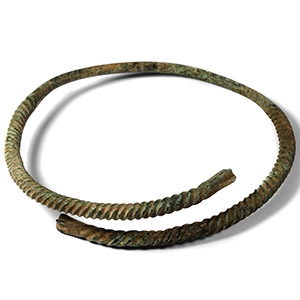
Pre-Viking Bronze Twisted Torc
Circa 8th century A.D.Sold for (Inc. bp): £117
Composed of overlapping arms and cruciform-section terminals. 265 grams, 17 cm
From the collection of a North American gentleman, formed in the 1990s. -
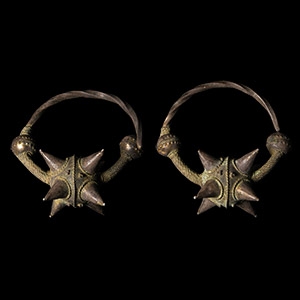
Viking Period Rus Silver Temple Earring Pair
10th-12th century A.D.Sold for (Inc. bp): £338
Each composed of a decoratively twisted upper hoop, bulbous collars and a large central bulb with projecting cones and granules. 30 grams total, 55-57 mm
From the collection of a North American gentleman, formed in the 1990s.
This style of earring was typical among Slavic women in the 8th-12th centuries, an imitation of Eastern Roman models. Examples have been found in Poland, Czech Republic, and Slovakia, and with similar decoration in Belarus. Such rings were also worn as part of head-dresses, in which context they are known as ‘temple rings’ because they were worn by women near the temples. They were usually made of base metals, but some silver and gold examples also survive. Different tribes had their own designs, which were often threaded onto a cord, forming part of a head-dress, or woven directly into braids of hair.
