
Loading, please wait...
LOT 1634
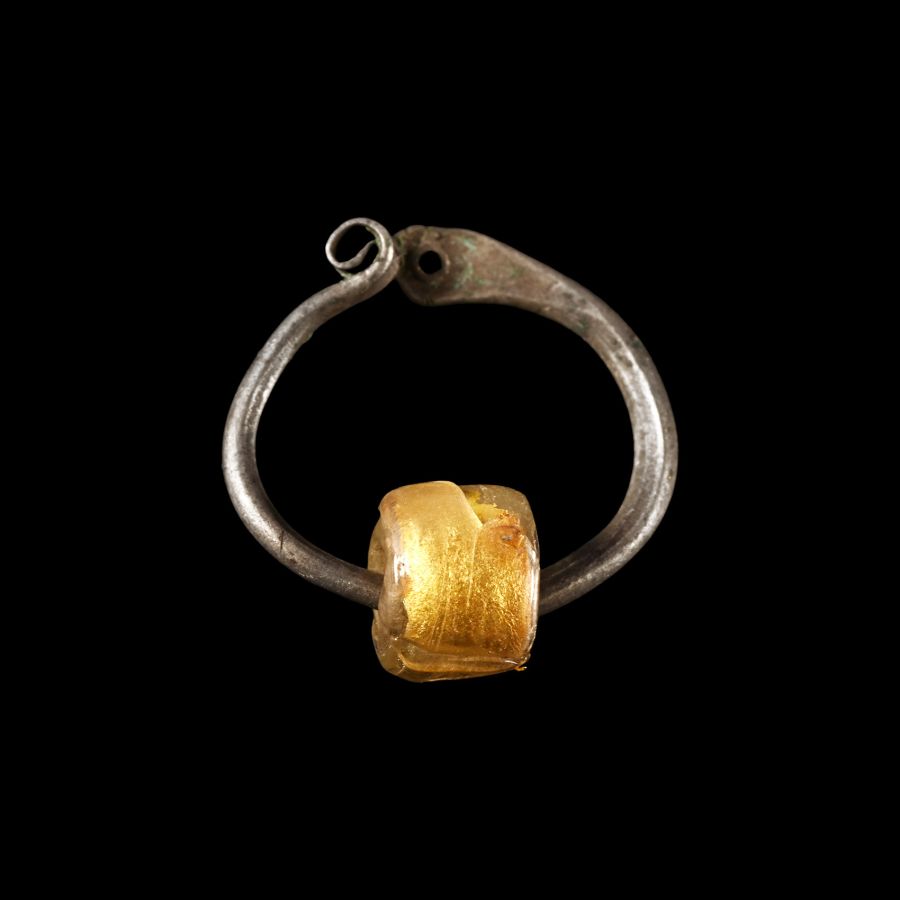
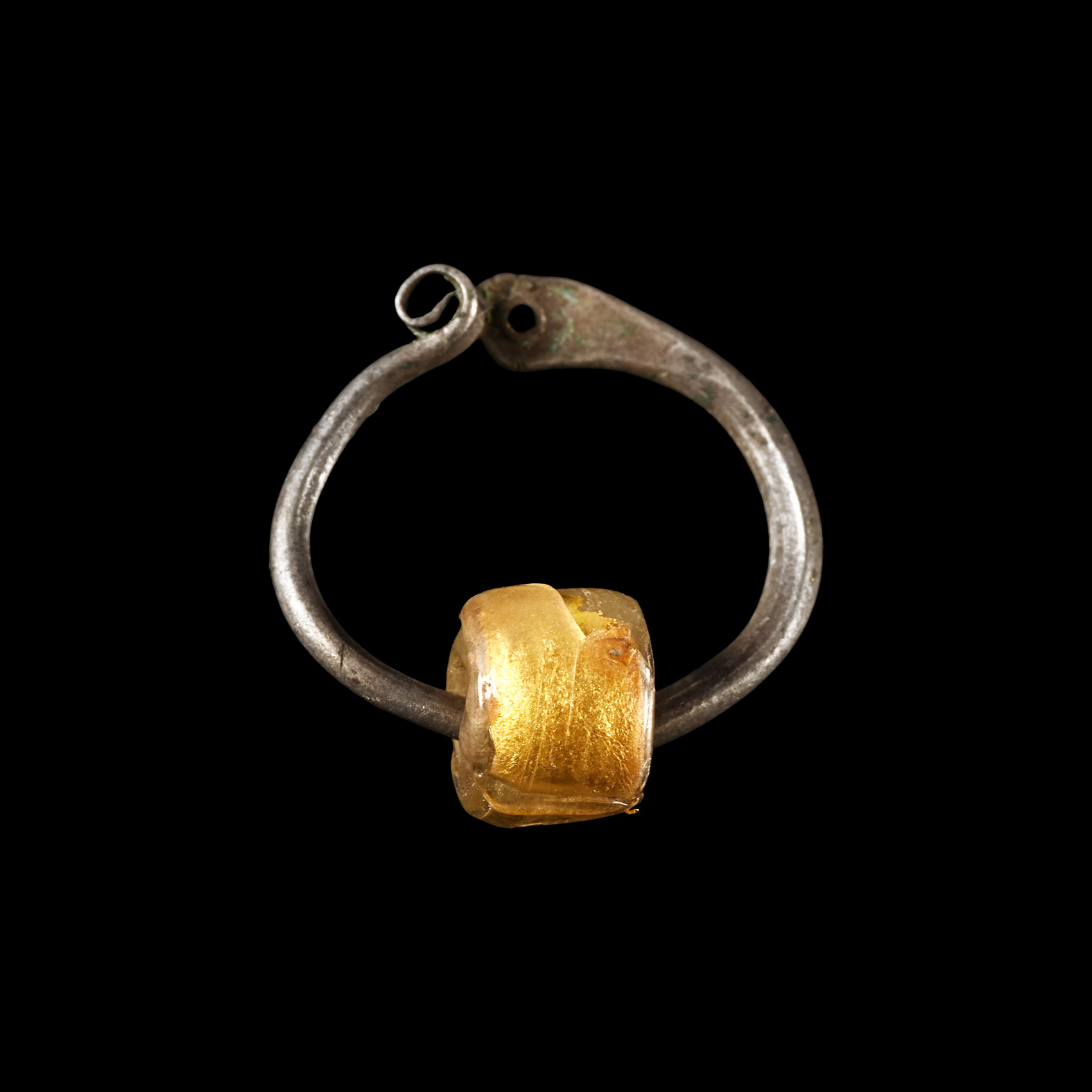
Viking Age Silver Earring with Bead
9TH-11TH CENTURY A.D.
5/8 in. (0.97 grams, 17 mm).
The carinated silver hoop with one flattened and pierced terminal and one coiled; free-running gold-in-glass bead. [No Reserve]
ProvenancePrivate collection formed in Europe in the 1980s.
Westminster collection, central London, UK.
TimeLine Auctions follows a vetting process to ensure the authenticity and legality of all items, reinforcing our commitment to integrity and responsible trading. Each antiquity, antique, and coin lot undergoes thorough examination by a vetting committee of at least ten external specialists, professional trade association members, scientists, and archaeologists: Our Vetting Process
AUCTIONS:
TimeLine is a leading auction house specialising in antiquities, ancient art, collectables, natural history, coins, medals, and books. Our auctions offer museums, collectors, historians, and enthusiasts the opportunity to acquire unique and historically significant pieces.
-
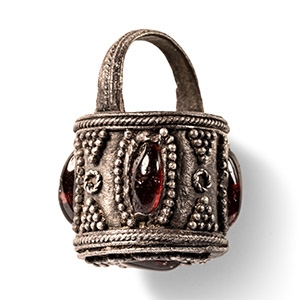
Pre Viking Scandinavian Silver Aroma Bucket Pendant with garnets
Circa 4th-7th century A.D.Sold for (Inc. bp): £546
With braided wire handle, applied wire bands to the rim, granulation to the sidewall and base, five cells each set with a cabochon garnet. 3.02 grams, 19 mm
Private collection formed in Europe in the 1980s. Westminster collection, central London, UK.
Pendants in the form of miniature buckets have been found in a number of pagan Anglo-Saxon and Viking contexts and are generally made of bronze or iron, with gold examples being rare; three gold examples were found with the hoard from Hoen, Norway. Bronze bucket amulets have been found at Driffield in Yorkshire, and Vimose bog in Denmark, among other places. In form they represent wooden buckets bound with bronze or iron bands which have been found in Anglo-Saxon and Viking graves and are believed to have held mead or ale and were used to replenish the cups from which warriors drank. As amulets they probably represent the ecstatic power of alcoholic drink and the role of women as the dispensers of these precious beverages. -
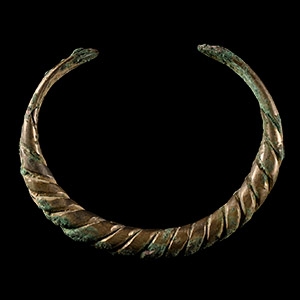
Viking Age Twisted Bronze Bracelet
Circa 10th-12th century A.D.Sold for (Inc. bp): £111
Formed as a twisted tapering bar with tongue-shaped finials, each with a median split and incised hatching. 50.45 grams, 72.39 mm
Private European collection formed before 2000. UK art market. Property of an Essex gentleman. -
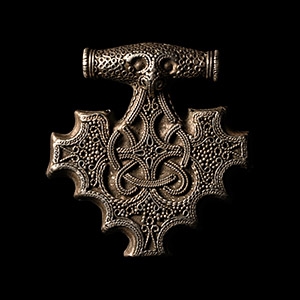
Viking Age Scandinavian Silver Filigree Tau Cross Pendant
Circa 10th-12th century A.D.Sold for (Inc. bp): £3,900
With scooped outline to the body, transverse suspension bar; applied filigree and granule detailing, large 'eyes' flanking the median panel with looped interlace detailing; cleaned and polished. 7.5 grams, 39 mm
Private collection formed in Europe in the 1980s. Westminster collection, central London, UK. This lot has been checked against the Interpol Database of stolen works of art and is accompanied by search certificate no.12070-212342.
This piece bears many similarities to a hoard found on the island of Hiddensee in the Baltic Sea. The hoard consisted of a classic Borre-style disc brooch, a neck ring of four twisted rods and a necklace of ten stylised cruciform pendants, such as this example. The items constitute a single set of jewellery and seem to be a gift from a Danish nobleman intended for presentation to a Slav woman of high standing. They were buried for safety en route during some local emergency that resulted in the items not being claimed. Evidence for the production of pendants in the Hiddensee style is provided by the remarkable find of forty-one bronze dies, as used for the manufacture of the pressed sheets onto which the filigree wires and granules were soldered. These dies were kept together in a leather bag, which had been dropped in the harbour at Hedeby.
