
Loading, please wait...
LOT 1590
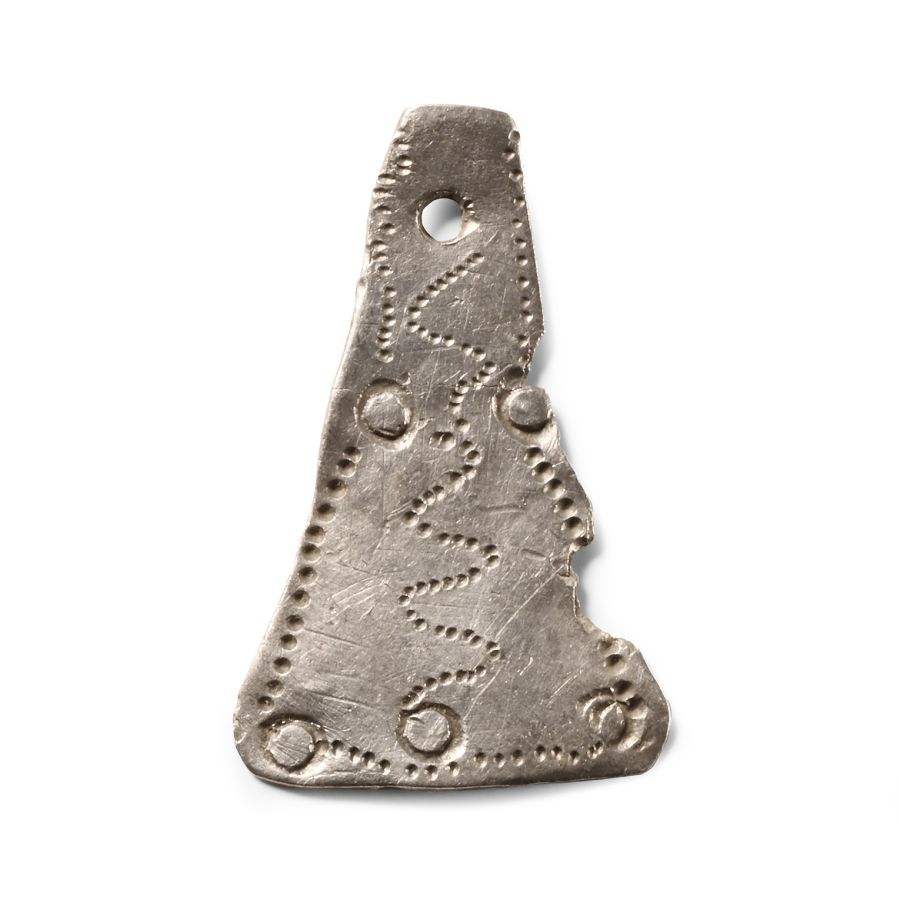
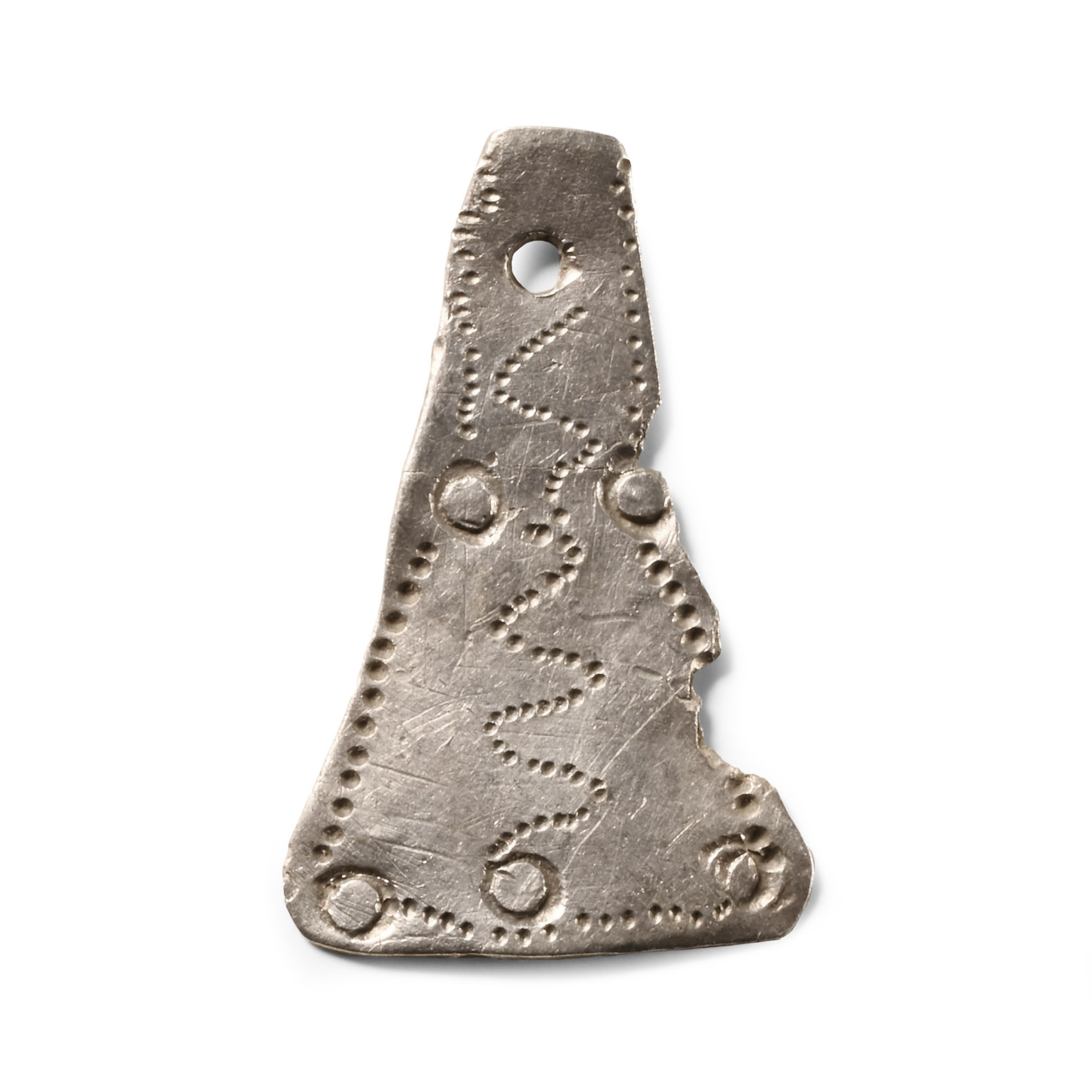
Viking Age Silver Decorated Axe-Shaped Pendant
CIRCA 9TH-11TH CENTURY A.D.
1 1/4 in. (1.95 grams, 30 mm).
Trapezoidal in plan with punched pellets and pointillé border, central serpent motif. [No Reserve]
ProvenanceProperty of the vendor's grandfather, thence by family descent, circa 1985.
From the private collection of a New York, USA gentleman.
TimeLine Auctions follows a vetting process to ensure the authenticity and legality of all items, reinforcing our commitment to integrity and responsible trading. Each antiquity, antique, and coin lot undergoes thorough examination by a vetting committee of at least ten external specialists, professional trade association members, scientists, and archaeologists: Our Vetting Process
AUCTIONS:
TimeLine is a leading auction house specialising in antiquities, ancient art, collectables, natural history, coins, medals, and books. Our auctions offer museums, collectors, historians, and enthusiasts the opportunity to acquire unique and historically significant pieces.
-
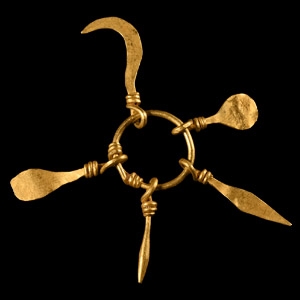
Viking Age Gold Ring with Five Pendants
Circa 8th-10th century A.D.Sold for (Inc. bp): £1,040
Wire ring with ends wound around the shank; miniature tool pendants including a sickle, mirror, dagger, spike and skillet. 2.81 grams, 30 mm
Acquired on the London art market in the late 1980s-1990s. From the family collection of an East London, UK, gentleman. -
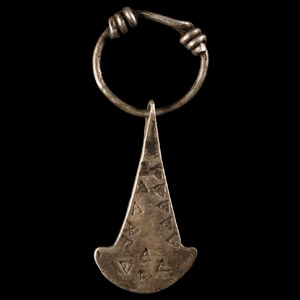
Viking Age Silver Axehead Pendant
Circa 8th-11th century A.D.Sold for (Inc. bp): £286
Tapering axehead pendant on a ring with coiled ends, triangular punched detailing. 3.75 grams, 44 mm
Acquired on the London art market in the late 1980s-1990s. From the family collection of an East London, UK, gentleman. -
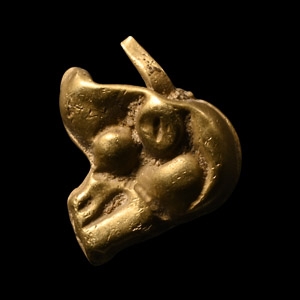
Viking Period Gold Animal-Head Pendant
Circa 9th-11th century A.D.Sold for (Inc. bp): £91
Hollow-formed with repoussé detailing to both faces. 0.54 grams, 9 mm
From a late Japanese specialist collector, 1970-2000s.
