
Loading, please wait...
LOT 1450
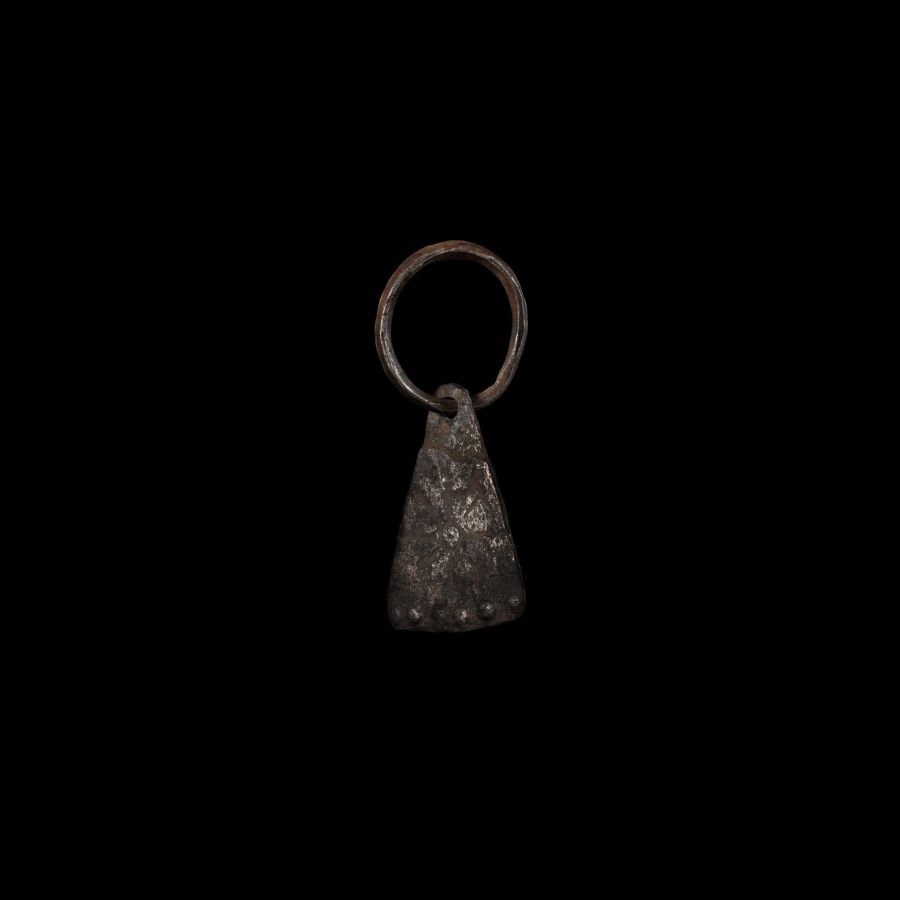
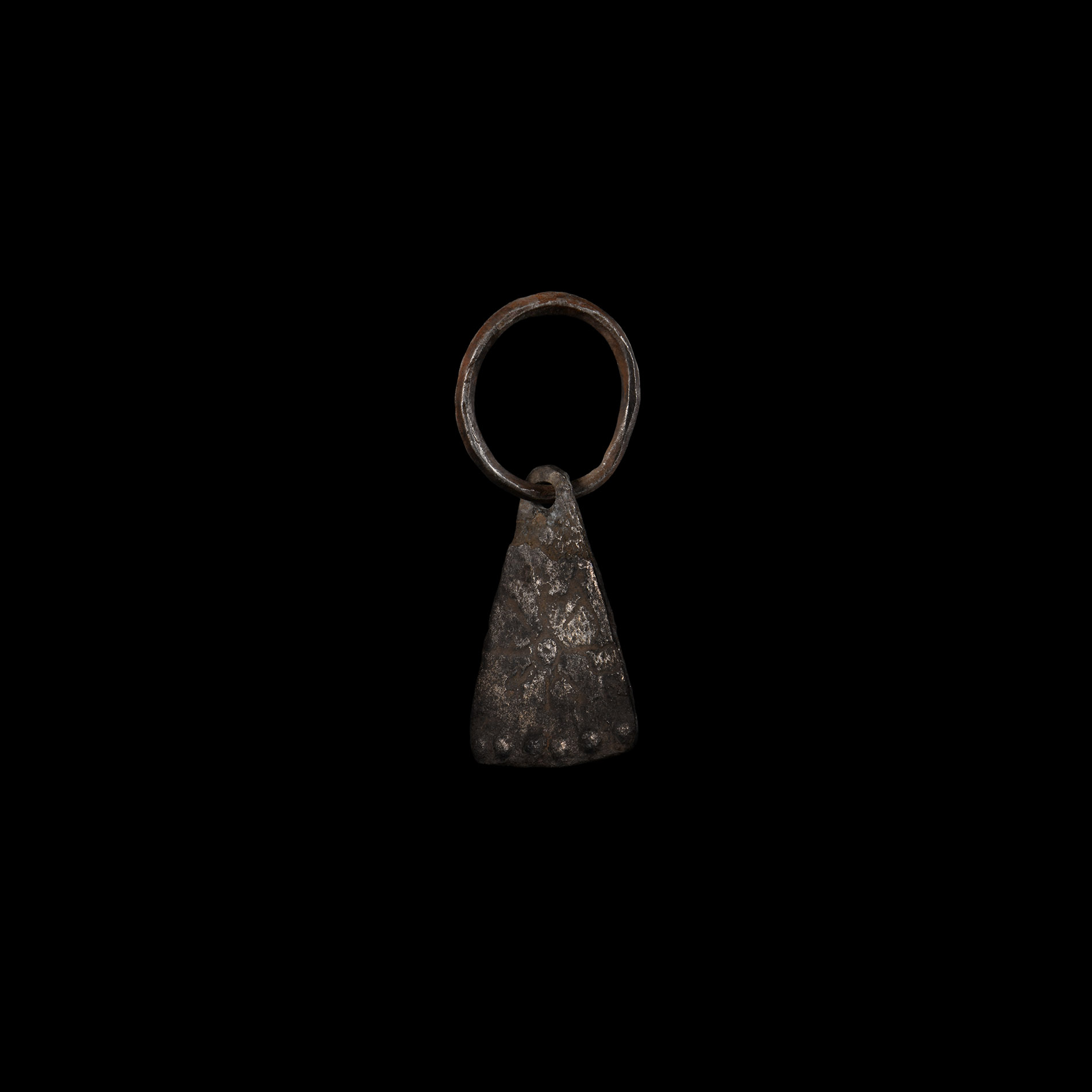
Viking Age Silver Axe Pendant
CIRCA 9TH-11TH CENTURY A.D.
1 1/2 in. (2.99 grams, 40 mm).
Composed of a free-running wedge-shaped head with sun burst to one face and repoussé pellets to the cutting edge, suspended on a slender carinated ring. [No Reserve]
ProvenanceEx UK collection since the 1990s.
CONDITIONTimeLine Auctions follows a vetting process to ensure the authenticity and legality of all items, reinforcing our commitment to integrity and responsible trading. Each antiquity, antique, and coin lot undergoes thorough examination by a vetting committee of at least ten external specialists, professional trade association members, scientists, and archaeologists: Our Vetting Process
AUCTIONS:
TimeLine is a leading auction house specialising in antiquities, ancient art, collectables, natural history, coins, medals, and books. Our auctions offer museums, collectors, historians, and enthusiasts the opportunity to acquire unique and historically significant pieces.
-
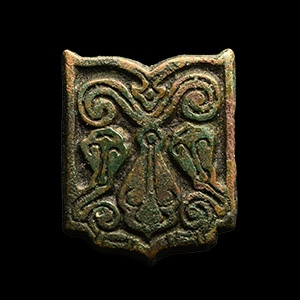
Viking Age Volga Bulgar Bronze Belt Mount
Late 10th century A.D.Sold for (Inc. bp): £59
Of polygonal shape, reserved stylised vegetal forms; attachment rivets to reverse. 8.7 grams, 32 mm
From the collection of a North American gentleman, formed in the 1990s.
Pentagonal strap mounts decorated with schematic plant ornaments, cast in bronze, characterised the population of Volga Bulgars, often in commercial relations with the Viking world. A belt-set with pentagonal and rectangular mounts decorated with plant ornaments, along with its strap end and buckle, were excavated by V.D. Sokolov in Slavic-Scandinavian graves in Russian territory. -
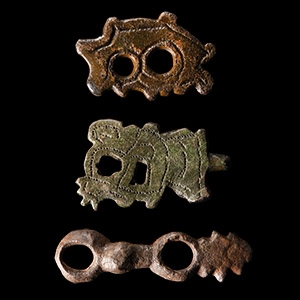
Viking Age Bronze Horse Harness Fitting Collection
11th century A.D.Sold for (Inc. bp): £20
Comprising a mixed group of cast flat-section Anglo-Scandinavian items: a D-section bar with two loops, balustered shank; a flat-section plaque with two round holes, linear border; a flat-section plaque with one rectangular and one irregular hole, linear borders and detailing. 81 grams total, 48-66 mm
Acquired in the 1970s. Ex property of a UK gentleman. -
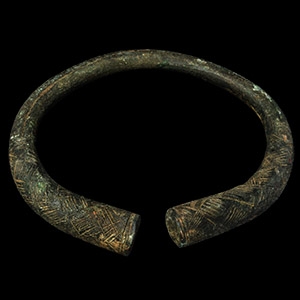
Viking Age Bronze Hatched Panel Bracelet with Trumpet Terminals
9th-11th century A.D.Sold for (Inc. bp): £124
Of penannular form, with a round-section body. 59 grams, 68 mm
From the collection of a North American gentleman, formed in the 1990s.
