
Loading, please wait...
LOT 1566
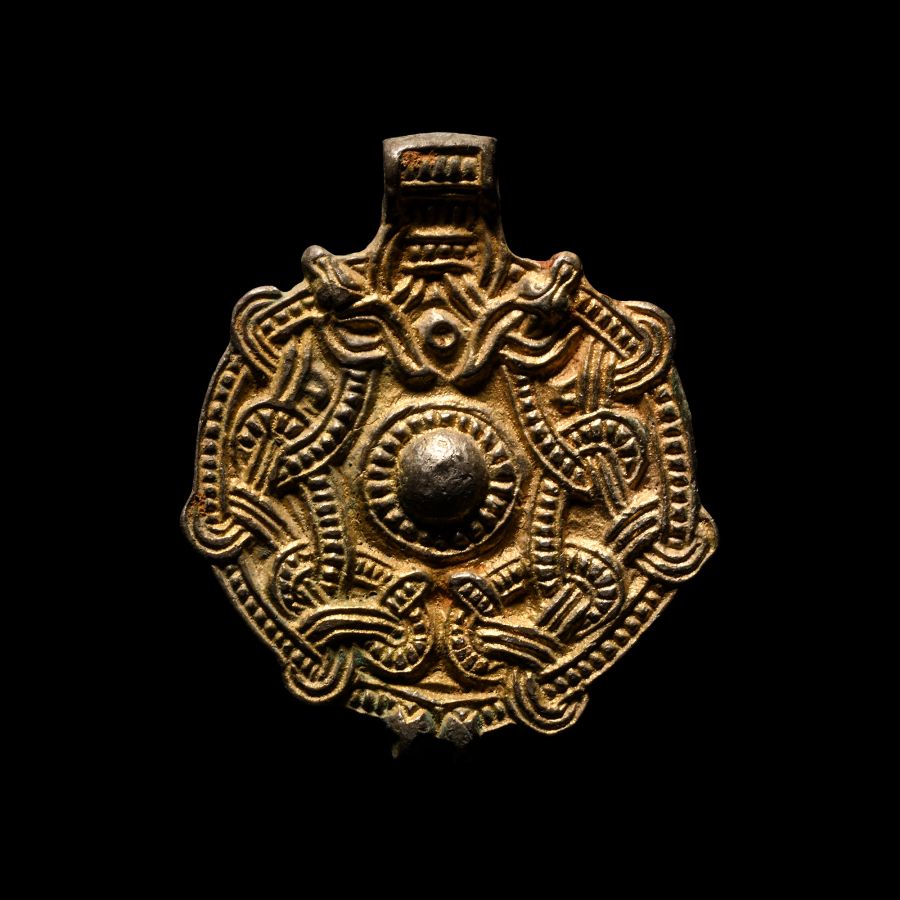
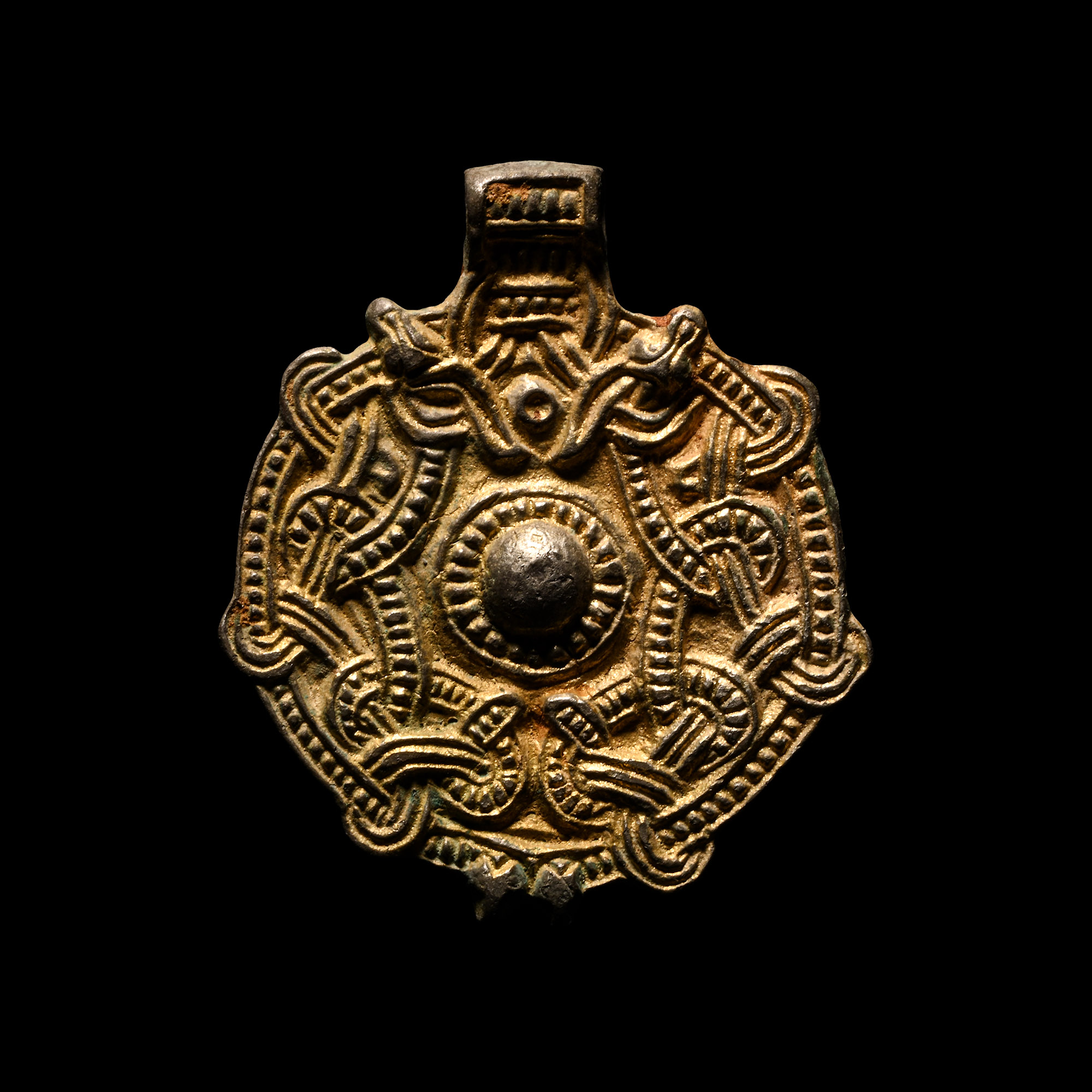
Viking Age Scandinavian Silver-Gilt Pendant with Interlaced Beasts
CIRCA 10TH CENTURY A.D.
1 5/8 in. (13.9 grams, 42 mm).
Discoid with integral loop; obverse with applied filigree Terslev ornament of three radiating looped knots and interstitial loops, boss to the centre. [No Reserve]
ProvenancePrivate collection formed in Europe in the 1980s.
Westminster collection, central London, UK.
Cf. Kershaw, J.F., Viking Identities. Scandinavian Jewellery in England, Oxford, 2013, pl.4, for type.
CONDITIONTimeLine Auctions follows a vetting process to ensure the authenticity and legality of all items, reinforcing our commitment to integrity and responsible trading. Each antiquity, antique, and coin lot undergoes thorough examination by a vetting committee of at least ten external specialists, professional trade association members, scientists, and archaeologists: Our Vetting Process
AUCTIONS:
TimeLine is a leading auction house specialising in antiquities, ancient art, collectables, natural history, coins, medals, and books. Our auctions offer museums, collectors, historians, and enthusiasts the opportunity to acquire unique and historically significant pieces.
LOT 1566
Viking Age Scandinavian Silver-Gilt Pendant with Interlaced Beasts
Sold for (Inc. bp): £780
-
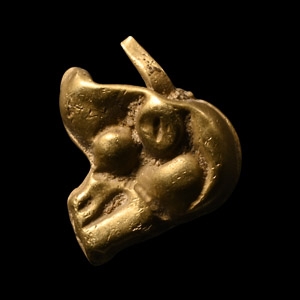
Viking Period Gold Animal-Head Pendant
Circa 9th-11th century A.D.Sold for (Inc. bp): £91
Hollow-formed with repoussé detailing to both faces. 0.54 grams, 9 mm
From a late Japanese specialist collector, 1970-2000s. -
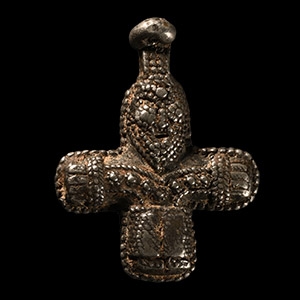
Viking White Metal Filigree Crucifix Pendant
8th-12th century ADEstimate: £1,200 - 1,700 (+bp*)
Opening Bid: £600
Depicting Christ bound by his wrists to the cross, wearing trousers; granulation to the body indicates a patterned shirt; beaded border around the perimeter of the cross; this lot bears close parallels with the ‘Birka Crucifix’ held by the Swedish History Museum but is not made from silver. 9.32 grams, 31 mm
Very fine condition, some wear. Rare.
Acquired on the London art market in the 2000s.
The Birka Crucifix pendant, unearthed from Birka grave 660 in Uppland, Sweden, is thought to be the oldest representation of Christ in the Nordic world and bears many similarities to this lot. The Swedish History Museum’s example was excavated from the grave of a wealthy female Christian convert; it is a filigree figure of Christ bound to the cross by his wrists, wearing trousers; this lot is a lower-relief white metal filigree crucifix with integral suspension loop, featuring a representation of head and face executed in the same shape and style as that of the Birka Crucifix figure. -
.jpg)
Viking Age Silver Earring with Bead
9th-11th century A.D.Sold for (Inc. bp): £111
The carinated silver hoop with one flattened and pierced terminal and one coiled; free-running gold-in-glass bead. 0.97 grams, 17 mm
Private collection formed in Europe in the 1980s. Westminster collection, central London, UK.
