
Loading, please wait...
LOT 0325
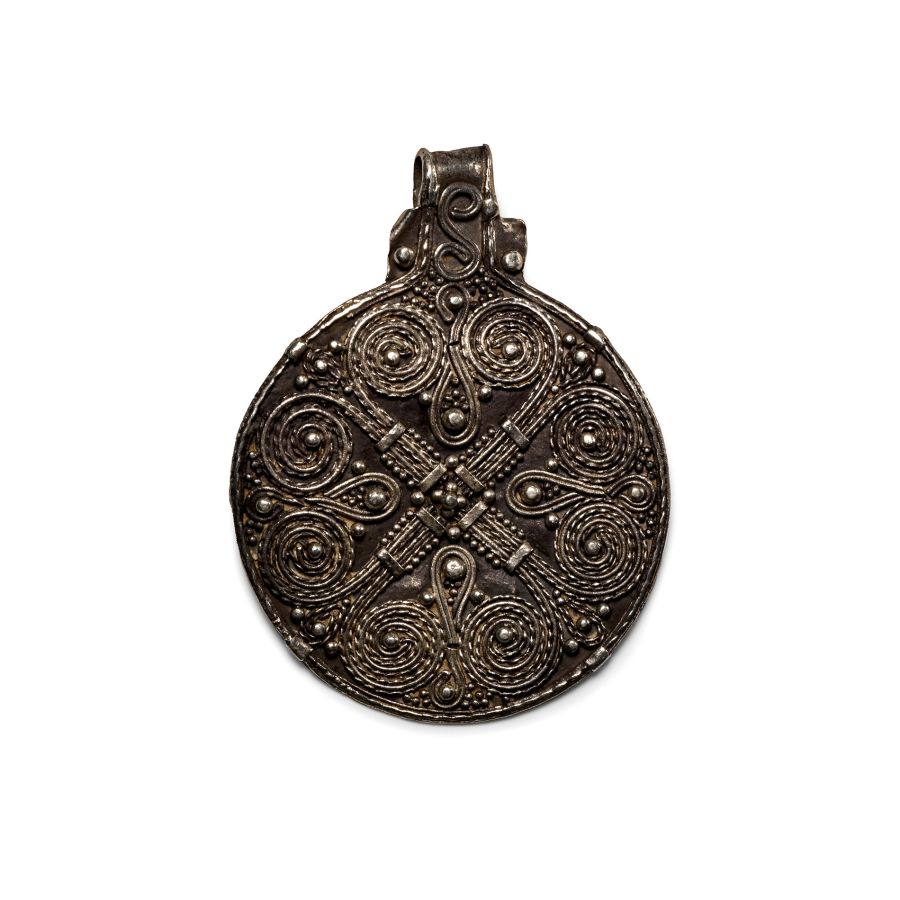
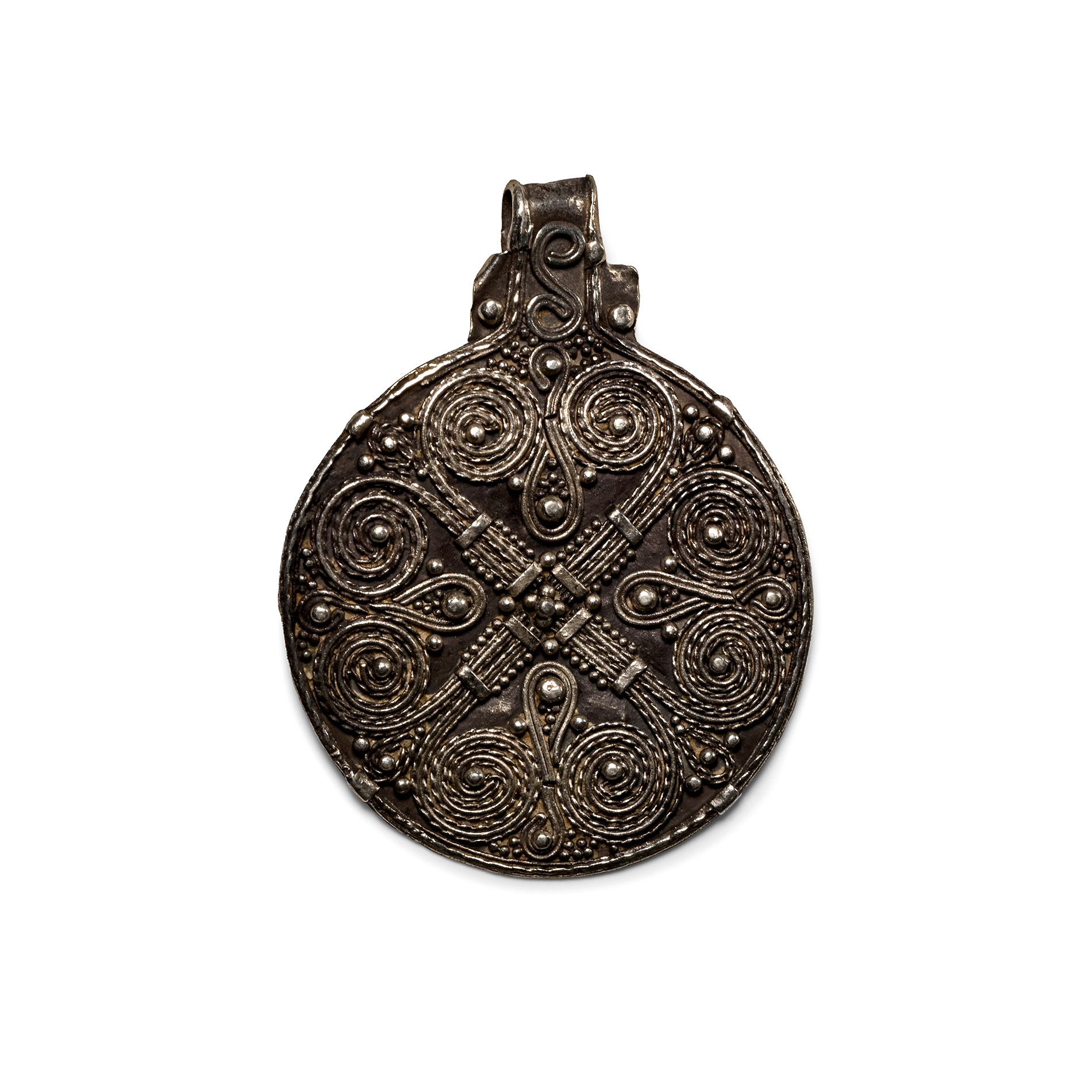
Viking Age Scandinavian Silver Filigree Pendant
CIRCA 9TH-11TH CENTURY A.D.
1 3/4 in. (5.68 grams, 44 mm).
Discoid plate with integral suspension loop secured at the reverse, symmetrical cruciform design of applied silver filigree coils and granule ornament. [No Reserve]
ProvenancePrivate collection formed in Europe in the 1980s.
Westminster collection, central London, UK.
Cf. Kershaw, J.F., Viking Identities. Scandinavian Jewellery in England, Oxford, 2013, pl.5, for type.
CONDITIONTimeLine Auctions follows a vetting process to ensure the authenticity and legality of all items, reinforcing our commitment to integrity and responsible trading. Each antiquity, antique, and coin lot undergoes thorough examination by a vetting committee of at least ten external specialists, professional trade association members, scientists, and archaeologists: Our Vetting Process
AUCTIONS:
TimeLine is a leading auction house specialising in antiquities, ancient art, collectables, natural history, coins, medals, and books. Our auctions offer museums, collectors, historians, and enthusiasts the opportunity to acquire unique and historically significant pieces.
-
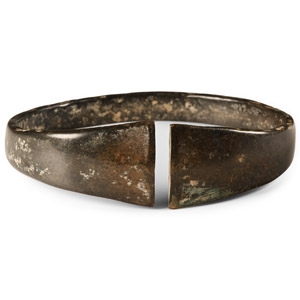
Viking Age Bronze Bracelet with Triangular Terminals
9th-11th century A.D.Sold for (Inc. bp): £39
Rectangular-section shank and flange finials. 36.7 grams, 62 mm
Private collection, Arundel, West Sussex, UK, 1975-late 1990s. -
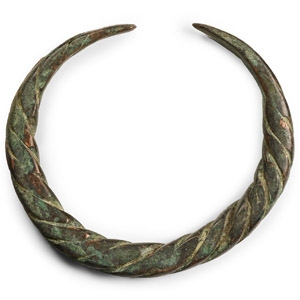
Viking Age Bronze Twisted Bracelet
9th-11th century A.D.Sold for (Inc. bp): £85
Twisted rods forming a penannular shank with hammered finials. 40.6 grams, 64 mm
Private collection, Arundel, West Sussex, UK, 1975-late 1990s. -
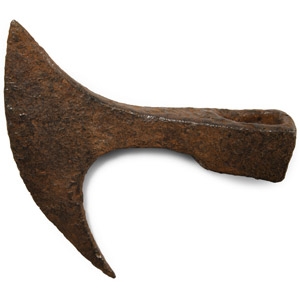
Viking Age Iron Broad Axehead
Circa 9th-11th century A.D.Sold for (Inc. bp): £286
With broad curved blade and pointed chin, broad neck, deep socket with square reverse. 222 grams, 13 cm
From the collection of a Californian, USA, gentleman, dating back to the late 1960s.
