
Loading, please wait...
LOT 0387
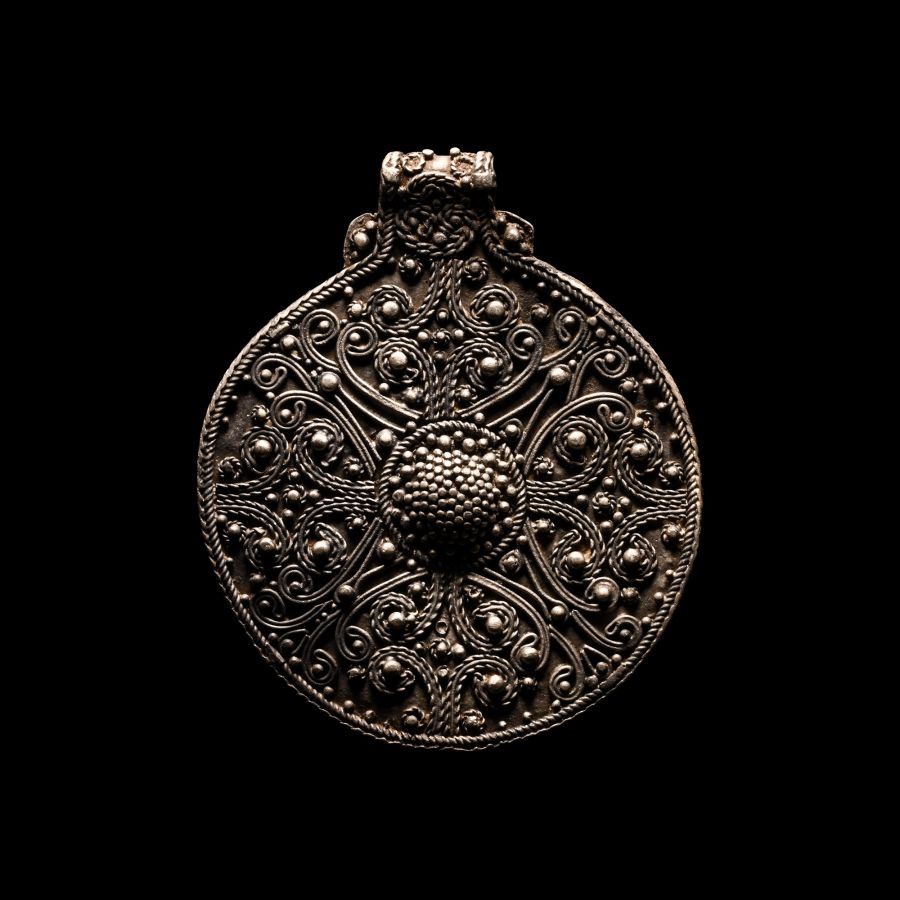
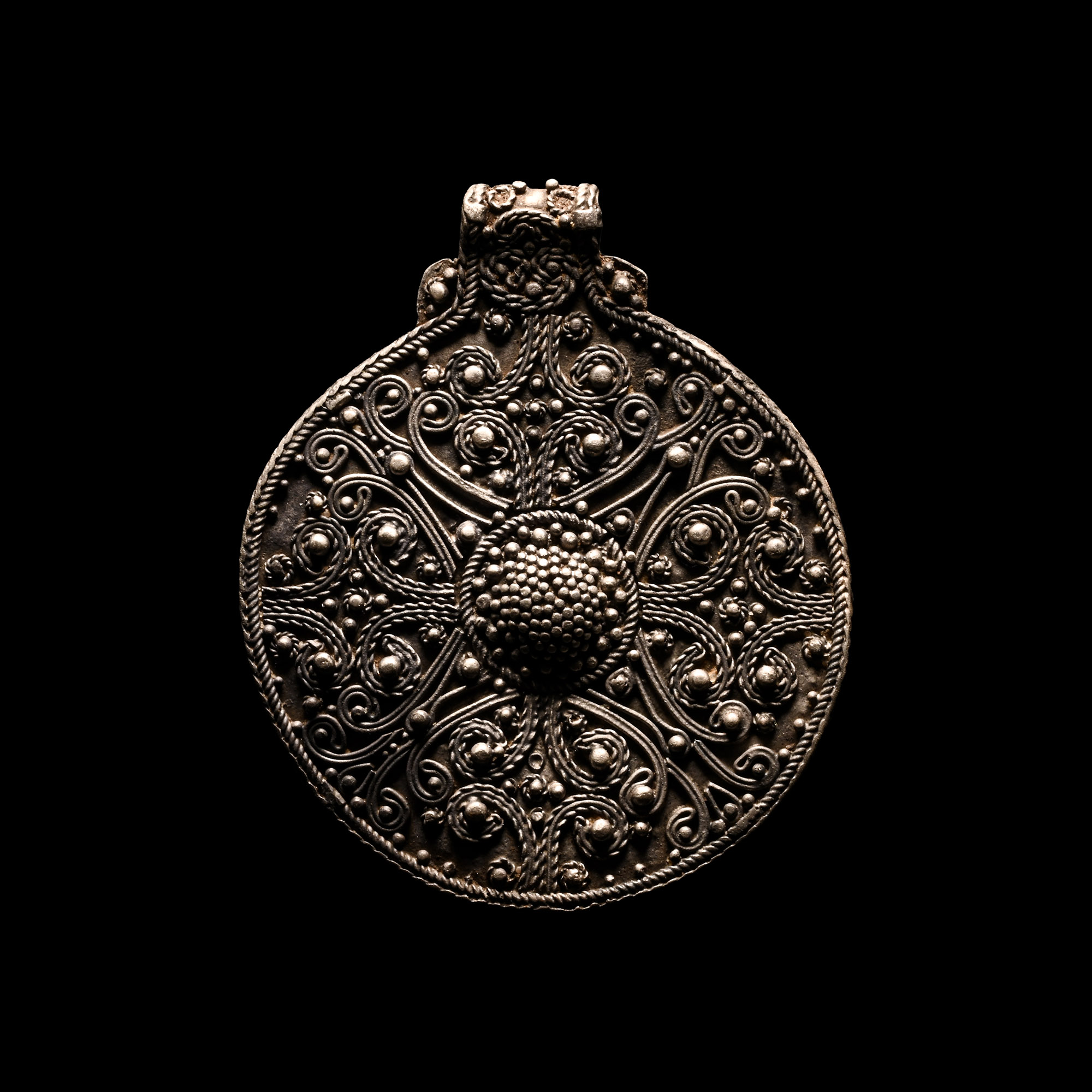
Viking Age Scandinavian Silver Filigree Pendant
CIRCA 9TH-11TH CENTURY A.D.
1 3/4 in. (7.17 grams, 46 mm).
Discoid plate with integral suspension loop secured at the reverse, symmetrical design of applied silver granules and silver wire with granulated boss to the centre and radiating arms; braided wire rim. [No Reserve]
ProvenancePrivate collection formed in Europe in the 1980s.
Westminster collection, central London, UK.
Cf. Kershaw, J.F., Viking Identities. Scandinavian Jewellery in England, Oxford, 2013, pl.5, for type.
CONDITIONTimeLine Auctions follows a vetting process to ensure the authenticity and legality of all items, reinforcing our commitment to integrity and responsible trading. Each antiquity, antique, and coin lot undergoes thorough examination by a vetting committee of at least ten external specialists, professional trade association members, scientists, and archaeologists: Our Vetting Process
AUCTIONS:
TimeLine is a leading auction house specialising in antiquities, ancient art, collectables, natural history, coins, medals, and books. Our auctions offer museums, collectors, historians, and enthusiasts the opportunity to acquire unique and historically significant pieces.
-
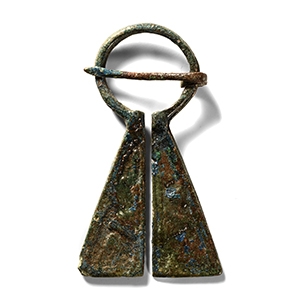
Viking Inspired Bronze Omega Penannular Brooch
12th-14th century A.D.Sold for (Inc. bp): £46
A flat-section Mordvinian type brooch comprising a penannular band and two trapezoidal plates; the tongue round-section with flat scroll around the band; the plates each with raised pellets. 12.5 grams, 63 mm
Private European collection formed before 2000. UK art market. Property of an Essex gentleman. -
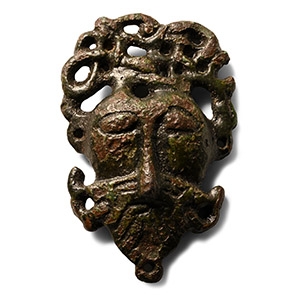
'The Ferryhill' Anglo-Scandinavian Viking Bronze Three-Dimensional Urnes Stirrup-Type Mount with Head of Odin
11th century A.D.Sold for (Inc. bp): £9,100
A bowed anthropomorphic mount in the form of the face of Odin, with oval right and damaged left eye, beard and hair raised to form a convex shape, rounded cheeks, a triangular nose and a beard, moustache with lateral protrusion, the hair openwork and formed of entwined linear elements, five rivet holes present. 27.39 grams, 50.66 mm
Found by Steve Aldred whilst searching with a metal detector near Ferryhill, County Durham, UK, on Tuesday 8th March 2022. Recorded with the British Museum's Portable Antiquities Scheme (PAS) and subsequently returned to the finder. Accompanied by a copy of the British Museum's Portable Antiquities Scheme (PAS) report no.DUR-834DAB, where this object is described as: 'a find of note and has been designated: of National importance'. Accompanied by a copy of the article about the circumstances surrounding the finding published in the February 2024 issue of Treasure Hunting Magazine. Accompanied by a copy of a photograph taken of the object when it was found on 8th March 2022. This lot has been checked against the Interpol Database of stolen works of art and is accompanied by search certificate no.12074-214165.
Comparison has been made with stirrup-strap mounts of Williams (1997) Class A, Type 9, and especially with variants of the form (see HAMP-B7C312). Although relatively few of these mounts have been found, and their distribution is spread across the country, there is an arguable focus on Yorkshire. Commenting on a 2007 Isle of Wight example (IOW-4FA904), Barry Ager (then of the British Museum) suggested a connection with horse-riding equipment, and in particular drew comparisons with a type of face-mask mount on the Danish harness-bow from Søllested (see Wilson and Klindt-Jensen, pl. 37). -
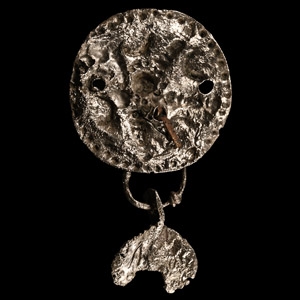
Viking Age Silver Mount with Lunar Pendant
Circa 9th-11th century A.D.Sold for (Inc. bp): £98
Discoid mount with repoussé animal design, pierced for attachment of a crescent dangle. 2.65 grams, 45 mm
Property of the vendor's grandfather, thence by family descent, circa 1985. From the private collection of a New York, USA gentleman.
