
Loading, please wait...
LOT 0344
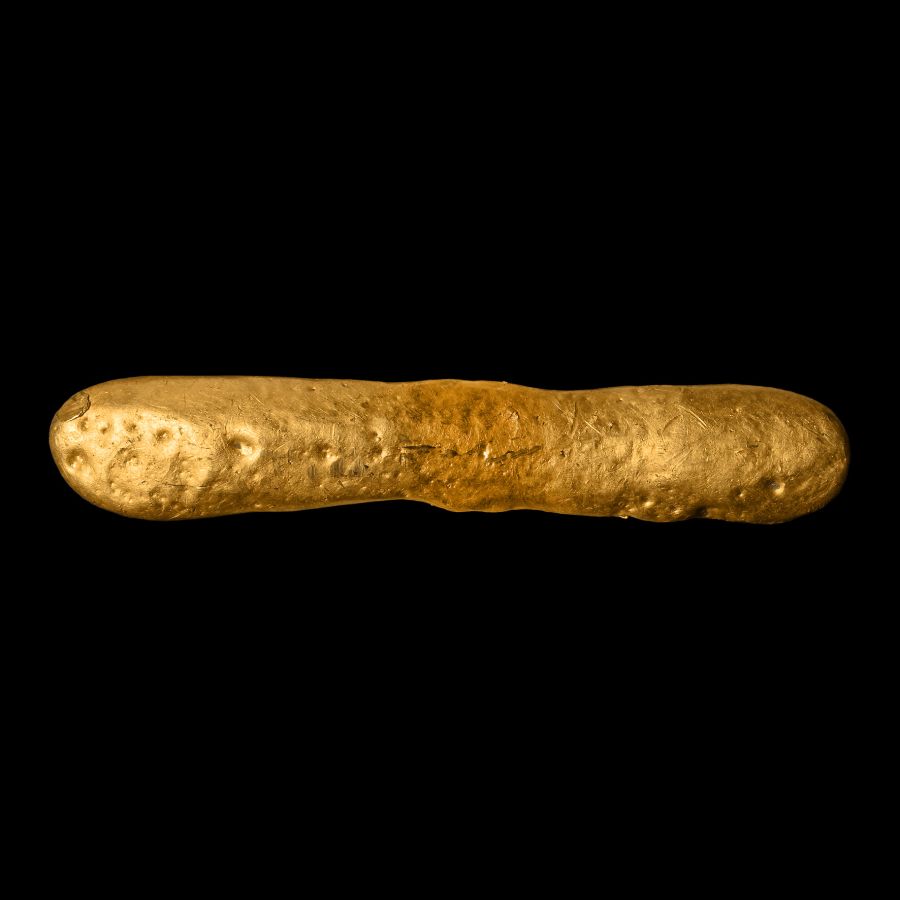
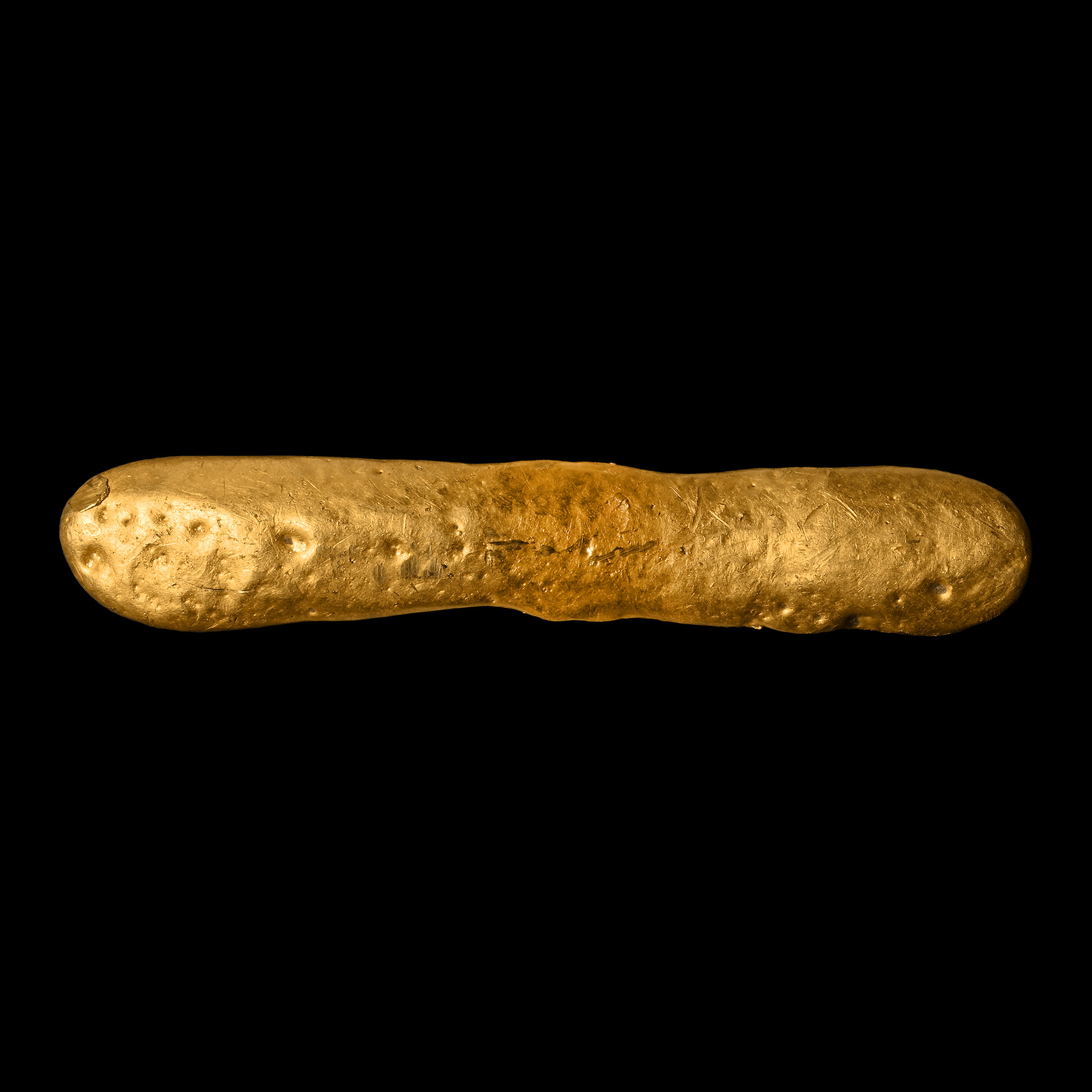
Viking Age or Earlier Solid Gold Bar Ingot
2ND MILLENNIUM B.C.-11TH CENTURY A.D.
2 5/8 in. (36.74 grams, 67 mm).
Sub-rectangular in plan with rounded ends, with the remains of a spur towards one end indicating the pouring point of the molten metal into the mould.
ProvenanceFound whilst searching with a metal detector near Eastchurch, Swale, Kent, UK, on Sunday 1st September 2019.
Accompanied by a copy of the report on find of potential Treasure for HM Coroner with reference no.2020 T3.
Accompanied by a copy of the British Museum's Portable Antiquities Scheme (PAS) report no.KENT-B43CF3.
Although listed as Early Medieval (i.e. Viking) in the coroner's report, this ingot could date from as early as the Bronze Age. The gold purity is near to 21 carat with an elemental breakdown of: Au 87.9, Ag 11.1, Sn 0.2 and traces of other elements.
CONDITIONTimeLine Auctions follows a vetting process to ensure the authenticity and legality of all items, reinforcing our commitment to integrity and responsible trading. Each antiquity, antique, and coin lot undergoes thorough examination by a vetting committee of at least ten external specialists, professional trade association members, scientists, and archaeologists: Our Vetting Process
AUCTIONS:
TimeLine is a leading auction house specialising in antiquities, ancient art, collectables, natural history, coins, medals, and books. Our auctions offer museums, collectors, historians, and enthusiasts the opportunity to acquire unique and historically significant pieces.
-
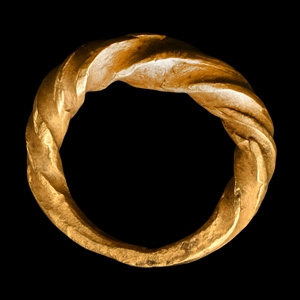
Viking Age Twisted Gold Ring
Circa 10th century A.D.Estimate: £1,800 - 2,400 (+bp*)
Opening Bid: £900
The decoratively twisted bar with a tapering, circular cross-section and butted ends fused at the underside. 6.47 grams, 20.94 mm overall, 14.41 mm internal diameter (approximate size British F, USA 2 3/4, Europe 3.67, Japan 3)
Acquired on the London art market, 1980s-1990s. -
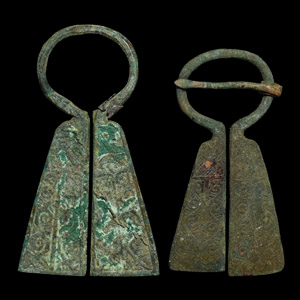
Viking Inspired Mordvinian Bronze Omega Brooch Pair
12th-14th century A.D.Sold for (Inc. bp): £46
Each with scroll motifs to the plaques. 21 grams total, 56-61 mm
Fine condition.
Acquired 1990-2000. From an old Suffolk collection. -
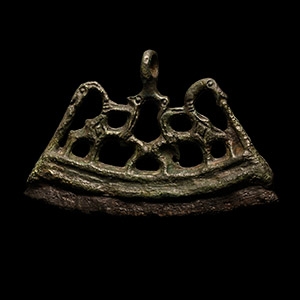
Viking Age Fire Steel with Bronze Handle with Horse and Riders
10th-11th century A.D.Sold for (Inc. bp): £130
Shown addorsed in a stylised openwork design, central suspension loop and iron steel with crescentic profile. 27 grams, 66 mm
From the collection of a North American gentleman, formed in the 1990s.
