
Loading, please wait...
LOT 1428
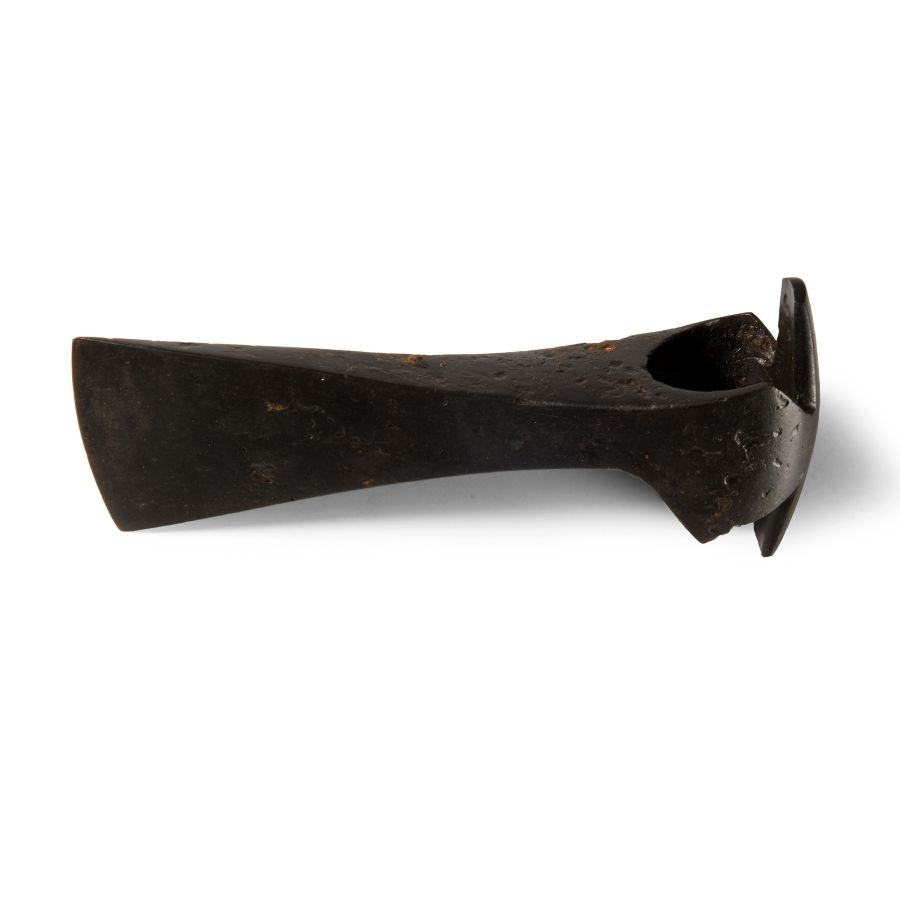
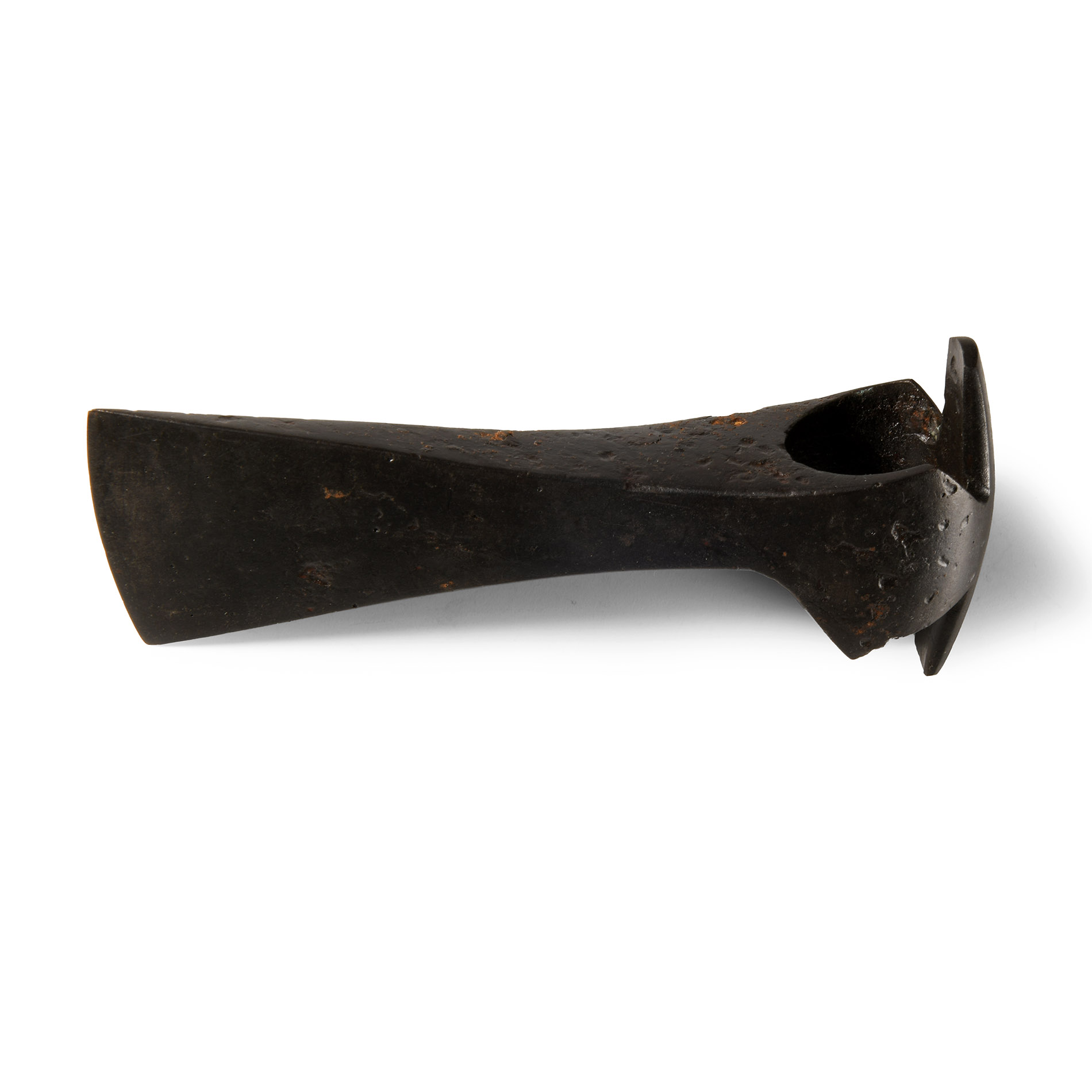
Viking Age Narrow Iron Axehead
CIRCA 9TH-11TH CENTURY A.D.
5 in. (229 grams, 12.6 cm).
With triangular-section long blade extending to a socket with small lateral flanges and rectangular extension to the rear.
ProvenanceProperty of London businessman, from his grandfather's collection after WW2; thence by family descent.
From the private collection of John Lawton, Surrey, UK.
Accompanied by a copy of a previous catalogue information page.
Cf. Sedov, B.B., Finno-Ugri i Balti v Epokhi Srednevekovija, Moscow, 1987, pl.V, item 23.
CONDITIONTimeLine Auctions follows a vetting process to ensure the authenticity and legality of all items, reinforcing our commitment to integrity and responsible trading. Each antiquity, antique, and coin lot undergoes thorough examination by a vetting committee of at least ten external specialists, professional trade association members, scientists, and archaeologists: Our Vetting Process
AUCTIONS:
TimeLine is a leading auction house specialising in antiquities, ancient art, collectables, natural history, coins, medals, and books. Our auctions offer museums, collectors, historians, and enthusiasts the opportunity to acquire unique and historically significant pieces.
-
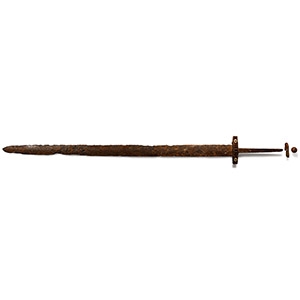
Migration Period Iron Sword with Garnet and Shell Cross Guard with Gold and Amber Sword Bead
5th-6th century A.D.Sold for (Inc. bp): £6,240
Eastern Roman or Germanic cavalry spatha with a parallel-sided blade and broad pointed tip, long tang; the trapezoidal lower guard with a gilt chip-carved plate divided in segments set with garnets to one side, each end with a shell disc set with a central garnet cabochon; accompanied by a strap from the scabbard and an amber sword bead with a beaded gold setting with a garnet cabochon. 970 grams total, 2-100 cm
From the private collection of a London gentleman, from his grandfather's collection formed before the early 1970s. Accompanied by an academic report by Dr Raffaele D’Amato. This lot has been checked against the Interpol Database of stolen works of art and is accompanied by search certificate number no.12012-213600.
The western spatha of the 4th-6th centuries was developed in a context that one can qualify as Romano-Germanic. Certain characteristics of the future Merovingian sword were already present in late Roman swords. It is quite natural that Type IV swords have been found in the countries conquered or settled by the Goths in southern, central and western Europe. -
.jpg)
100 Civil War Period Lead Musket Balls
Circa 17th-18th century A.D.Sold for (Inc. bp): £65
Mixed group of lead-alloy musket and carbine balls, some with casting seam and sprue nipple. 1.71 kg total, 9-19 mm
Found Hertfordshire, UK. -
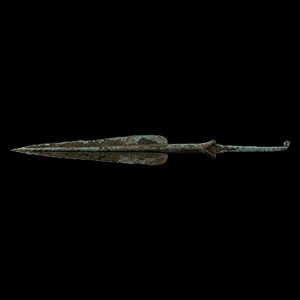
Marlik Type Bronze Tanged Spearhead
12th-11th century B.C.Estimate: £100 - 140 (+bp*)
Opening Bid: £50
With heavily ridged and tapering blade, short collared shaft and a square-section tapering tang bent at the tip. 159 grams, 31.5 cm
Acquired 1980-2015. Ex Abelita family collection.
The weapon belongs to type I of the Khorasani classification. Similar weapons have been excavated in Marlilk by Professor Negahban and dated by Stutzinger to the late 13th-early 12th century B.C.
