
Loading, please wait...
LOT 1627
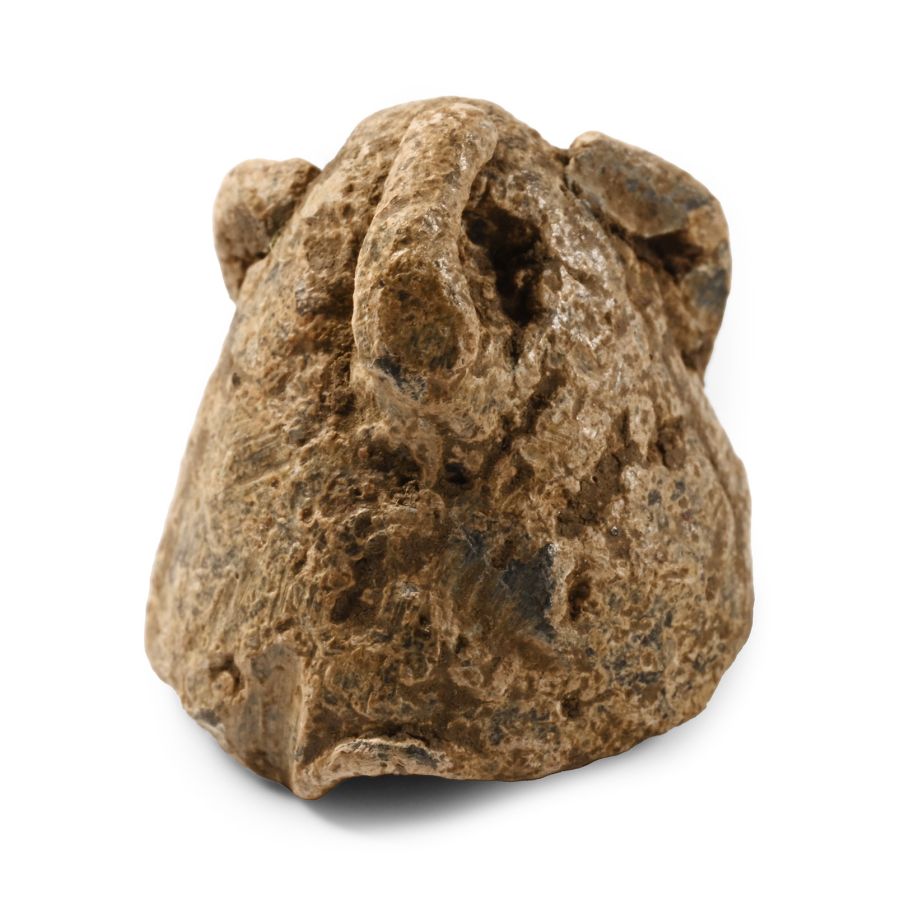
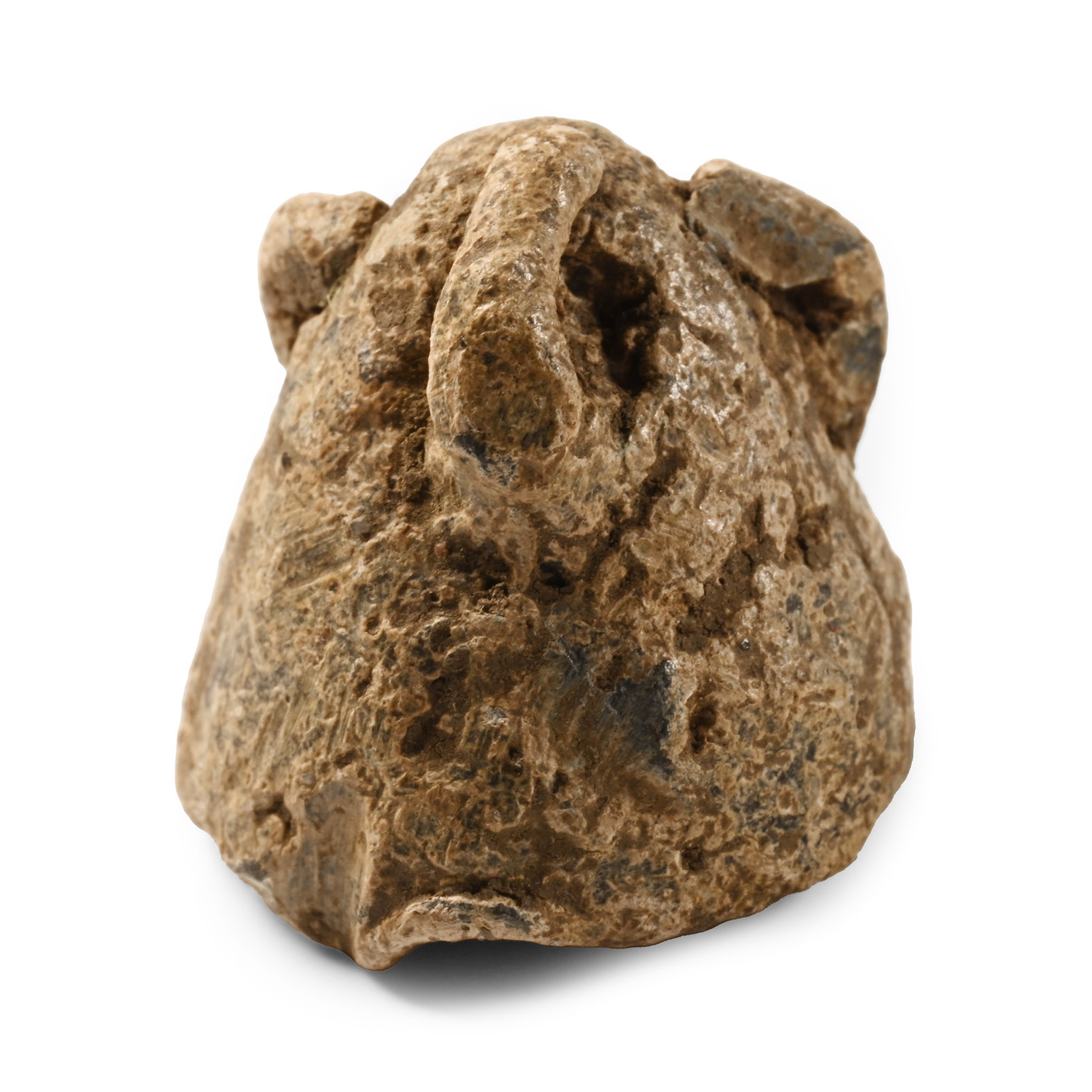
Viking Age Lead Gaming Piece
9TH-11TH CENTURY A.D.
5/8 in. (30.6 grams, 18 mm).
Of conical profile with three curved spurs below the apex. [No Reserve]
ProvenanceFrom a private Lincolnshire collection, 1990s.
LiteratureCf. Hammond, B., British Artefacts vol.2 - Middle Saxon & Viking, Witham, 2010, item 1.14-j, for type.
CONDITIONTimeLine Auctions follows a vetting process to ensure the authenticity and legality of all items, reinforcing our commitment to integrity and responsible trading. Each antiquity, antique, and coin lot undergoes thorough examination by a vetting committee of at least ten external specialists, professional trade association members, scientists, and archaeologists: Our Vetting Process
AUCTIONS:
TimeLine is a leading auction house specialising in antiquities, ancient art, collectables, natural history, coins, medals, and books. Our auctions offer museums, collectors, historians, and enthusiasts the opportunity to acquire unique and historically significant pieces.
-
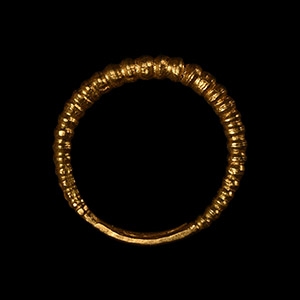
Viking Age Gold Ribbed Ring
Circa 9th-11th century A.D.Sold for (Inc. bp): £468
Formed as a graduated sequence of bulbs, plain reverse. 2.61 grams, 19.59 mm overall, 15.39 mm internal diameter (approximate size British I 1/2, USA 4 1/2, Europe 8.07, Japan 7)
Ex property of a late Japanese collector, 1970-2000s. -
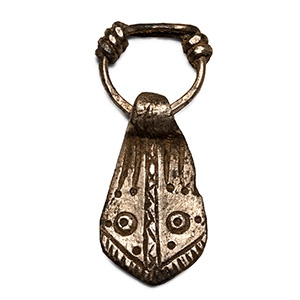
Viking Age Silver Decorated Duck-Foot Pendant
9th-11th century A.D.Sold for (Inc. bp): £169
Trapezoidal plaque with geometric detailing, suspension loop. 4.32 grams, 35 mm
Ex German art market, 2000s. Acquired from an EU collector living in London. From the collection of Surrey, UK, gentleman. -
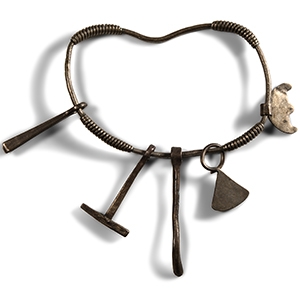
Viking Age Silver Bracelet with Pendants
Circa 10th-12th century A.D.Sold for (Inc. bp): £338
With graduated silver wire coils to the shank, collection of free-running cosmetic grooming pendants comprising: pelta-shaped plaque, quadrant-shaped plaque, ear scoop, miniature hammer, tweezers. 28.75 grams total, bracelet 88.90 mm wide
Formerly acquired in the late 1950s. From the family collection of a South East London collector.
Miniature hammers occur in pre-Viking times both in Scandinavia and in England, but their number increased markedly in Viking Scandinavia. They are known in iron, bronze, occasionally amber, and, from the 10th century onward, silver. They are predominantly found in women's graves, while most of the silver examples come from hoards of the late 10th and 11th centuries.
