
Loading, please wait...
LOT 0312
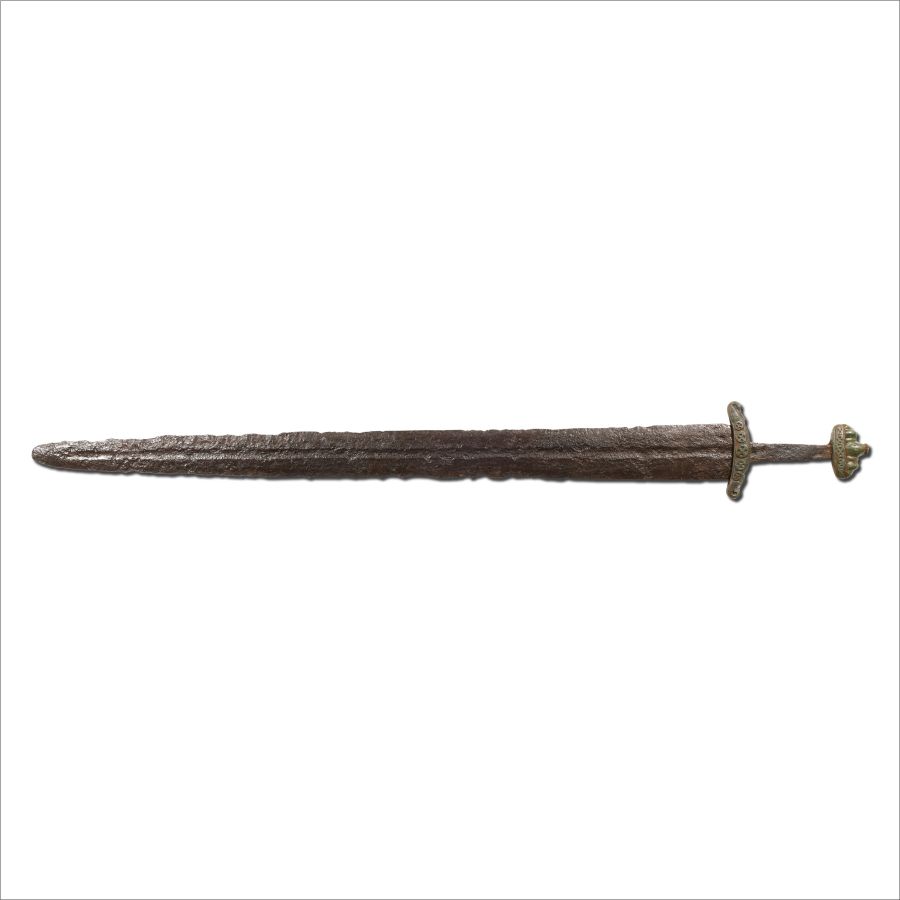
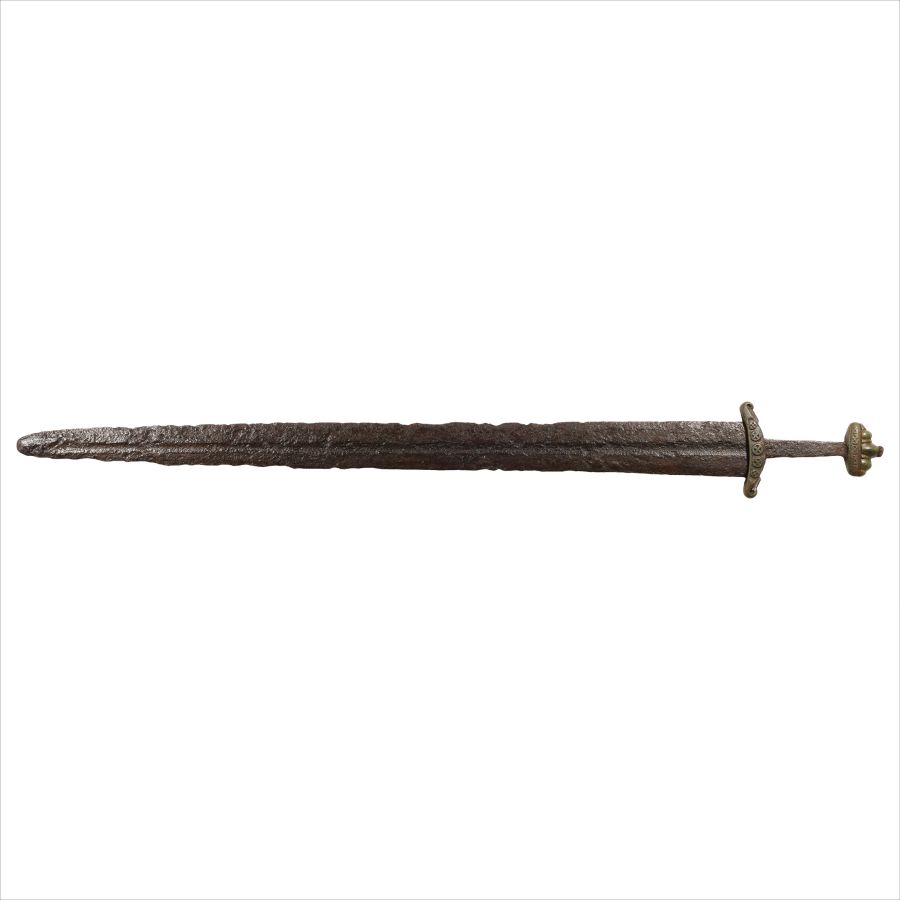
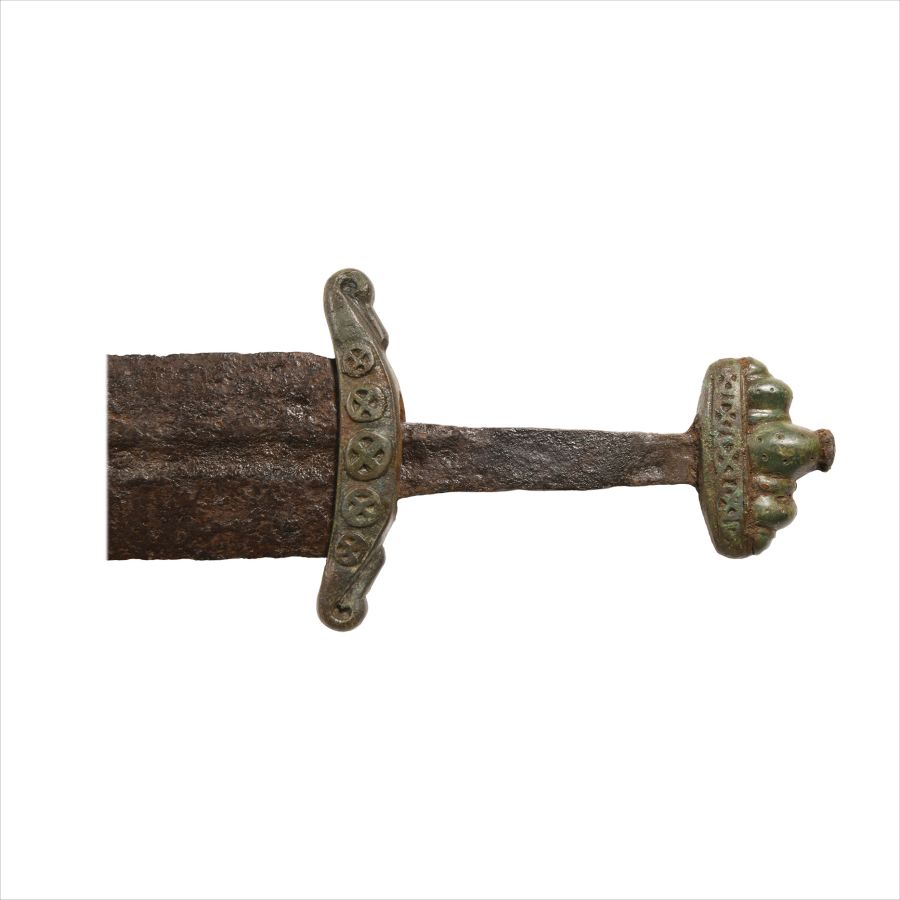
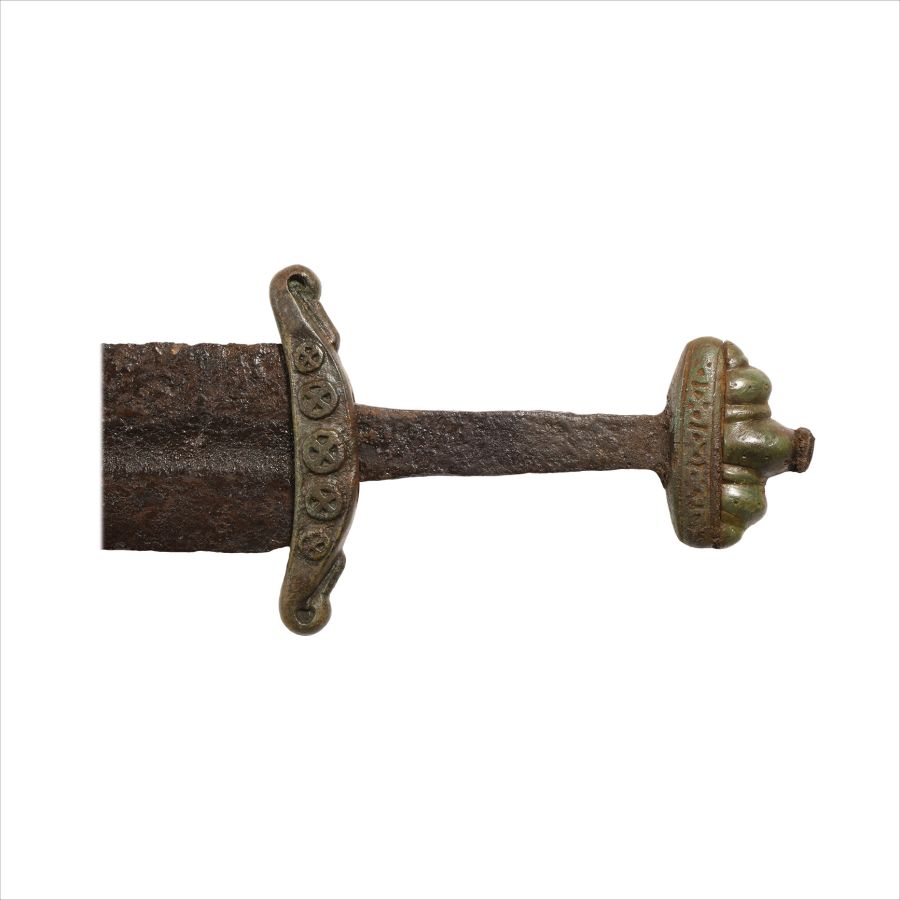
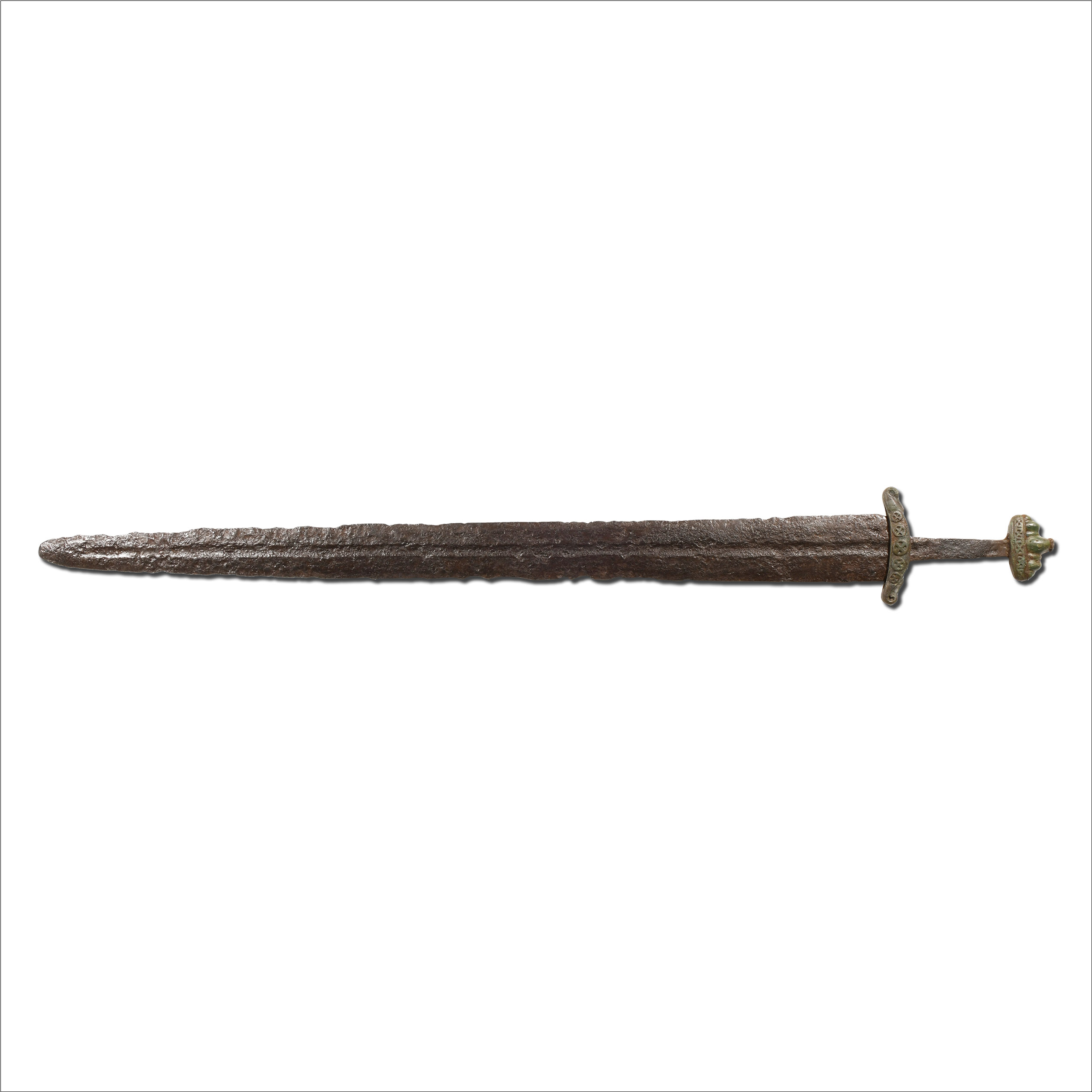
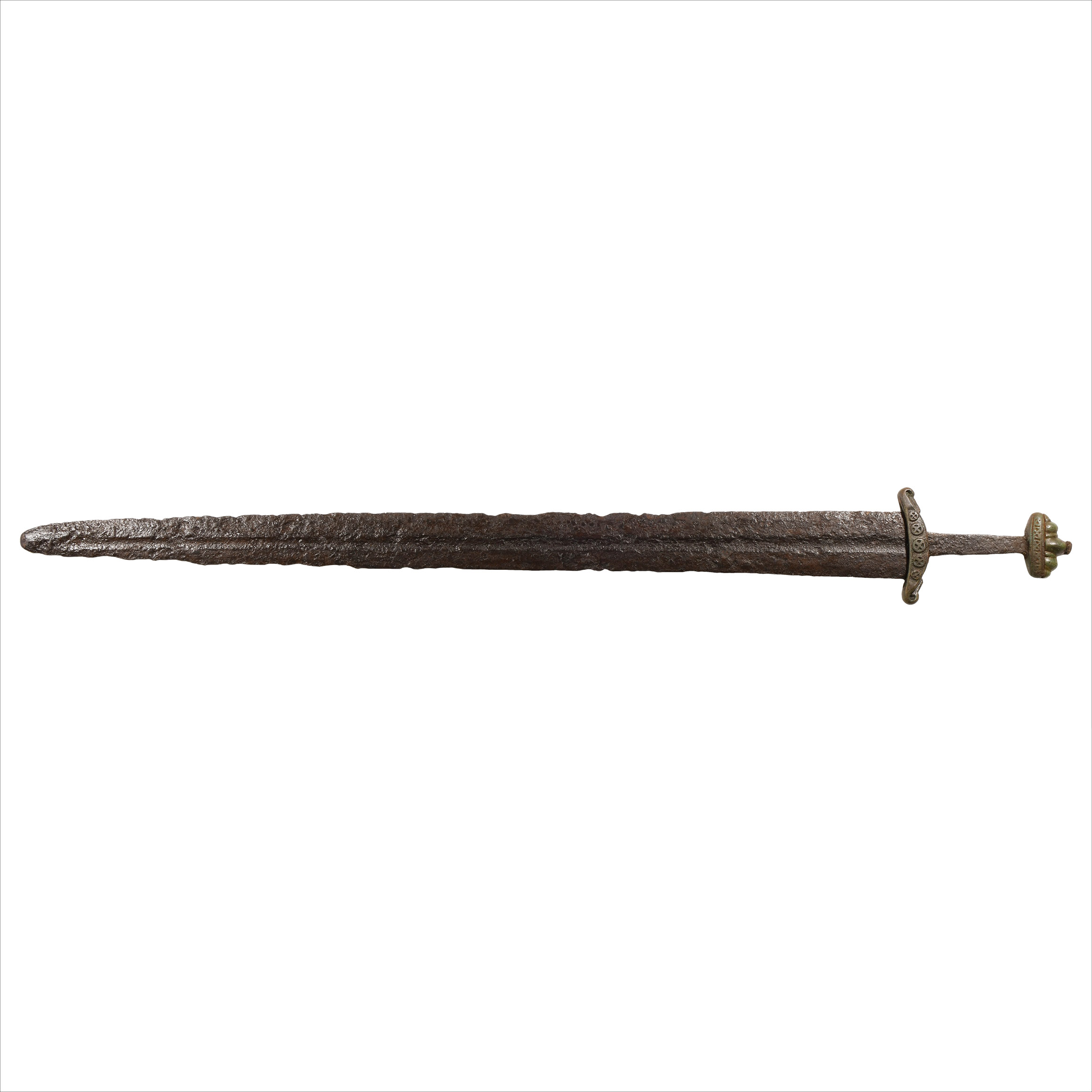
Viking Age Iron Sword with Seven-Lobed Pommel
CIRCA 11TH CENTURY A.D.
34 in. (1.02 kg, 86.5 cm).
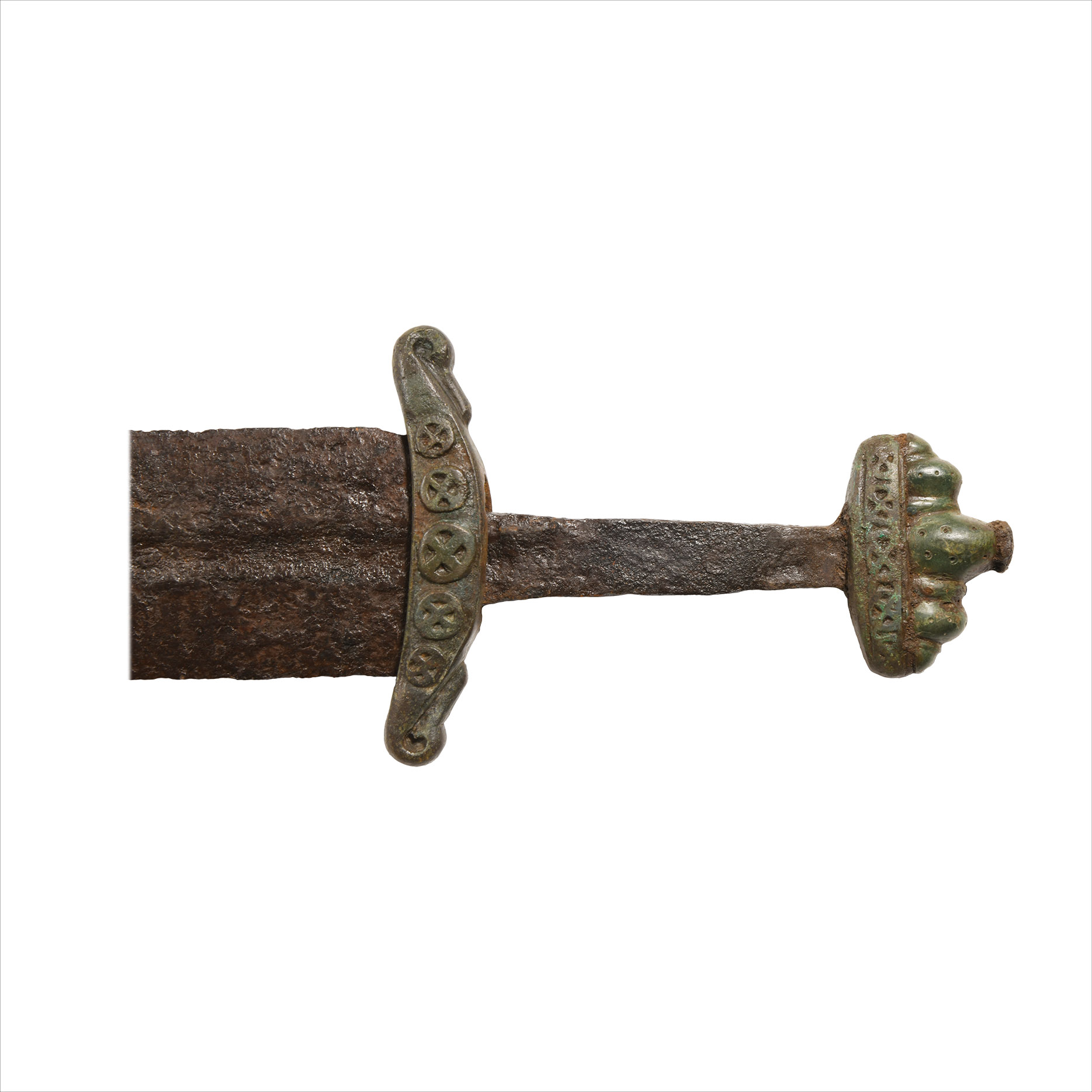
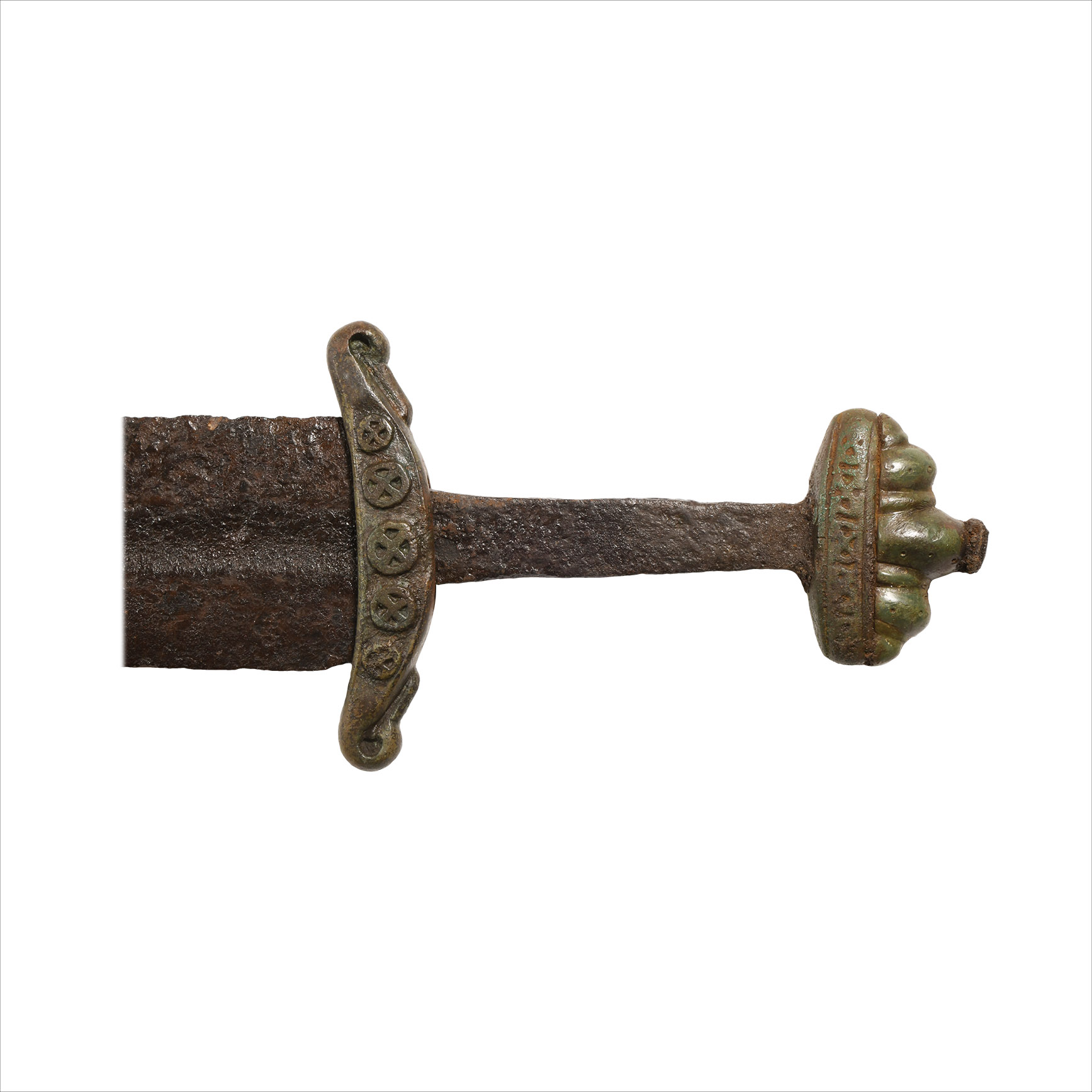
Couronian sword of Petersen Type K with double-edged tapering blade and tapering fullers; bronze cross-guard extending at each end to serpent- or horse-heads, wheeled ornament to both faces; the lower guard with similar motifs; seven-lobed pommel with annulets and pellets.
ProvenanceFrom the private collection of a London gentleman, from his grandfather's collection formed before the early 1970s.
Accompanied by an academic report by Dr Raffaele D’Amato.
This lot has been checked against the Interpol Database of stolen works of art and is accompanied by search certificate no.11925-209658.
Cf. Kazakevičius, Балтские мечи IX-XIII вв. (Baltic Swords, 9th-13th century AD), Vilnius, 1996; Peirce, I., Swords of the Viking Age, Suffolk, 2002; Tomsons, A., ‘Symbolism of Medieval Swords from the territory of Latvia during the 11th-13th centuries’ in Acta Universitatis Lodziensis. Folia Archaeologica 29, Łódź, 2012, pp.145-161.
FootnotesCouronian swords of this type, with animal-head decoration on the lower guard, were widespread and used in the Eastern Baltic lands from the 10th to 13th century. Such zoomorphic detailing was a clear influence from Germanic art. Regular geometric ornamentation, derived from Romanesque art, was also widespread, with one of the most common ornaments being a cross-in-circle.
CONDITIONTimeLine Auctions follows a vetting process to ensure the authenticity and legality of all items, reinforcing our commitment to integrity and responsible trading. Each antiquity, antique, and coin lot undergoes thorough examination by a vetting committee of at least ten external specialists, professional trade association members, scientists, and archaeologists: Our Vetting Process
AUCTIONS:
TimeLine is a leading auction house specialising in antiquities, ancient art, collectables, natural history, coins, medals, and books. Our auctions offer museums, collectors, historians, and enthusiasts the opportunity to acquire unique and historically significant pieces.
-
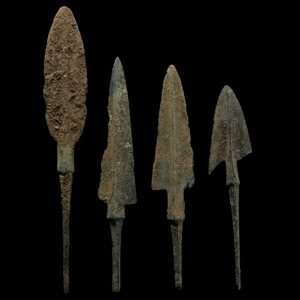
Luristan Bronze Arrowhead Collection
13th-7th century B.C.Sold for (Inc. bp): £72
Tanged, barbed and leaf-shaped types. 91 grams total, 10.3-14 cm
Ex G. White collection, 1980s-1990s. -
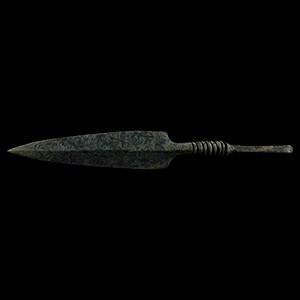
Western Asiatic Bronze Tanged Spearhead
3rd-2nd millennium B.C.Sold for (Inc. bp): £124
With long blade, shallow midrib, rectangular-section tang; engraved, reinforced shaft, and squared shoulders. 423 grams, 34.5 cm
Acquired 1980-2015. Ex Abelita family collection.
According to Gernez, this spear belongs to the group of tripartite spears with bulging biconcave ogival blade, a marked stop and tang, usually curved. The tomb KCG 14 of Carchemish, yielded a similar example, in association with spears and ceramic dated from the second half of the 3rd millennium. A very similar spear comes from a tomb at Tell Mozan. A larger example with a decoration of rings in relief on the stem belongs to the λ deposit of Byblos. Another spear, of similar form, presents a decoration of vertical lines on the stem. It was found in the tomb of the Lord of the Caprids at Ebla, making it the most recent in the series (around 1750 B.C.). -
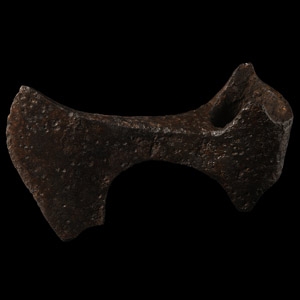
Viking Iron Bearded Axehead
Circa 9th-11th century A.D.Sold for (Inc. bp): £208
With scooped socket flanked by lateral wings, broad blade with chin and spur to the lower edge; possibly Baltic workmanship. 470 grams, 15 cm
From the private collection of a London gentleman, from his grandfather's collection formed before the early 1970s.
