
Loading, please wait...
LOT 0262
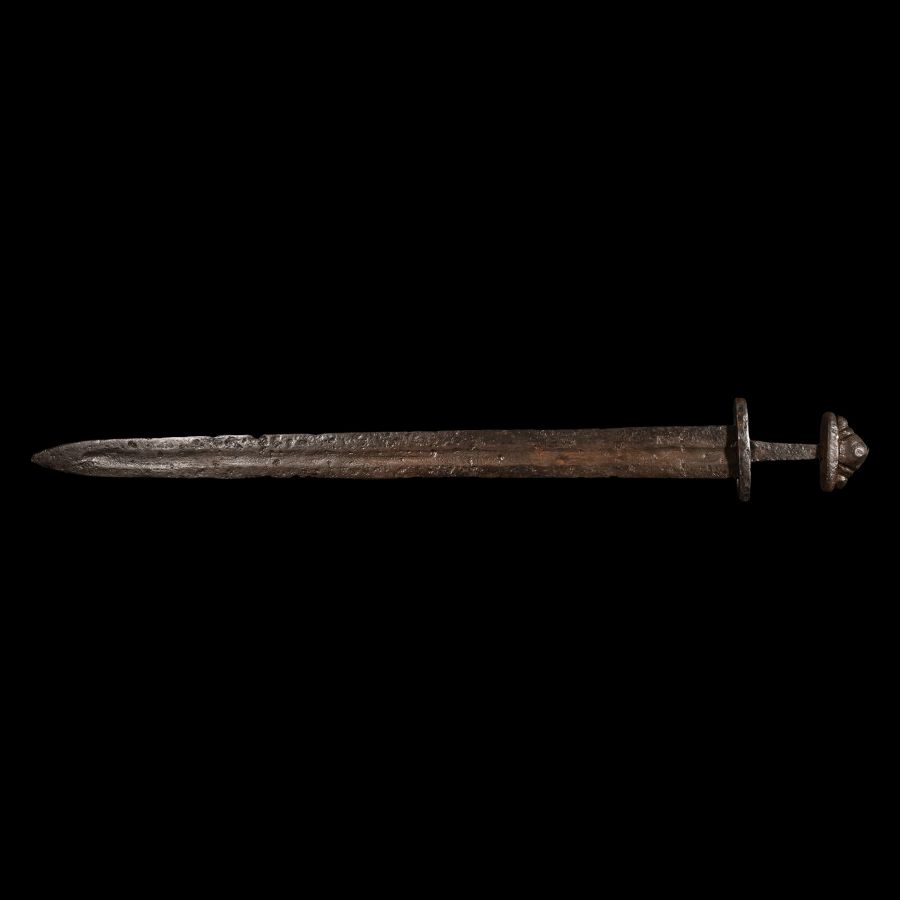
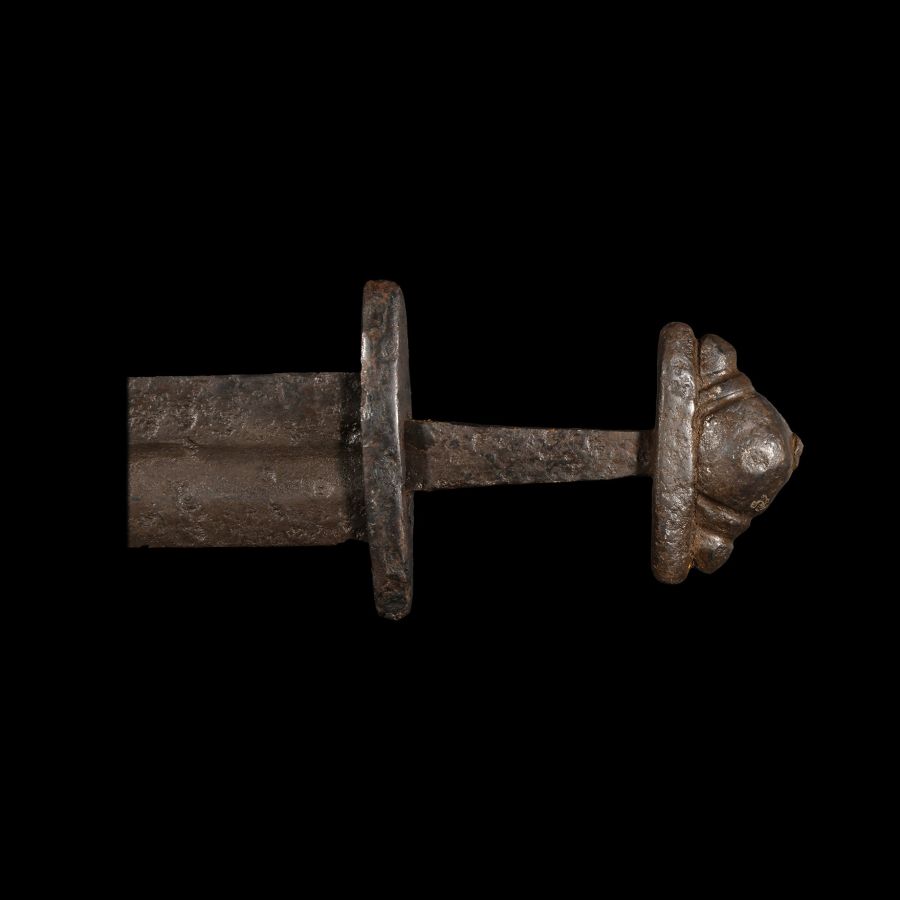
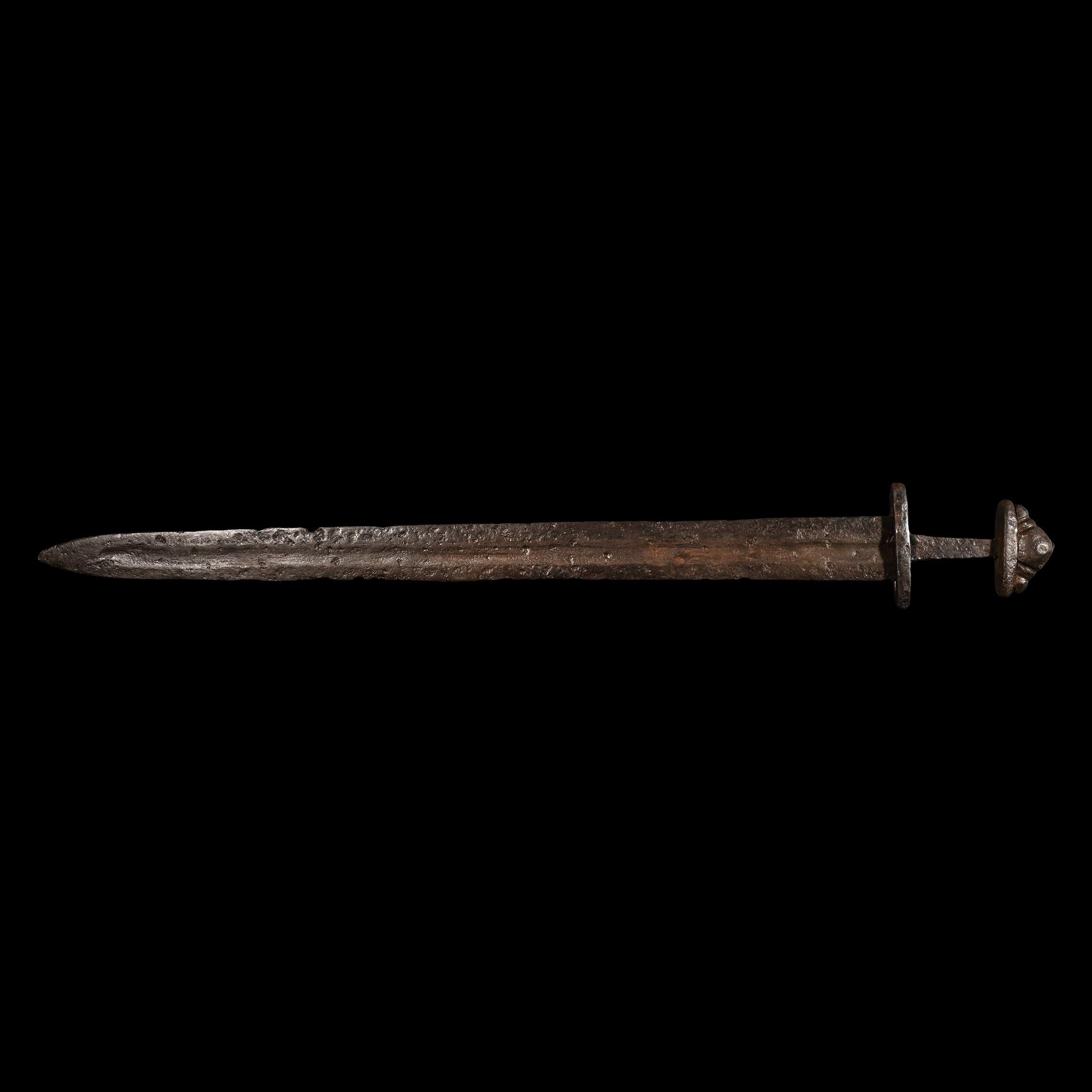
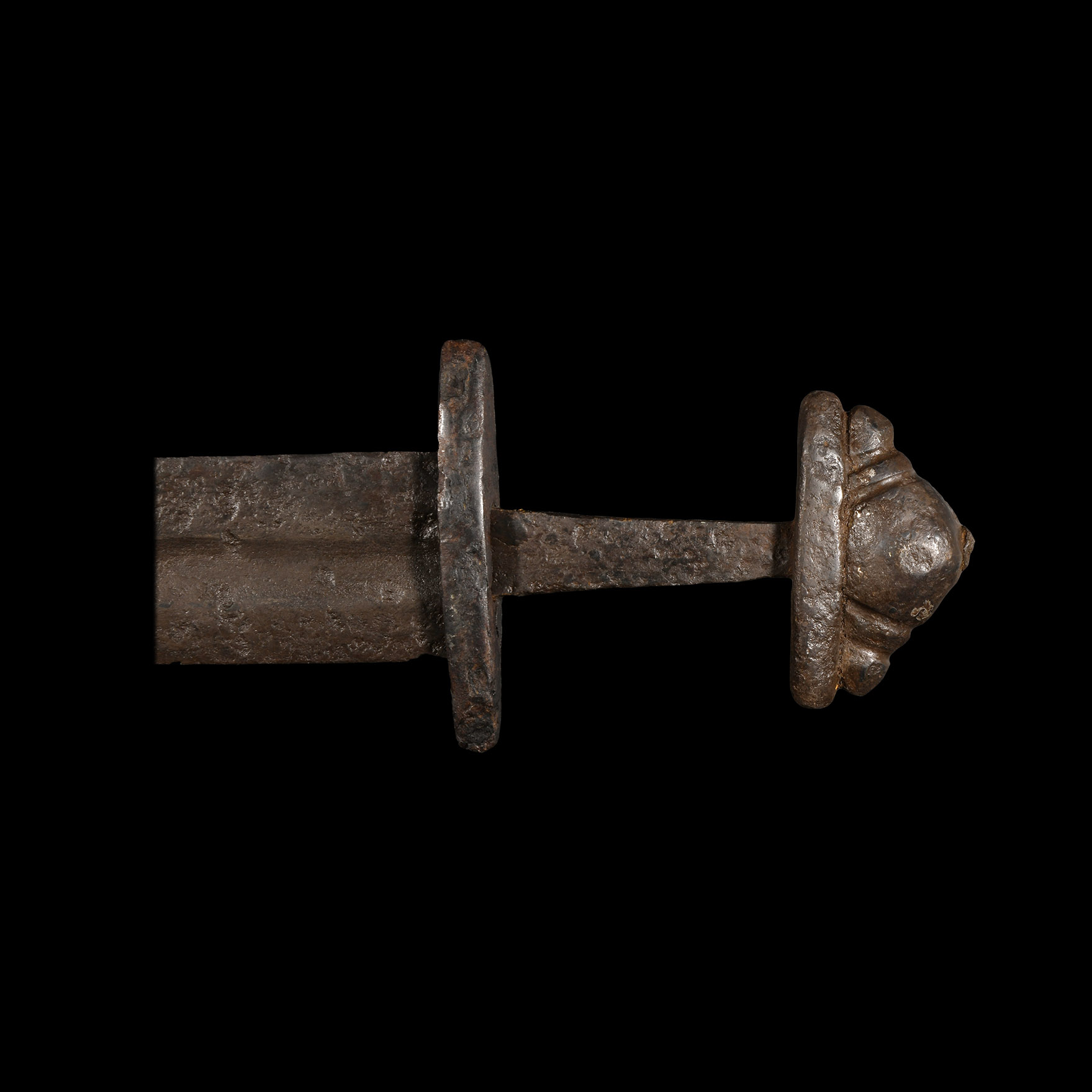
Viking Age Iron Sword with Five-Lobed Pommel
CIRCA 10TH-11TH CENTURY A.D.
35 1/4 in. (1.05 kg, 89.5 cm).
Composed of a double-edged tapering blade of Petersen Type T variant, with a slightly rounded point, shallow fullers; boat-shaped cross guard with traces of vertical silver strips, narrow tang; boat-shaped upper guard supporting a five-lobed pommel with traces of silver inlay.
ProvenanceAcquired 1971-1972.
From the collection of the vendor's father.
Property of a London, UK, collector.
Accompanied by an academic report by Dr Raffaele D’Amato.
This lot has been checked against the Interpol Database of stolen works of art and is accompanied by search certificate number no.11755-202775.
Cf. Petersen, J., De Norske Vikingsverd, Oslo, 1919; Peirce, I., Swords of the Viking Age, Suffolk, 2002; Sedov, B.B., Finno-Ugri i Balti v Epokhi Srednevekovija, Moscow, 1987; the sword finds parallels in various similar Viking age specimens of T variant, published by Petersen (especially a sword from Utgården, Seliord, Telemark, p.151, fig.121), or types S and T published by Peirce (specimens C16430 and C18454-C3210 & C3211, pp.106-109) and Sedov (pl.CXXIII no.11).
CONDITIONTimeLine Auctions follows a vetting process to ensure the authenticity and legality of all items, reinforcing our commitment to integrity and responsible trading. Each antiquity, antique, and coin lot undergoes thorough examination by a vetting committee of at least ten external specialists, professional trade association members, scientists, and archaeologists: Our Vetting Process
AUCTIONS:
TimeLine is a leading auction house specialising in antiquities, ancient art, collectables, natural history, coins, medals, and books. Our auctions offer museums, collectors, historians, and enthusiasts the opportunity to acquire unique and historically significant pieces.
-
Tower 'Brown Bess' Musket and Bayonet
Circa 1800 A.D.Sold for (Inc. bp): £3,640
Napoleonic era musket with 93cm (36½") smooth-bore barrel of .75" bore with London proof marks, the lockplate with 'TOWER', 'crown-over-G R' and inspection marks; fitted with full wood stock stamped 'S' and 'IR' to left side and butt with brass butt plate, trigger guard, ferrules, fore-end and sideplate; fitted with sling swivel loops and steel ramrod with cleaning rag eye; action working well in half and full cock, with correct steel socket bayonet. 4.60 kg, 173 cm with bayonet
Acquired from Andrew Bottomley, UK, 2014. The Kusmirek Collection, UK. Accompanied by copy of the invoice and listing. This lot has been checked against the Interpol Database of stolen works of art and is accompanied by search certificate no.204080.
The 'Brown Bess' musket, in several versions, was the standard British infantry longarm from about 1736 to 1838; some were later converted to the percussion system. Sold as an exempt item under Section 58 (2) of the Firearms Act, 1968, to be held as a curiosity or ornament. No license required but buyer must be over 18 years of age. Overseas bidders should note that, due to UK regulations governing export of all firearms, overseas buyers will need to make arrangements for shipping this lot out of the UK directly, by air freight, with a specialist company or agent. -
Amarlu Type Bronze Short Sword
Late 2nd millennium B.C.Sold for (Inc. bp): £1,755
Composed of a massive triangular blade with a slightly raised mid-rib flanked by three parallel rows on each side, the guard formed with a pronounced trident shape, ornamented with small geometric square recesses, the hilt with square-section grip incised with four vertical rows of similar square recesses, double broad crescentic open pommel surmounted by a broad raised median rib which links the double crescentic halves; repaired. 911 grams, 53 cm
One horn cracked and repaired
Acquired 1970s-1980s. From the collection of a Surrey, UK, gentleman.
Moorey, analysing similar swords found in Amarlu, stated that the blade and tang were made first, forged to shape by hammering at a high temperature. The next step was to cover the tang with a clayed material. Once dry, this material formed the core for the casting. Then a hollow mould of the exact shape of the shoulder, grooved hilt and pommel was made around the clay core covering the tang. Finally, liquid metal was poured into the mould. The weapon was then finished by hammering the pommel and shoulder to the hilt. -
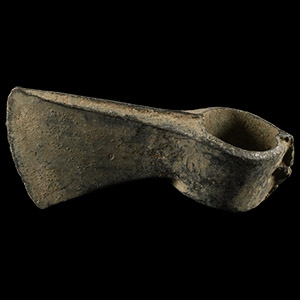
Western Asiatic Bronze Axehead
2nd-1st millennium B.C.Estimate: £100 - 140 (+bp*)
Opening Bid: £50
Featuring an oval-shaped socket, the cheeks with straight upper and sloping lower profiles, chamfered blade with convex cutting edge. 420 grams, 12.9 cm
Acquired 1980-2015. Ex Abelita family collection.
