
Loading, please wait...
LOT 0263
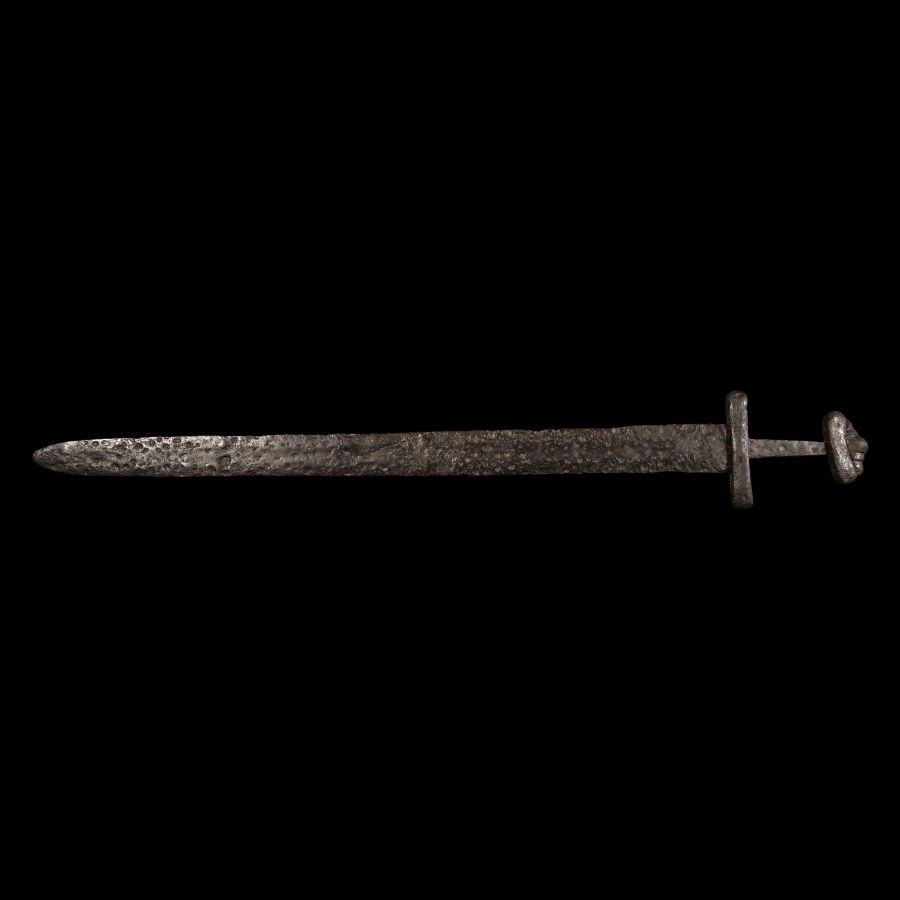
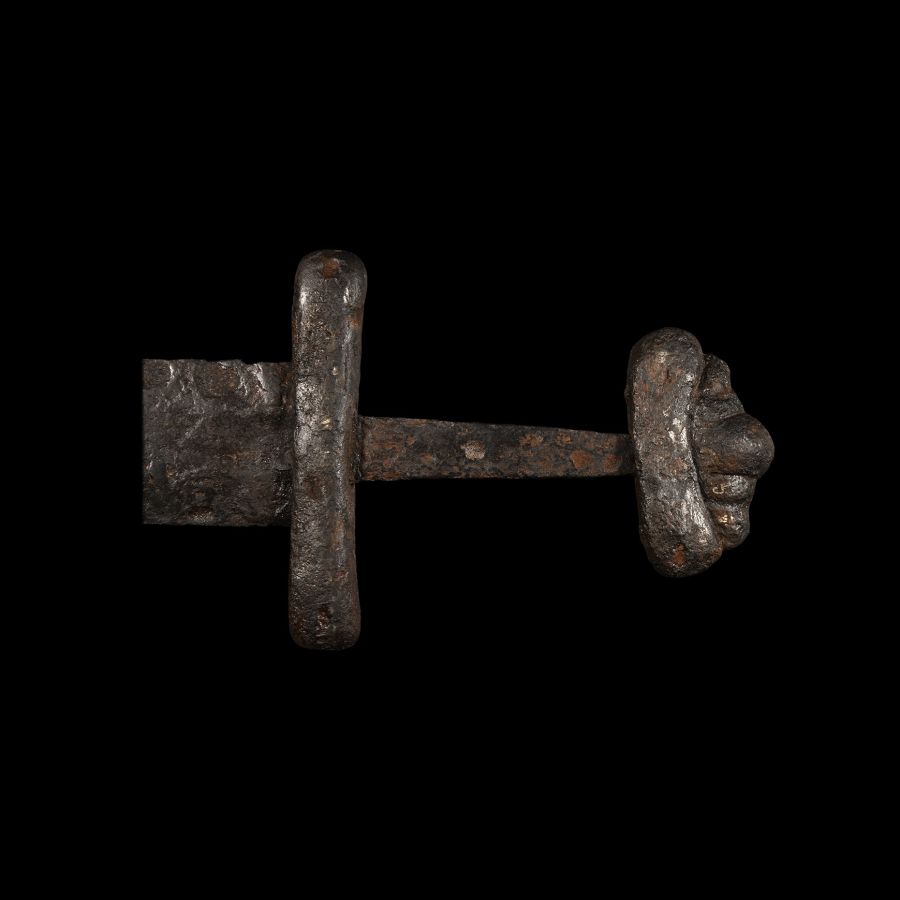
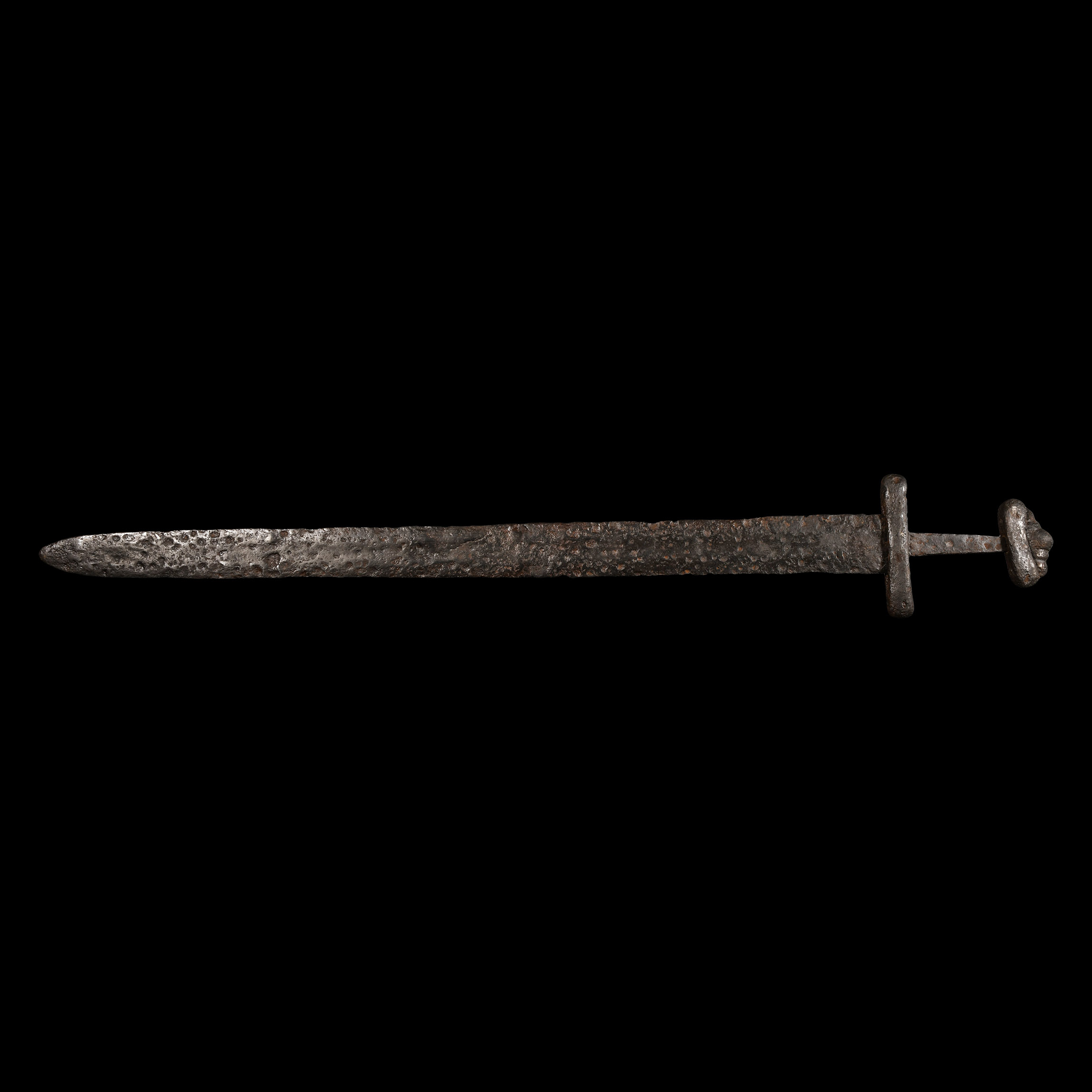
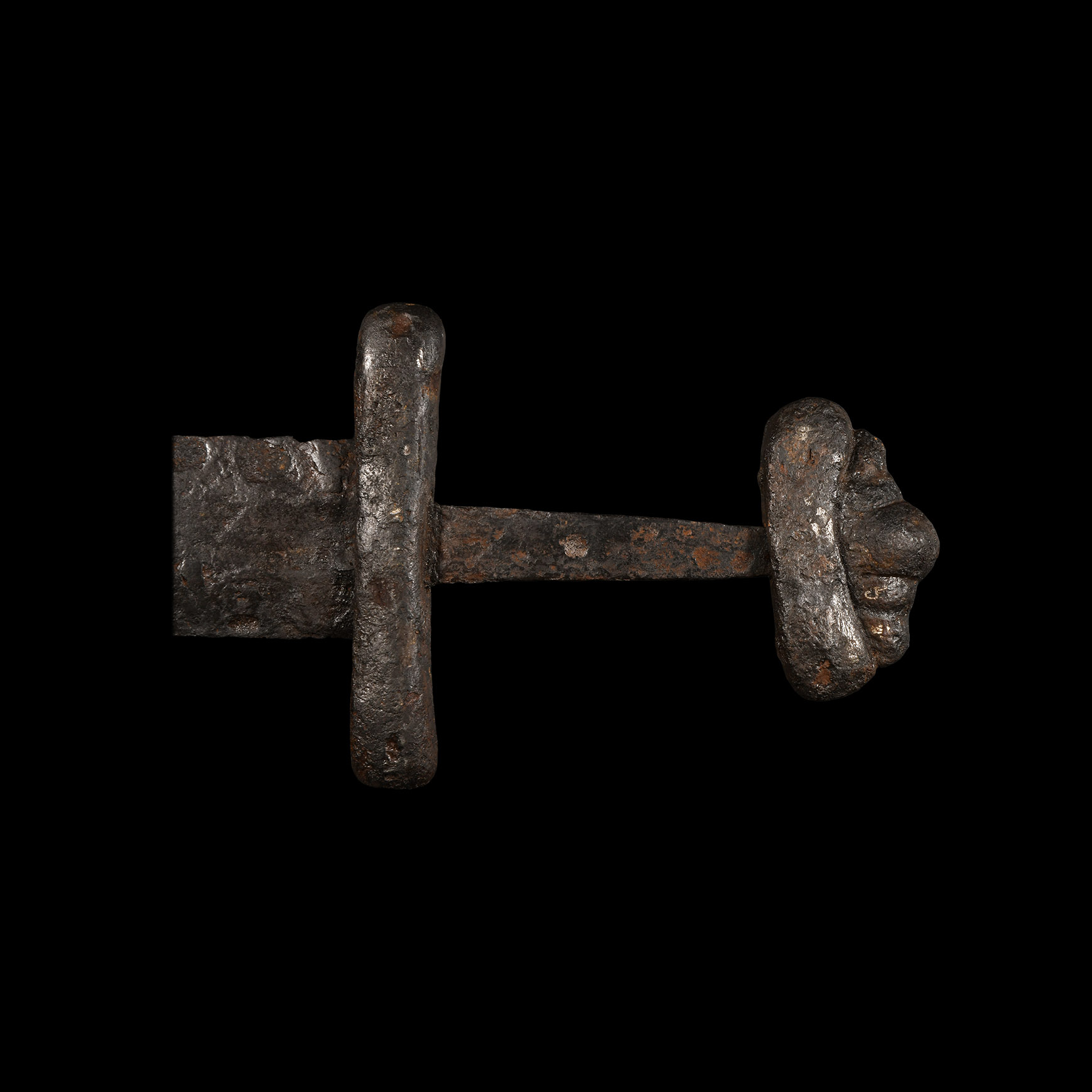
Viking Age Iron Sword with Five-Lobed Pommel
10TH-11TH CENTURY A.D.
34 1/2 in. (1.3 kg, 87.5 cm).
Of Petersen Type S variant with a double-edged blade, shallow fullers and a rounded point; boat-shaped upper and lower guard with some remains of silver inlay, the pommel also showing traces of silver decoration.
ProvenanceAcquired 1971-1972.
From the collection of the vendor's father.
Property of a London, UK, collector.
Accompanied by an academic report by Dr Raffaele D’Amato.
This lot has been checked against the Interpol Database of stolen works of art and is accompanied by search certificate number no.11756 - 202774.
Cf. Hjardar, K. & Vike, V., Vikings at war, Oxford-Philadelphia, 2016, p.169, for the type; the sword finds good parallels in various similar Viking age specimens, like the sword from Mixnam’s pit, Chertsey, today at the Chertsey Museum (Peirce, 2002, pp.98ff.).
FootnotesViking swords of Type S are commonly found in Nordic countries and in Eastern Europe, with only a small number found in Western Europe. The type was often characterised by splendid decoration achieved with silver and copper inlays, of which here some traces are still visible.
CONDITIONTimeLine Auctions follows a vetting process to ensure the authenticity and legality of all items, reinforcing our commitment to integrity and responsible trading. Each antiquity, antique, and coin lot undergoes thorough examination by a vetting committee of at least ten external specialists, professional trade association members, scientists, and archaeologists: Our Vetting Process
AUCTIONS:
TimeLine is a leading auction house specialising in antiquities, ancient art, collectables, natural history, coins, medals, and books. Our auctions offer museums, collectors, historians, and enthusiasts the opportunity to acquire unique and historically significant pieces.
-
Luristan Bronze Sword Blade
1st millennium B.C.Estimate: £200 - 300 (+bp*)
Opening Bid: £60
Comprising a narrow leaf-shaped blade with midrib and lateral channels, rounded shoulders, short tang with attachment hole. 445 grams, 45.5 cm
Ex German collection, Cologne, formed 1980s-1990. The Kusmirek Collection, UK.
The metalworking techniques used in making bronze weapons in early Iran were very complex. Surfaces were often finished in repoussé work, and some of the weapons were chased, others engraved. The function of the ridges here was not only decorative, however, but principally to reduce suction and thus allow the blade to be withdrawn speedily. The ruling elites of warrior horsemen were buried in the graves with their weapons and horses which are the main sources of the Luristan and North-Western bronze weapons. -
Viking Age Bronze Jellinge Sword Scabbard Chape
10th century A.D.Sold for (Inc. bp): £130
Plate with lip to the outer curved edges, knop to the centre of the bow and spurs to the angles; low-relief design of interlaced foliage within a braided band; lateral mounting holes, three studs to the reverse. 14.7 grams, 52 mm
From the collection of a North American gentleman, formed in the 1990s. -
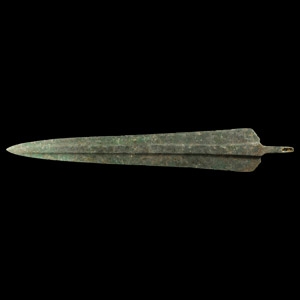
Luristan Bronze Short Sword Blade
Early 1st millennium B.C.Sold for (Inc. bp): £130
Triangular with thick rectangular-section midrib, rounded shoulders, narrow tip, short tang with inserted fixing pin for the organic grip. 472 grams, 42.2 cm
Ex German collection, Cologne, 1980-1990s.
This tanged bronze blade from Luristan belongs to a category of Luristan swords still in use in Achaemenid Period, as proved from a blade with a perished handle (probably bone or wood) of the same type, in the National Museum of Iran (2694/15633). Examples without inscriptions like our model have been classified by Grotkamp-Schepers in the Solingen Museum as pieces from Luristan.
