
Loading, please wait...
LOT 0313
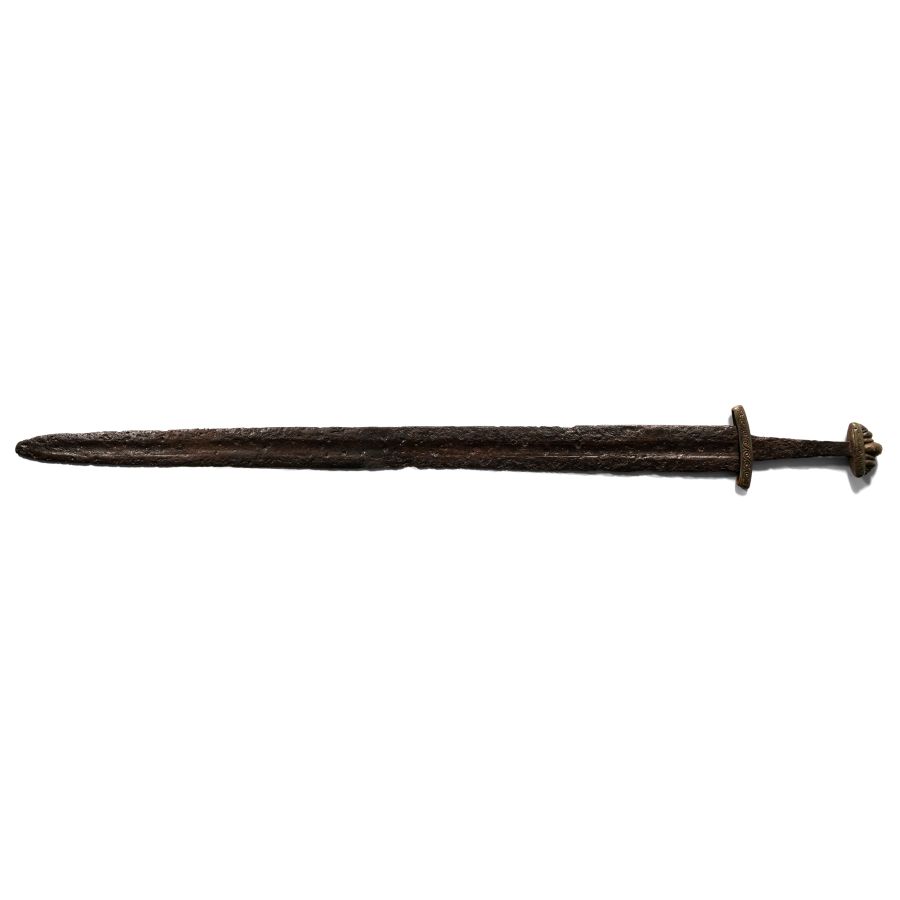
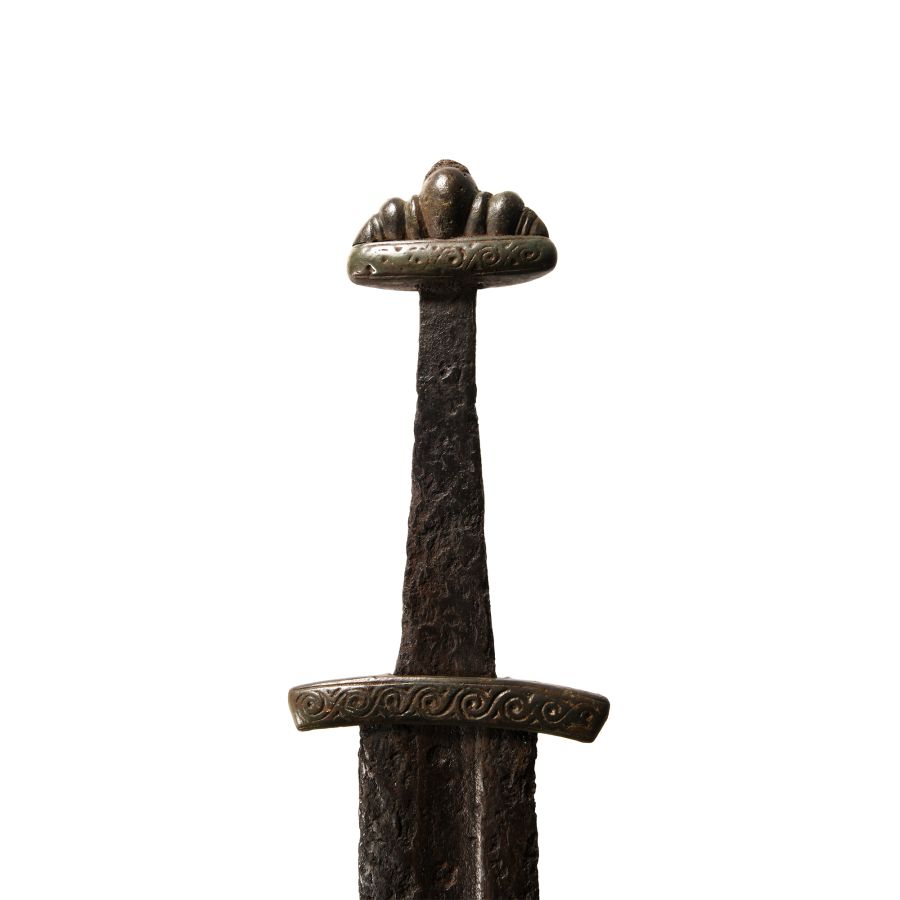
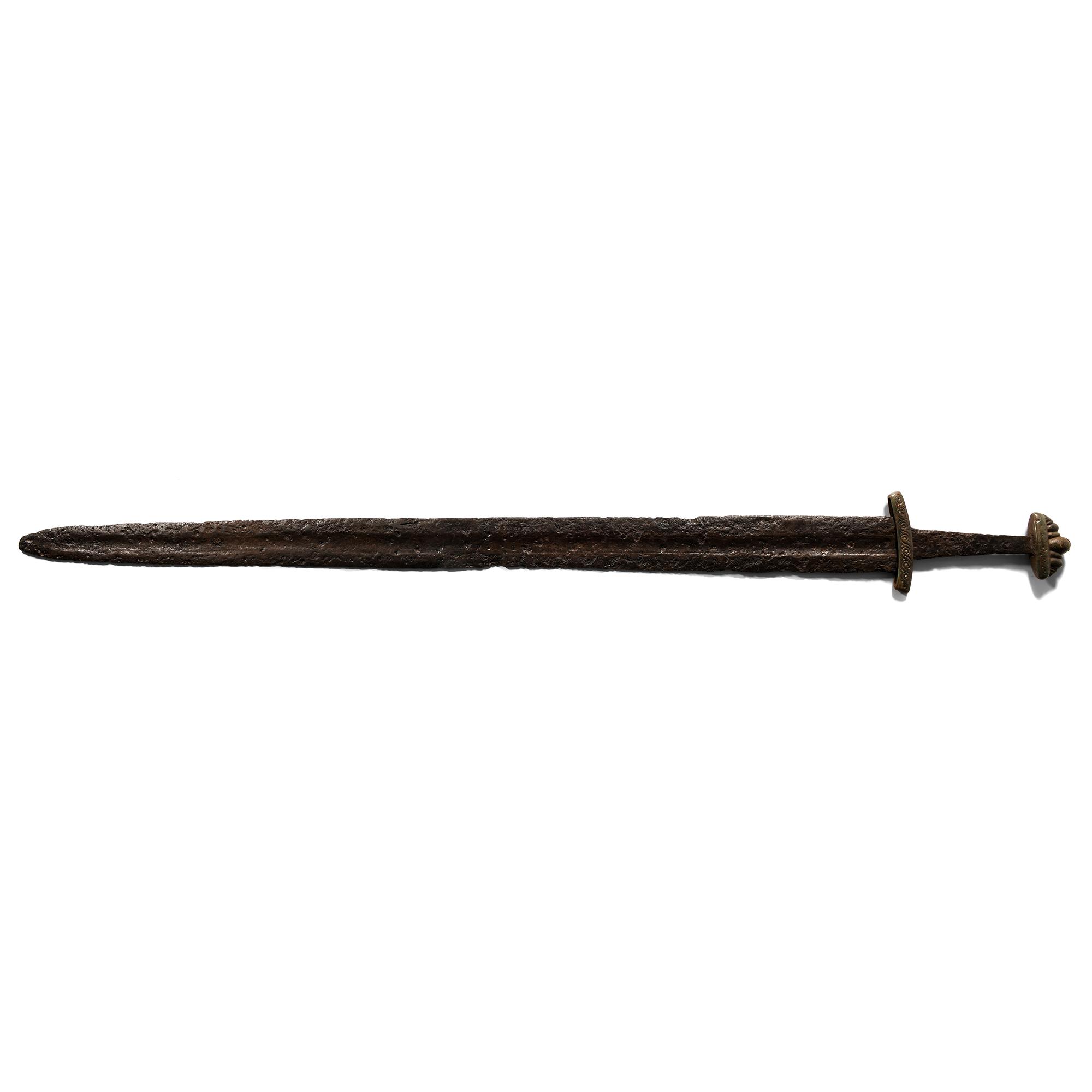
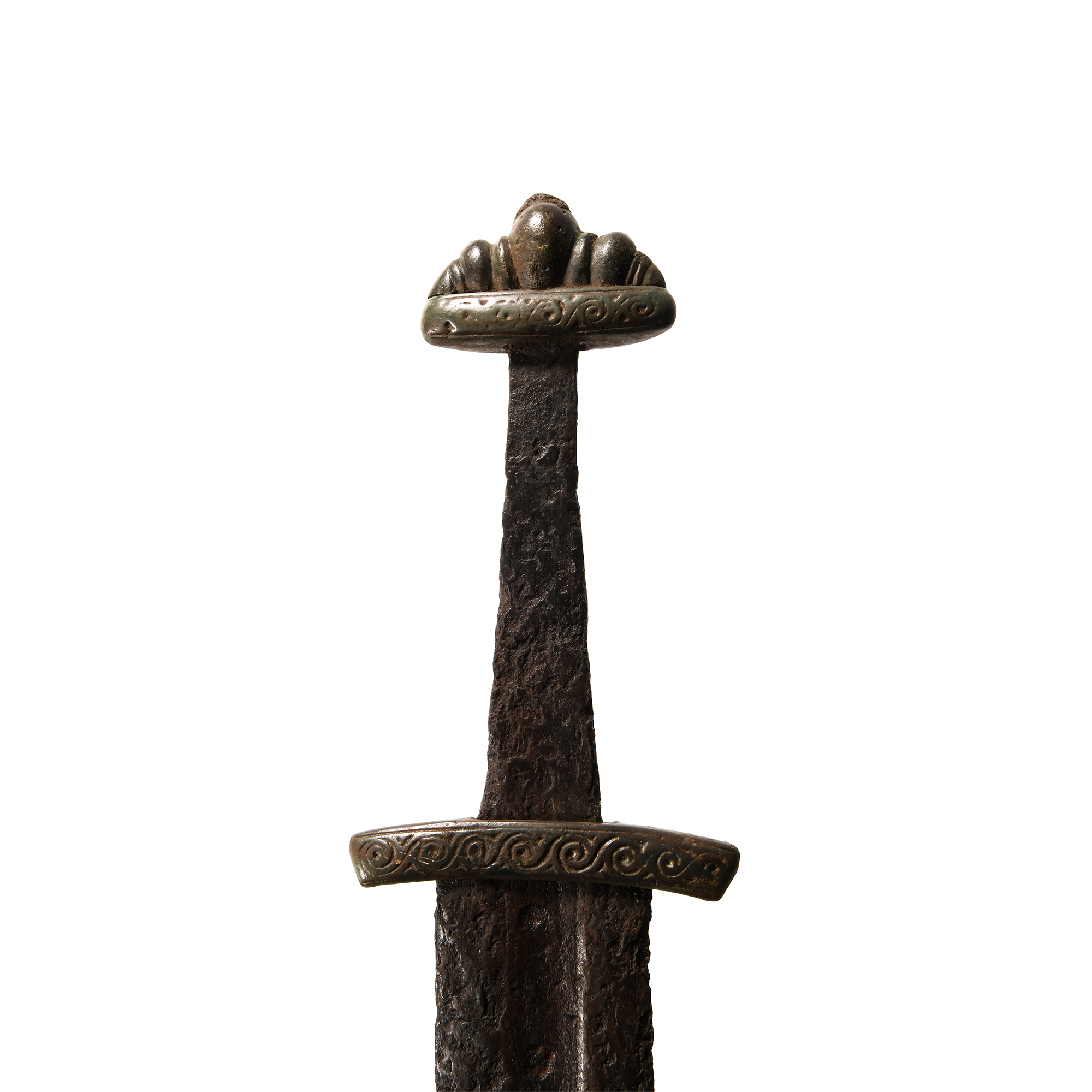
Viking Age Iron Sword with Bronze Hilt
10TH-13TH CENTURY A.D.
34 5/8 in. (675 grams, 88 cm).
With a double-edged tapering blade, long tapering fullers and a narrow tang; boat-shaped bronze cross-guard with Jellinge Style decoration; the upper guard with similar ornament topped by a seven-lobed pommel.
ProvenanceFrom the private collection of a London gentleman, from his grandfather's collection formed before the early 1970s.
Accompanied by an academic report by Dr Raffaele D’Amato.
This lot has been checked against the Interpol Database of stolen works of art and is accompanied by search certificate number no.12011-213595.
See Kazakevičius, Балтские мечи IX-XIII вв. (Baltic Swords, 9th-13th century AD), Vilnius, 1996; Peirce, I., Swords of the Viking Age, Suffolk, 2002; Tomsons, A., ‘Symbolism of Medieval Swords from the territory of Latvia during the 11th-13th centuries’ in Acta Universitatis Lodziensis. Folia Archaeologica 29, Łódź, 2012, pp.145-161.
FootnotesThis Couronian sword finds a good parallel with Baltic swords, used by Prussian, Couronians, Estonian and Lithuanian pagan warriors; see a sword once in the Prussian Museum, inventory V. Nr. 8368, from Janischken (Fig. 1,a); other clear parallels can be seen in Kazakevičius, 1996, figs.62-63 (fig.2) and Tomsons, 2012, fig.2 (Fig.3),3,7. The Curonian swords of this type, sometimes with animal head decoration on the lower guard, were widespread and used in the Eastern Baltic lands from 10th to 13th century.
CONDITIONTimeLine Auctions follows a vetting process to ensure the authenticity and legality of all items, reinforcing our commitment to integrity and responsible trading. Each antiquity, antique, and coin lot undergoes thorough examination by a vetting committee of at least ten external specialists, professional trade association members, scientists, and archaeologists: Our Vetting Process
AUCTIONS:
TimeLine is a leading auction house specialising in antiquities, ancient art, collectables, natural history, coins, medals, and books. Our auctions offer museums, collectors, historians, and enthusiasts the opportunity to acquire unique and historically significant pieces.
-
Western Asiatic Bronze Dagger
2nd millennium B.C.Estimate: £100 - 140 (‡+bp*)
Opening Bid: £50
With a narrow pointed blade and wide raised flange down centre, straight sides, well marked shoulders with narrow tang, one hole for rivet. 128 grams total, 17.6 cm high including stand
From the possessions of a member of a German princely family, gathered in the late 19th century, until the 1930s. with Auction House CUSP, Vienna, Auction Antique Art from Asia and from the Eastern Mediterranean, 16 June 2012, lot 75 [Part].
The type was technically more advanced than previous types of blades in the Near East, owing to the shape of the weapon, with its slightly convex sides widening out near the point, which combined the advantages of the leaf-shaped and straight-sided forms. -
Western Persian Bronze Socketted Axehead
Circa 2nd millennium B.C.Sold for (Inc. bp): £91
With tubular socket, expanding blade with flanges to the long sides, curved edge. 362 grams, 11.9 cm
Acquired on the German art market before 1990. From a German collection. -
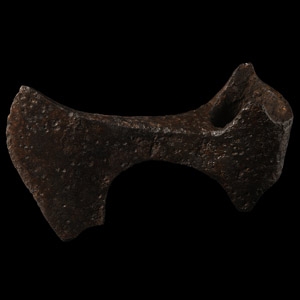
Viking Iron Bearded Axehead
Circa 9th-11th century A.D.Sold for (Inc. bp): £208
With scooped socket flanked by lateral wings, broad blade with chin and spur to the lower edge; possibly Baltic workmanship. 470 grams, 15 cm
From the private collection of a London gentleman, from his grandfather's collection formed before the early 1970s.
