
Loading, please wait...
LOT 0334
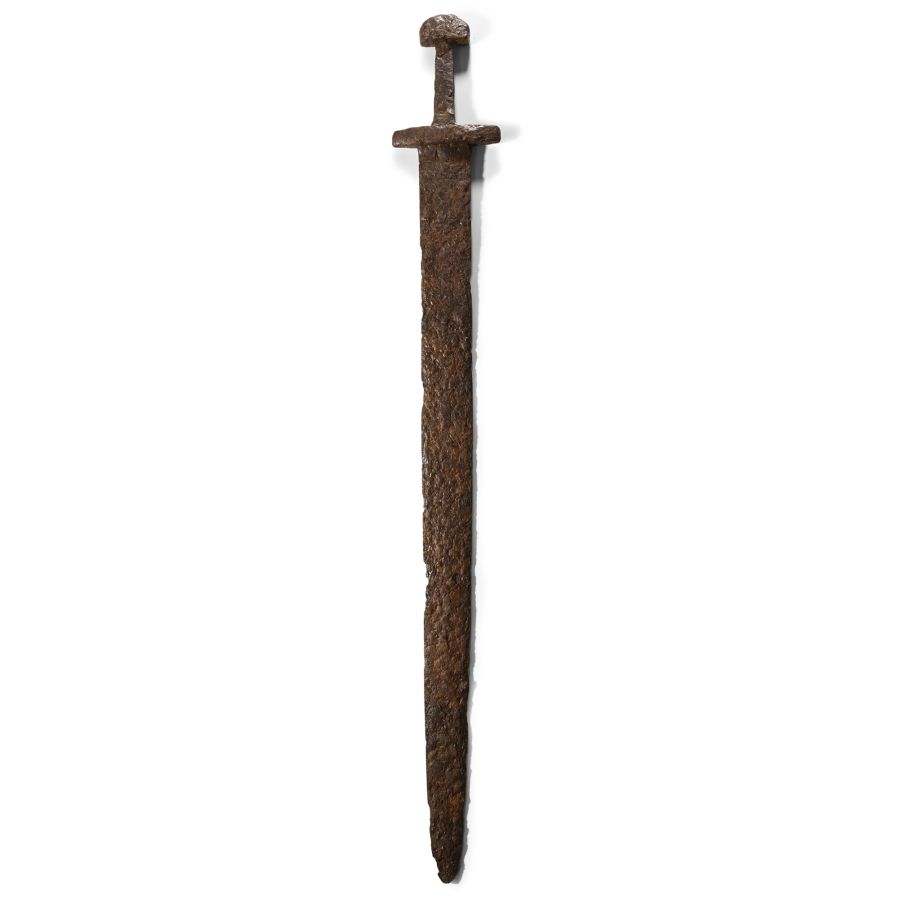
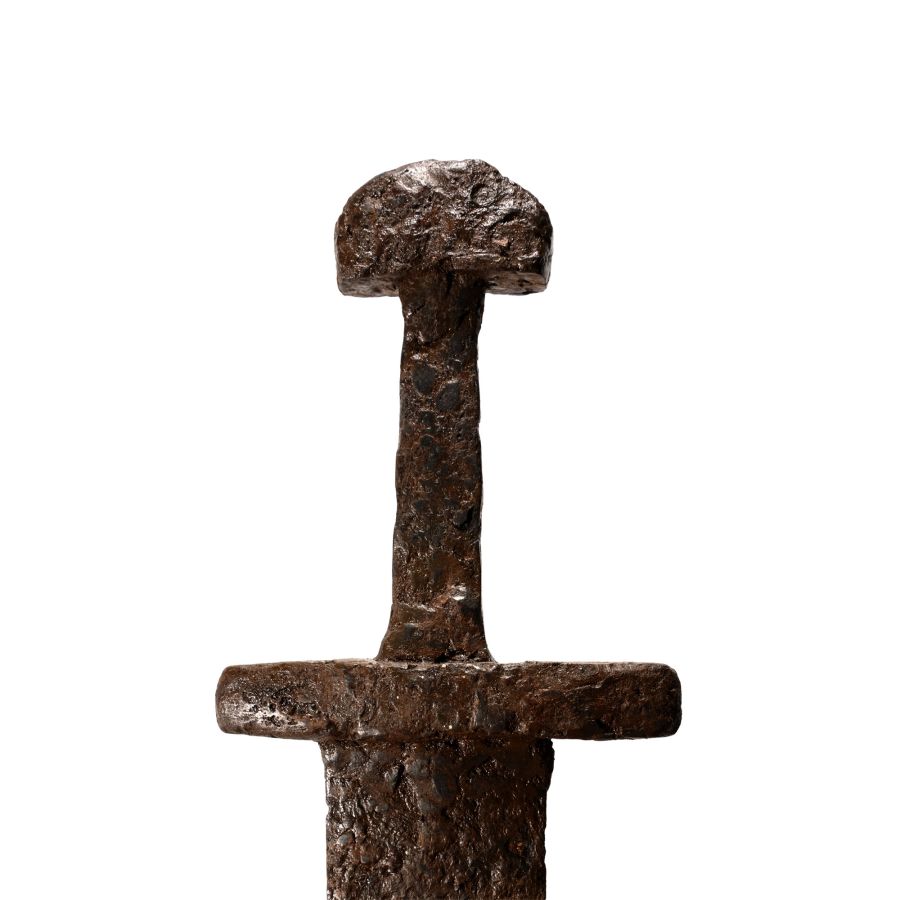
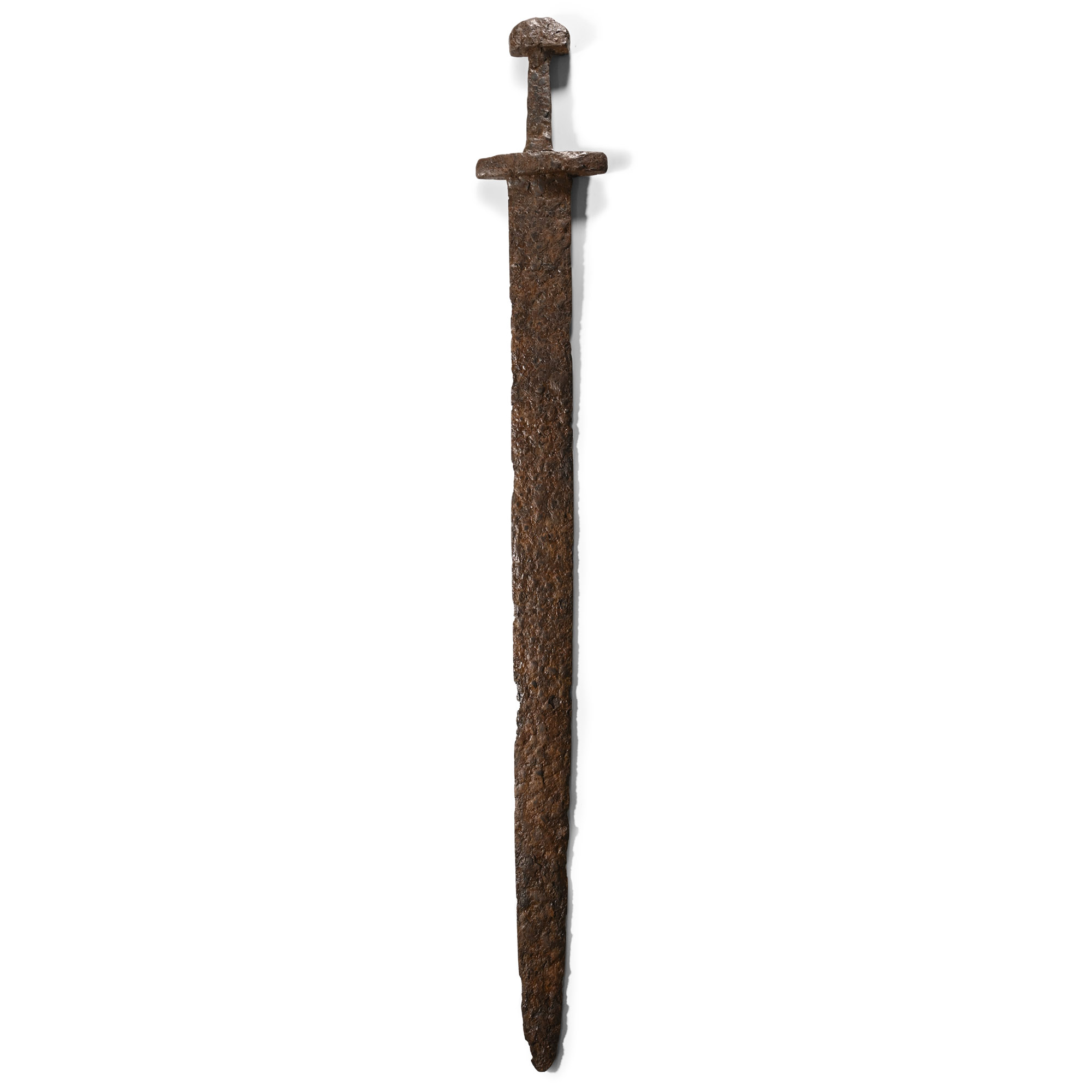
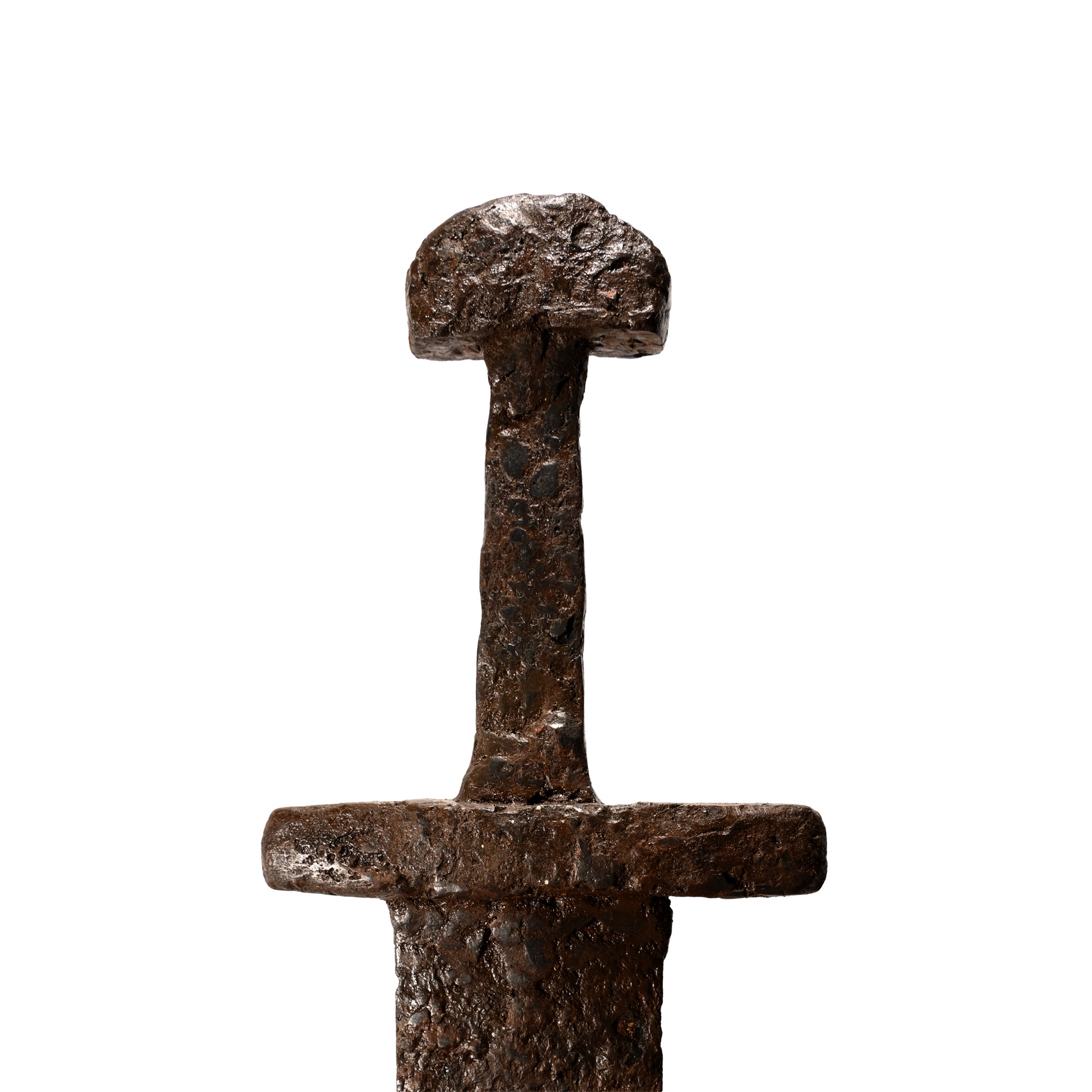
Viking Age Iron Sword of Petersen Type X
EARLY 10TH-MID 11TH CENTURY A.D.
35 1/2 in. (1.24 kg, 90.2 cm).
A single-handed double-edged cutting sword with wide cutting edges showing usage wear, short boat-shaped cross-guard and a flat tang, pommel of solid tea-cosy type divided into two sections by a shallow groove, traces of wooden scabbard on the blade; cleaned and conserved.
ProvenanceFrom the private family collection of a lady, UK; acquired in Germany mid 20th century.
Accompanied by an academic report by Dr Raffaele D'Amato.
This lot has been checked against the Interpol Database of stolen works of art and is accompanied by search certificate number no.12622-236127.
This lot has been cleared against the Art Loss Register database, and is accompanied by an illustrated lot declaration signed by the Head of the Antiquities Department, Dr Raffaele D'Amato.
Cf. Petersen, J., De Norske Vikingsverd, Oslo, 1919; Oakeshott, R.E., The Archaeology of the weapons, London, 1960; Viollet le Duc, Encyclopedie Médiévale, Tours, 1999; Peirce, I., Swords of the Viking Age, Suffolk, 2002; the sword finds good parallels in various similar Viking age specimens, for example a sword in the Musée de l'Armée, Paris (inv. no. JPO 2253, s. Peirce, 2002, pp.118-119) or the one preserved in Nationalmuseet, Copenhagen, inv. n. C8727; a similar blade was found in Grodziec, Poland, and is dated to the 10th century.
CONDITIONTimeLine Auctions follows a vetting process to ensure the authenticity and legality of all items, reinforcing our commitment to integrity and responsible trading. Each antiquity, antique, and coin lot undergoes thorough examination by a vetting committee of at least ten external specialists, professional trade association members, scientists, and archaeologists: Our Vetting Process
AUCTIONS:
TimeLine is a leading auction house specialising in antiquities, ancient art, collectables, natural history, coins, medals, and books. Our auctions offer museums, collectors, historians, and enthusiasts the opportunity to acquire unique and historically significant pieces.
-
Western Asiatic Integral Hilted Bronze Short Sword
Late 3rd-2nd millennium B.C.Estimate: £200 - 300 (+bp*)
Opening Bid: £110
With a broad, lentoid-section flat blade, rounded tip, sloping sides, well marked shoulders with wide but short tang. 713 grams, 43.5 cm
Acquired 1980-2015. Ex Abelita family collection. This lot is accompanied by an illustrated lot declaration signed by the Head of the Antiquities Department, Dr Raffaele D’Amato. This lot is accompanied by an illustrated lot declaration signed by the Head of the Antiquities Department, Dr Raffaele D'Amato.
The sword finds similarity with a one from the Royal Cemetery of Ur. This is the most primitive form of dagger, consisting of a simple, pointed blade having slightly convex outline shoulders sloping to a short tang which has no rivets, and was probably hafted to wood with bitumen. -
Roman Legion XIII 'Battle of Munda' Lead Slingshot
1st century B.C.Sold for (Inc. bp): £221
Fusiform with reserved legend 'LXIII' (for LEGIO XIII = 13th Legion). 32.6 grams, 36 mm
Acquired on the UK art market. Property of a gentleman collector. This lot is accompanied by an illustrated lot declaration signed by the Head of the Antiquities Department, Dr Raffaele D'Amato.
The shot (Völling type 1C) is marked with the abbreviated name of Legion XIII, and was probably used at the Battle of Munda (or Monda) against Julius Caesar, 17th March 45 B.C., or against the sons of Pompey, because both the generals (Pompey sons and Caesar) had in their army a Legio with the numeral XIII on that day. Interestingly, other glandes of the same typology from the same battlefield bear the name of Pompey, so that it is much possible that the glans belongs to the Legio XIII of Pompey, who was destroyed during the battle and whose survivors were massacred among the 22,000 defenders of Cordoba by the troops of Caesar (D'Amato, 2021, pp.421 and 424). The projectiles were made of different materials: lead (glandes) or in pottery or stone (lapides missiles). -
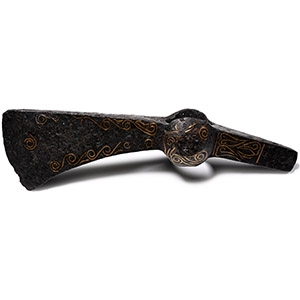
Eastern Viking Period Laten Inlaid Iron Axehead
9th century A.D.Sold for (Inc. bp): £5,200
With narrow straight blade, shank to the rear with square hammer-face, inlaid geometric and vegetal ornaments. 275 grams, 17.7 cm
Private collection formed in Europe in the 1980s. Westminster collection, central London, UK. This lot has been cleared against the Art Loss Register database, and is accompanied by an illustrated lot declaration signed by the Head of the Antiquities Department, Dr Raffaele D'Amato.
Battle-axes came into use in Scandinavia, especially in the Eastern parts of Sweden, Gotland and Denmark. Among the types, there were narrow-bladed types described to be very light in the sources. They could weigh as little as 200-250 grams, making them suitable for single-handed use. Some of them were decorated according to the Slavic taste.
