
Loading, please wait...
LOT 1637
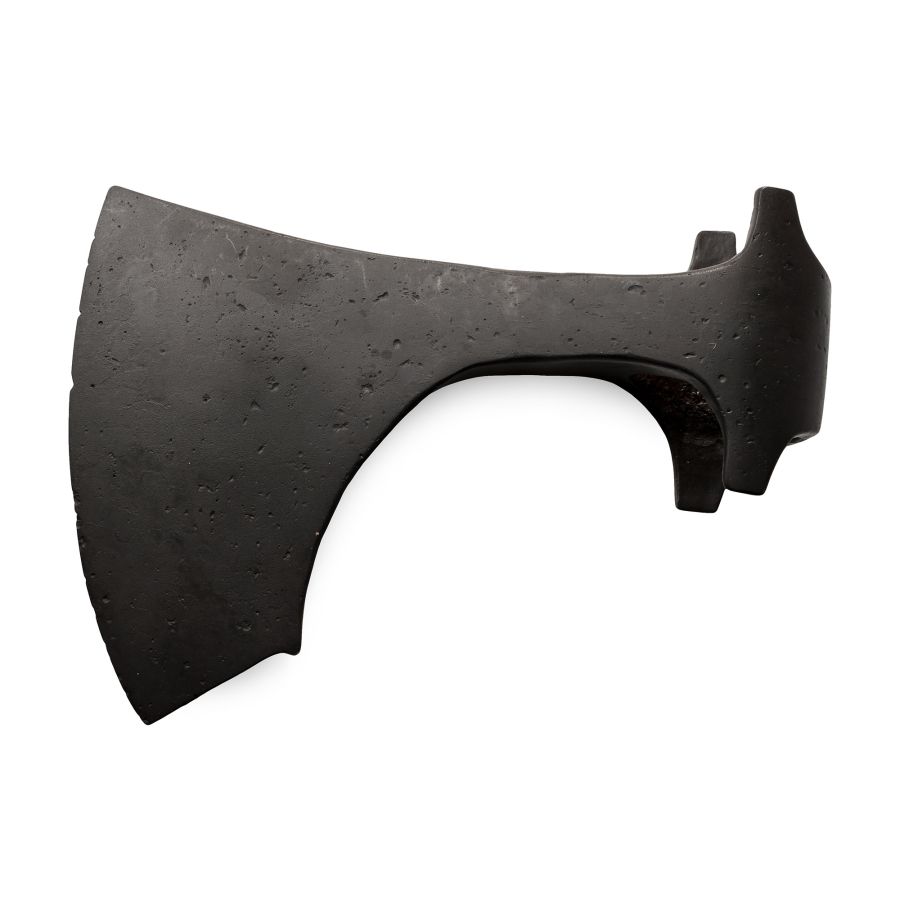
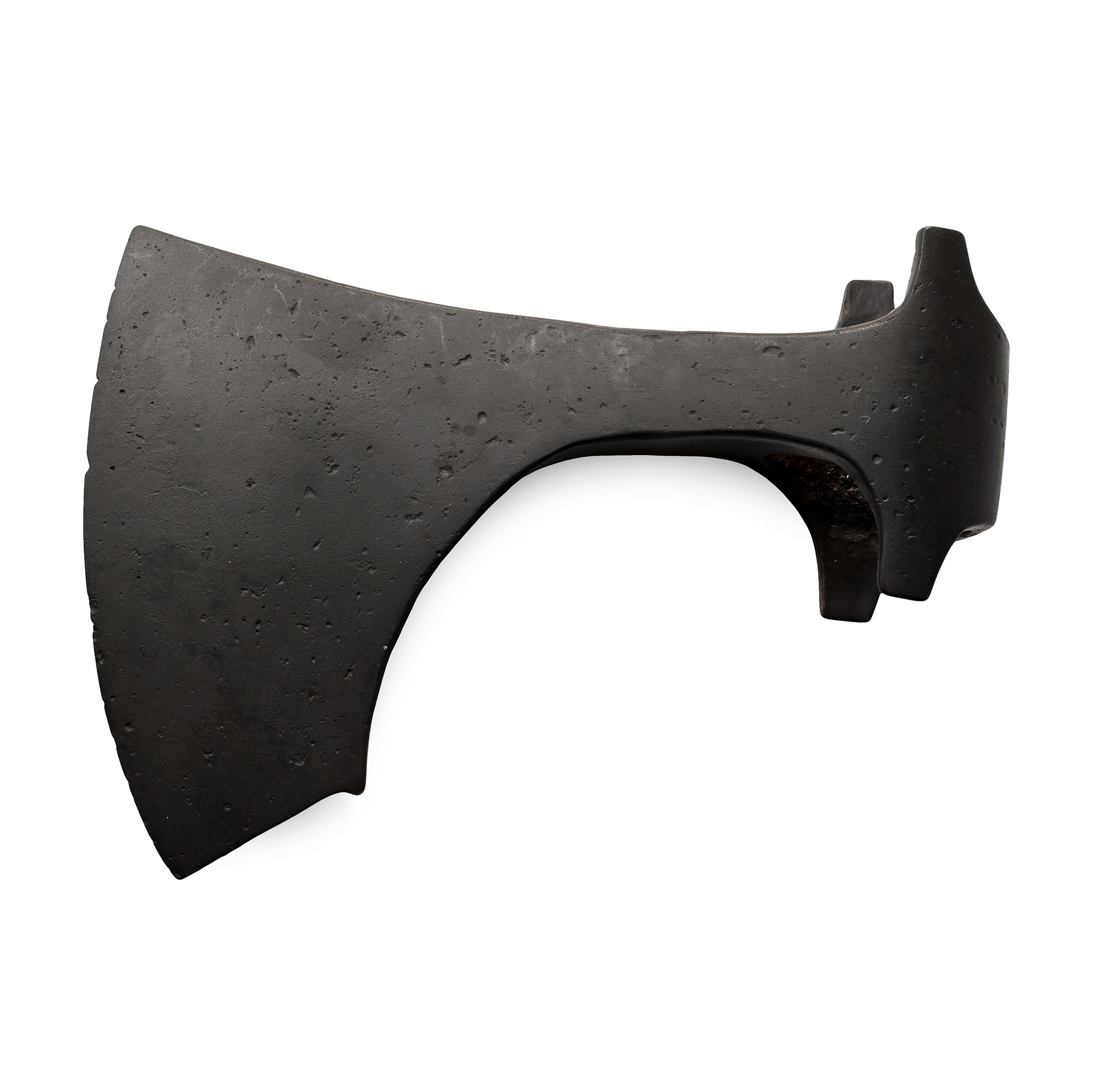
Viking Age Iron Socketted Bearded Axehead
CIRCA 10TH-11TH CENTURY A.D.
6 7/8 in. (788 grams, 17.5 cm).
With slender ridged blade and chin to the lower edge, round socket with rectangular flanges, flattened rear edge; professionally cleaned, conserved, and restored. [No Reserve]
ProvenanceFrom the family collection of a South East London collector; formerly acquired in the late 1950s.
LiteratureCf. Hjardar, K. & Vike, V., Vikings at war, Oxford-Philadelphia, 2016, p.163Y, for typology, and p.164, for discussion.
FootnotesThe type appears to be related to the Y-type of Viking axes. Slavic battle-axes also came into use in Scandinavia, especially in the eastern part of Gotland, Sweden and Denmark. The old Norse word Taparöx probably come from Topor, the Slavic word for axe. Eastern axes are also characterised by an almost completely round hole for the shaft.
CONDITIONTimeLine Auctions follows a vetting process to ensure the authenticity and legality of all items, reinforcing our commitment to integrity and responsible trading. Each antiquity, antique, and coin lot undergoes thorough examination by a vetting committee of at least ten external specialists, professional trade association members, scientists, and archaeologists: Our Vetting Process
AUCTIONS:
TimeLine is a leading auction house specialising in antiquities, ancient art, collectables, natural history, coins, medals, and books. Our auctions offer museums, collectors, historians, and enthusiasts the opportunity to acquire unique and historically significant pieces.
-
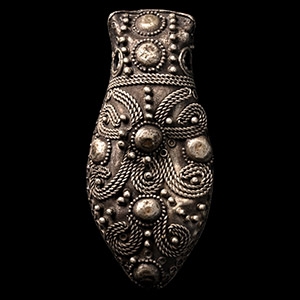
Viking Period Silver Filigree Teardrop Pendant
Circa 9th-11th century A.D.Sold for (Inc. bp): £572
Plano-convex in section and hollow-formed, with transverse channel to accept a suspension loop; applied bands of filigree, granules and bosses. 7.8 grams, 53 mm
Private collection formed in Europe in the 1980s. Westminster collection, central London, UK. -
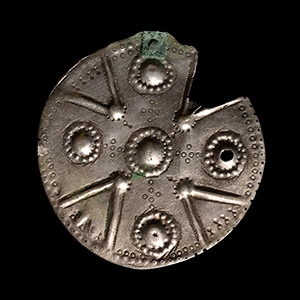
Viking Silver Pendant with Expanding Cross
9th-11th century A.D.Estimate: £250 - 350 (‡+bp*)
Opening Bid: £125
Executed in repoussé technique, a dome to each arm likely representing the Five Wounds of Christ, together with punched annulets and other details. 6.56 grams, 51 mm
From the collection of a North American gentleman, formed in the 1990s. -
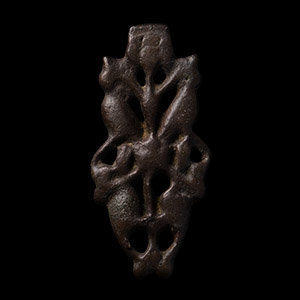
Viking Age Bronze Zoomorphic Mount
10th-11th century A.D.Estimate: £100 - 140 (‡+bp*)
Opening Bid: £50
Displaying a symmetrical openwork design of birds within a vinescroll; attachment pin to the reverse. 12.4 grams, 44 mm
Found Winteringham, Humberside, UK, in 1986.
