
Loading, please wait...

LOT 1670
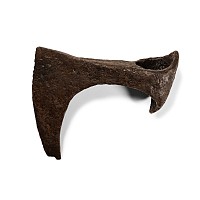
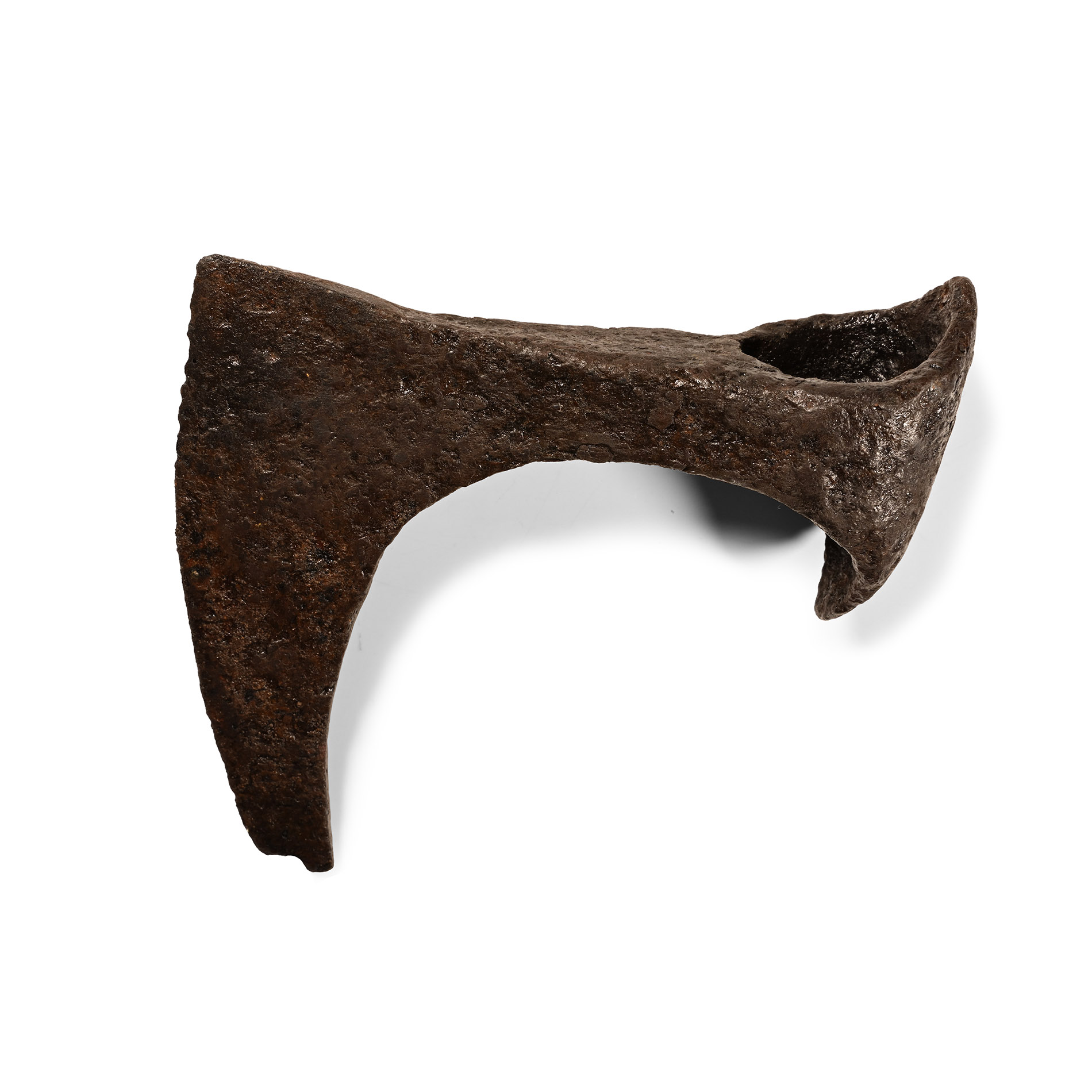
Viking Age Iron Long Bearded Axe Head
CIRCA 10TH-12TH CENTURY A.D.
5 3/4 in. (603 grams, 14.5 cm).
With broad curved blade and short spur beneath the chin, narrow neck, deep socket with extended edge to the reverse. [No Reserve]
ProvenanceFrom the private collection of a London gentleman, from his grandfather's collection formed before the early 1970s.
LiteratureCf. Arbman, H., Birka I: Die Gräber, Uppsala, 1940, pl.14, item 3; Kirpichnikov, A.N., Drevnerusskoe Oruzie, II, Moscow-Leningrad, 1966, in Arkheologiia SSSR, vol. E1-36, especially axes nos.1,5, from Веськово and Селибка (pl.XIII), and no.6 (pl.XXII) from Гусева Гора; Sedov, B.B., Finno-Ugri i Balti v Epokhi Srednevekovija, Moscow, 1987, pl V, items 16, 17, 20; pl.CXXIV, item 1.
FootnotesThe axe seems to be a variation of type IV of the Kirpichnikov classification of the Eastern Rus Axes typology. These axes appeared in the 10th century, and continued in the 10th-11th century.
CONDITIONTimeLine Auctions follows a vetting process to ensure the authenticity and legality of all items, reinforcing our commitment to integrity and responsible trading. Each antiquity, antique, and coin lot undergoes thorough examination by a vetting committee of at least ten external specialists, professional trade association members, scientists, and archaeologists: Our Vetting Process
AUCTIONS:
TimeLine is a leading auction house specialising in antiquities, ancient art, collectables, natural history, coins, medals, and books. Our auctions offer museums, collectors, historians, and enthusiasts the opportunity to acquire unique and historically significant pieces.
-
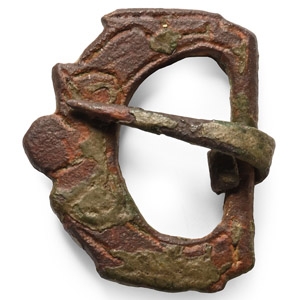
Anglo-Scandinavian Viking Bronze Buckle
Circa 6th century A.D.Sold for (Inc. bp): £715
D-shaped in plan with broad loop, Ringerike Style ornament, flat-section pin. 9.8 grams, 33 mm
Found Lincolnshire, UK. From an old private collection of Norfolk, UK, gentleman, formed since 1998. -
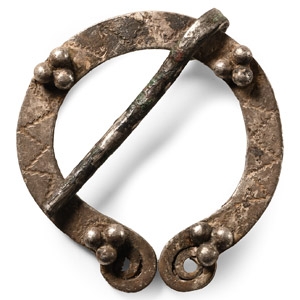
Viking Period Silver Penannular Brooch
10th-12th century A.D.Sold for (Inc. bp): £72
Flat-section with pointillé zigzag to the obverse, coiled finials, four granule cluster, sturdy round-section pin. 4.71 grams, 30 mm
UK private collection before 2000. Acquired on the UK art market. Property of a London gentleman. -
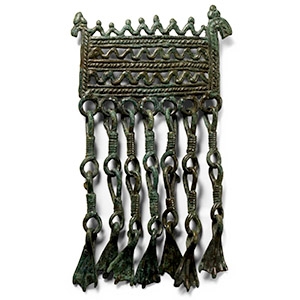
Viking Age Bronze Pendant with Duck-Foot Pendants
8th-10th century A.D.Sold for (Inc. bp): £624
A rectangular bronze pendant formed as a pair of addorsed horse-heads in profile and openwork panel; bar with seven articulated chains each terminating in a pendant formed as the foot of a wading bird, Finno-Ugric type. 146 grams, 15 cm
From the private collection of a London gentleman, from his grandfather's collection formed before the early 1970s.
