
Loading, please wait...
LOT 1571
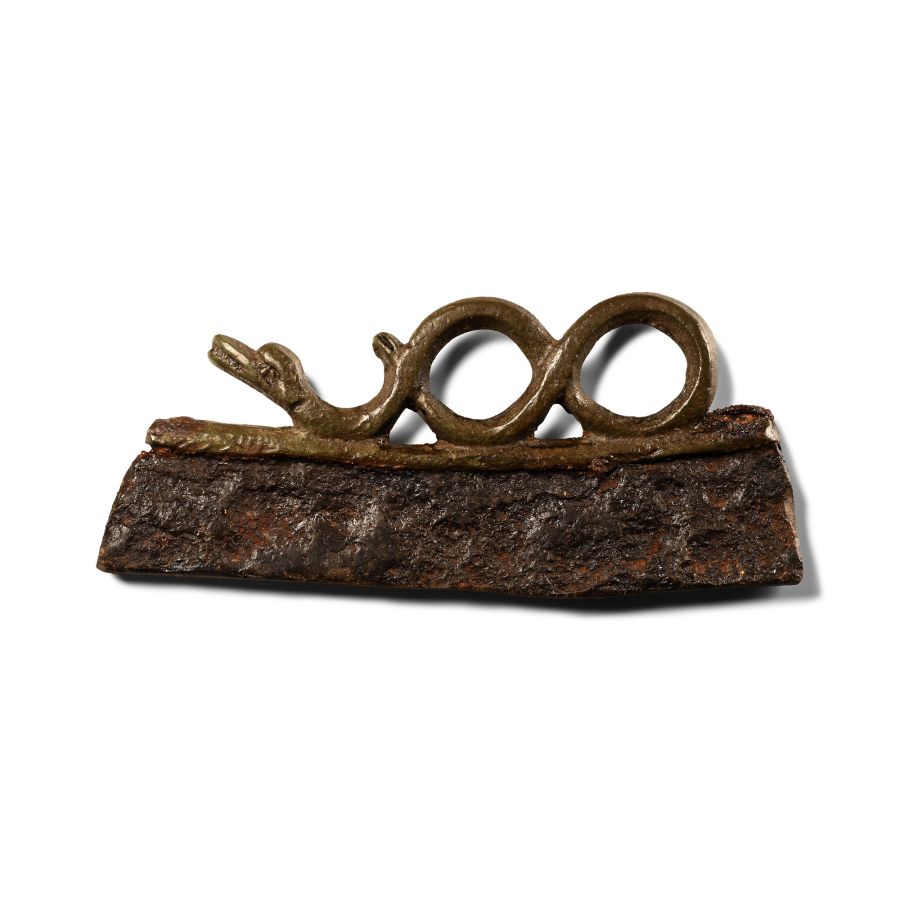
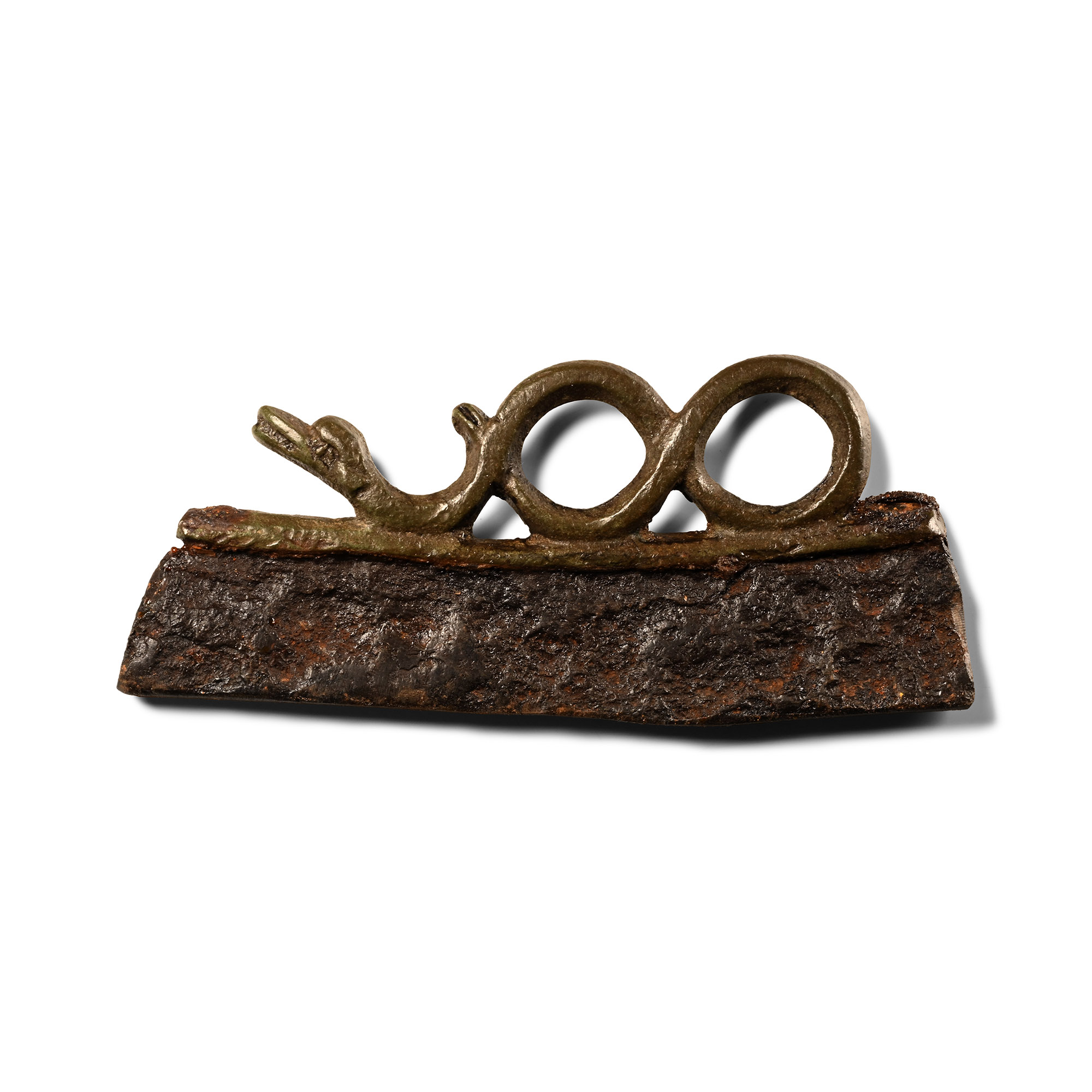
Viking Age Iron Fire-Striker with Bronze Serpent Handle
9TH-11TH CENTURY A.D.
3 in. (39 grams, 79 mm).
Comprising a flat band with two hoops for the fingers forming the body of a serpent with raised head behind, iron striking face to the lower edge. [No Reserve]
ProvenanceFrom the private collection of a London gentleman, from his grandfather's collection formed before the early 1970s.
LiteratureCf. Arbman, H., Birka I: Die Gräber, Uppsala, 1940, pl.144 (2).
CONDITIONTimeLine Auctions follows a vetting process to ensure the authenticity and legality of all items, reinforcing our commitment to integrity and responsible trading. Each antiquity, antique, and coin lot undergoes thorough examination by a vetting committee of at least ten external specialists, professional trade association members, scientists, and archaeologists: Our Vetting Process
AUCTIONS:
TimeLine is a leading auction house specialising in antiquities, ancient art, collectables, natural history, coins, medals, and books. Our auctions offer museums, collectors, historians, and enthusiasts the opportunity to acquire unique and historically significant pieces.
LOT 1571
Viking Age Iron Fire-Striker with Bronze Serpent Handle
Sold for (Inc. bp): £260
-
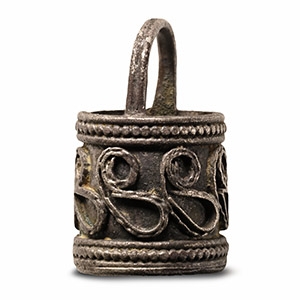
Pre Viking Scandinavian Silver Aroma Bucket Pendant
Circa 4th-7th century A.D.Sold for (Inc. bp): £338
Miniature drum-shaped vessel with strap handle, beaded wire bands to top and bottom of sidewall, filigree loop ornament. 2.02 grams, 18 mm
Private collection formed in Europe in the 1980s. Westminster collection, central London, UK.
Pendants in the form of miniature buckets have been found in a number of pagan Anglo-Saxon and Viking contexts and are generally made of bronze or iron, with gold examples being rare; three gold examples were found with the hoard from Hoen, Norway. Bronze bucket amulets have been found at Driffield in Yorkshire, and Vimose bog in Denmark, among other places. In form they represent wooden buckets bound with bronze or iron bands which have been found in Anglo-Saxon and Viking graves and are believed to have held mead or ale and were used to replenish the cups from which warriors drank. As amulets they probably represent the ecstatic power of alcoholic drink and the role of women as the dispensers of these precious beverages. -
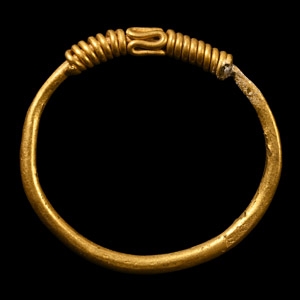
Viking Age Gold Twisted Wire Terminal Ring
Circa 9th-11th century A.D.Sold for (Inc. bp): £326
Irregular hoop with ends coiled about the shank. 2.11 grams, 21.95 mm overall, 19.16 mm internal diameter (approximate size British N, USA 6 1/2, Europe 13.72, Japan 13)
Ex property of a late Japanese collector, 1970s. -
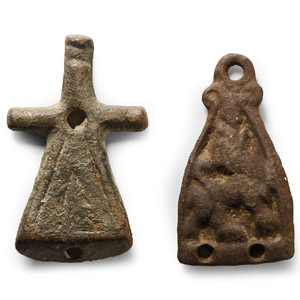
Anglo-Scandinavian Viking Bronze Stirrup Apex Mount Group
11th century A.D.Estimate: £150 - 200 (+bp*)
Opening Bid: £75
Comprising: a tongue-shaped mount of Williams's Class A Type II with pierced trefoil final, high-relief wolf in profile with head raised, two rivet-holes to the base and narrow ledge to the reverse; a triangular mount of Williams' Class A Type 14 with three radiating arms at the apex and rivet-hole between, low-relief chevron to the plaque, angled ledge to the lower edge with median rivet-hole. 43.3 grams total, 49-53 mm
Acquired on the UK art market in the 1980s. From an East Anglian private collection.
