
Loading, please wait...


LOT 1360
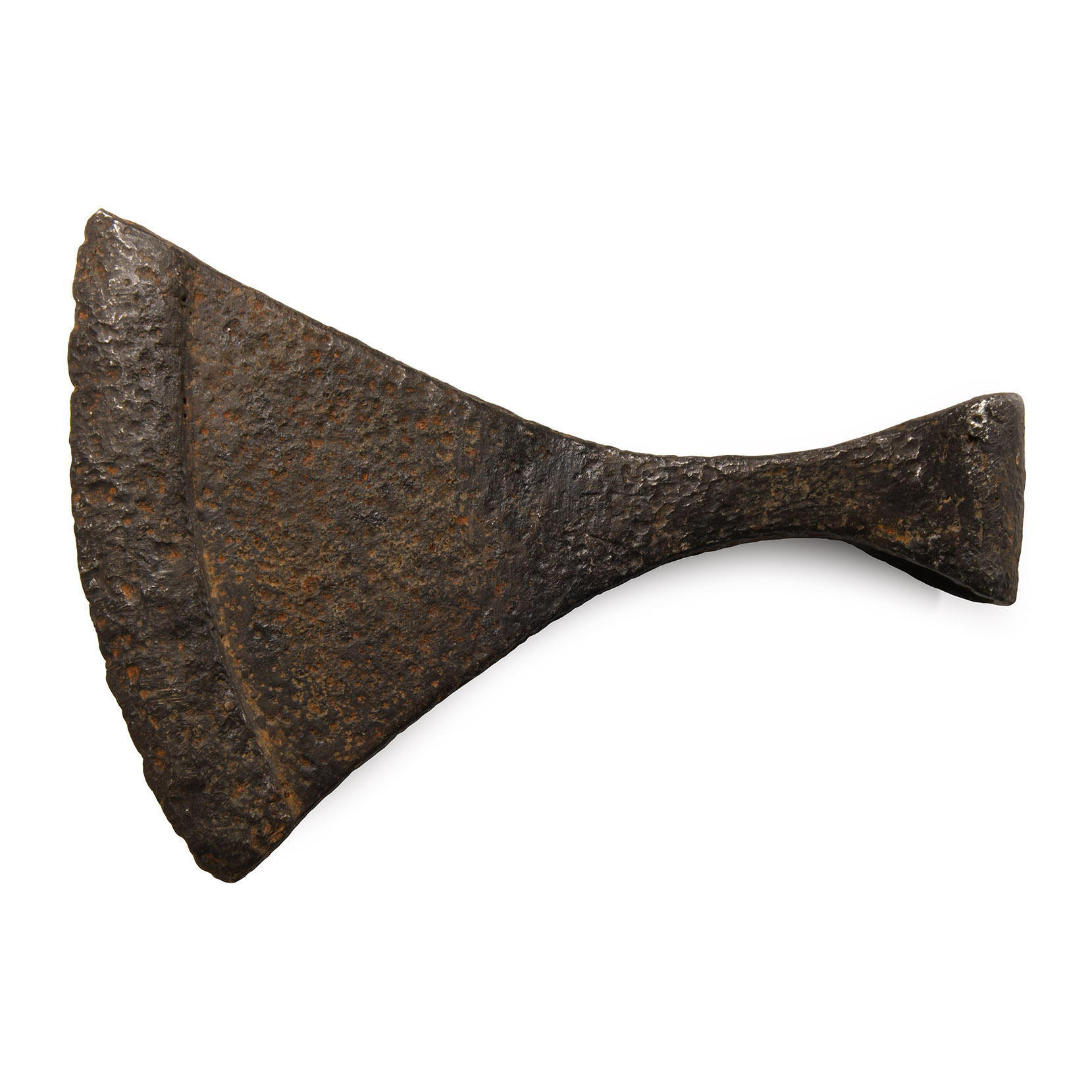
Viking Age Iron Broad Axehead
CIRCA 9TH-11TH CENTURY A.D.
7 3/4 in. (627 grams, 19.5 cm).
With elongated butt and flanged cylindrical socket, slender neck with broad, flaring cheeks, raised fore-edge to blade. [No Reserve]
ProvenancePrivate collection, UK, formed 1980s-1990s.
CONDITIONTimeLine Auctions follows a vetting process to ensure the authenticity and legality of all items, reinforcing our commitment to integrity and responsible trading. Each antiquity, antique, and coin lot undergoes thorough examination by a vetting committee of at least ten external specialists, professional trade association members, scientists, and archaeologists: Our Vetting Process
AUCTIONS:
TimeLine is a leading auction house specialising in antiquities, ancient art, collectables, natural history, coins, medals, and books. Our auctions offer museums, collectors, historians, and enthusiasts the opportunity to acquire unique and historically significant pieces.
-
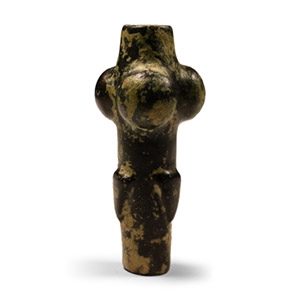
Luristan Bronze Bulbous Macehead
Circa 7th-6th century B.C.Sold for (Inc. bp): £182
With three round knobs at the top, radiating from the hollow shaft, with a further three heater-shaped projections below. 167 grams, 98 mm
Private collection, UK. -
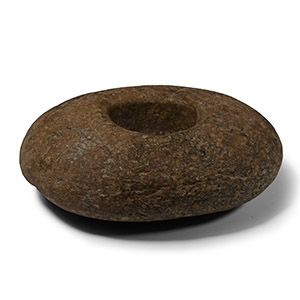
Chinese Stone Axehead
Neolithic Period, 3000-2000 B.C.Estimate: £120 - 170 (+bp*)
Opening Bid: £60
Biconvex in profile and annular in plan with rounded edges to the socket. 1.66 kg, 16.8 cm
Private UK collection. Acquired in the 1980s. Property of a Cambridgeshire gentleman. -
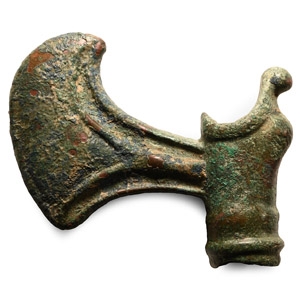
North-Western Persian Elamite Bronze Axehead
2nd millennium B.C.Sold for (Inc. bp): £286
With crescent blade and rounded knot at the butt, ornamental curved edging to the upper shaft hole, a cord edge on the lower shaft hole, incised band around the edge of the blade. 267 grams, 97 mm
UK private collection before 2000. Acquired on the UK art market. Property of a London gentleman.
The type corresponds to the Gernez type H.2.H.a, of axes with collar and short sleeve lined with mouldings, fan-shaped blade and rear knot. It was a variant only known in Elam and Luristan. In Luristan one identical specimen was found at Chigha Sabz (grave M7). In Elam the majority of these axes were found in the Middle-Bronze Age (Age of Isin-Larsa or Early Babylonian Age) tombs of Sarcophagi, at Susa.
