
Loading, please wait...
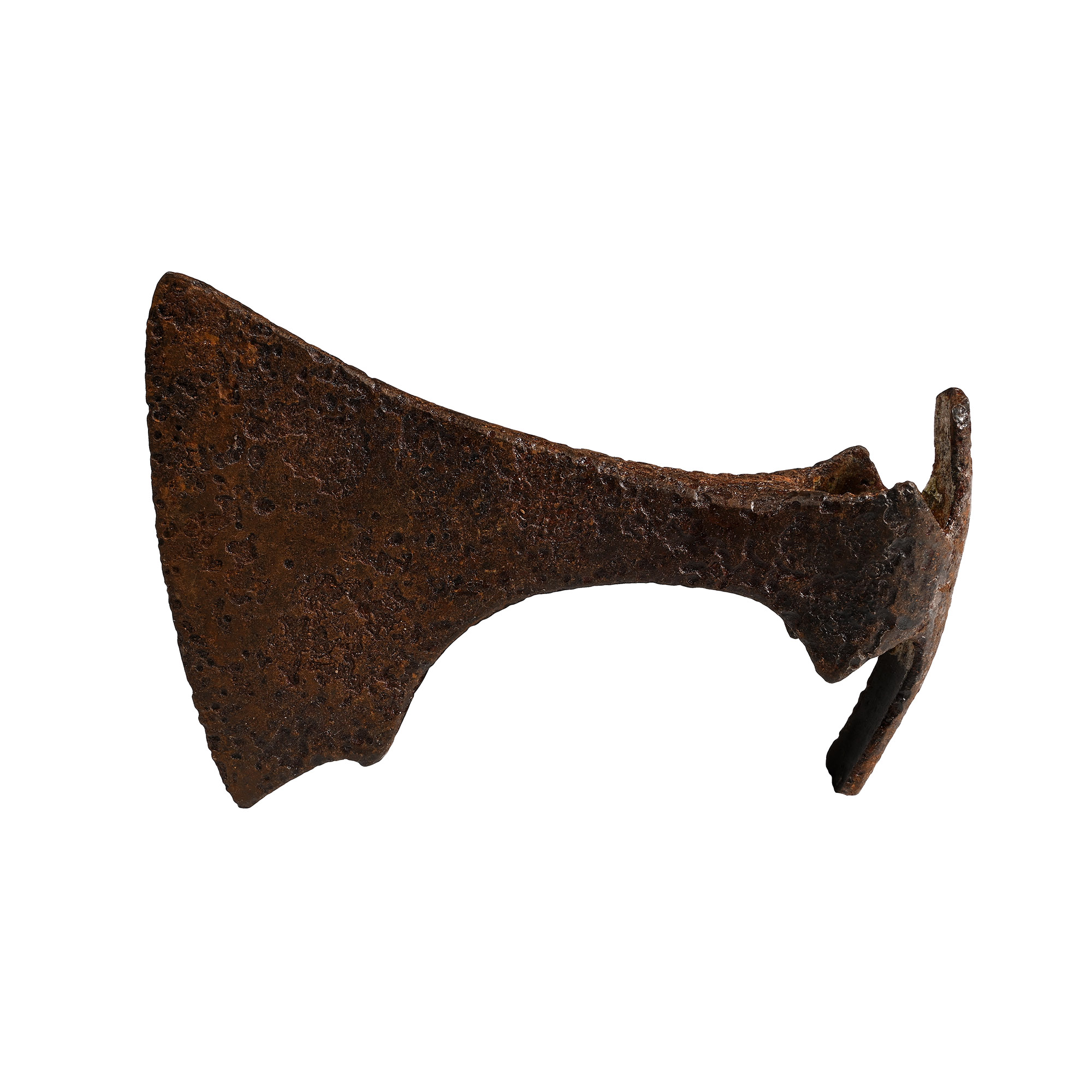
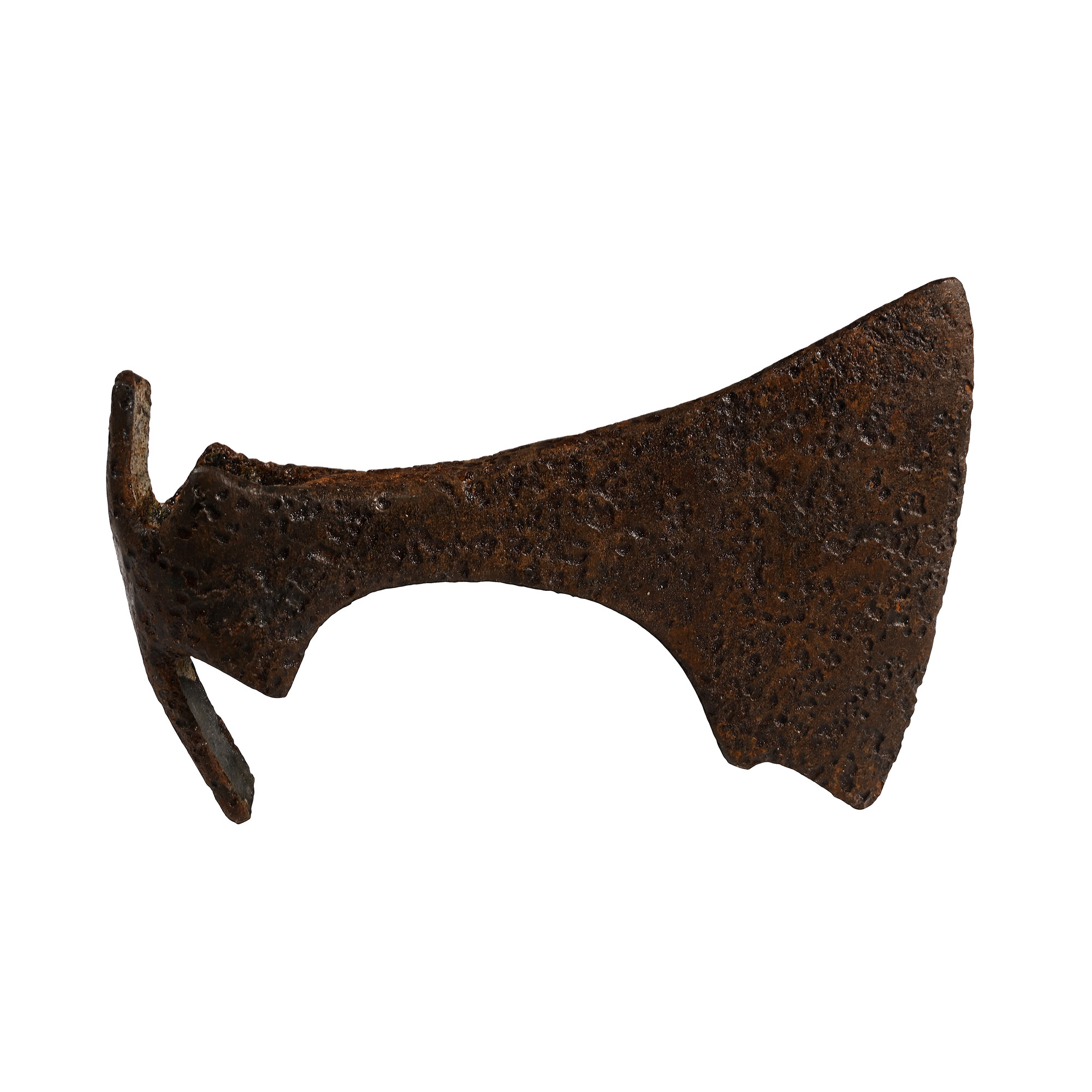
LOT 1462
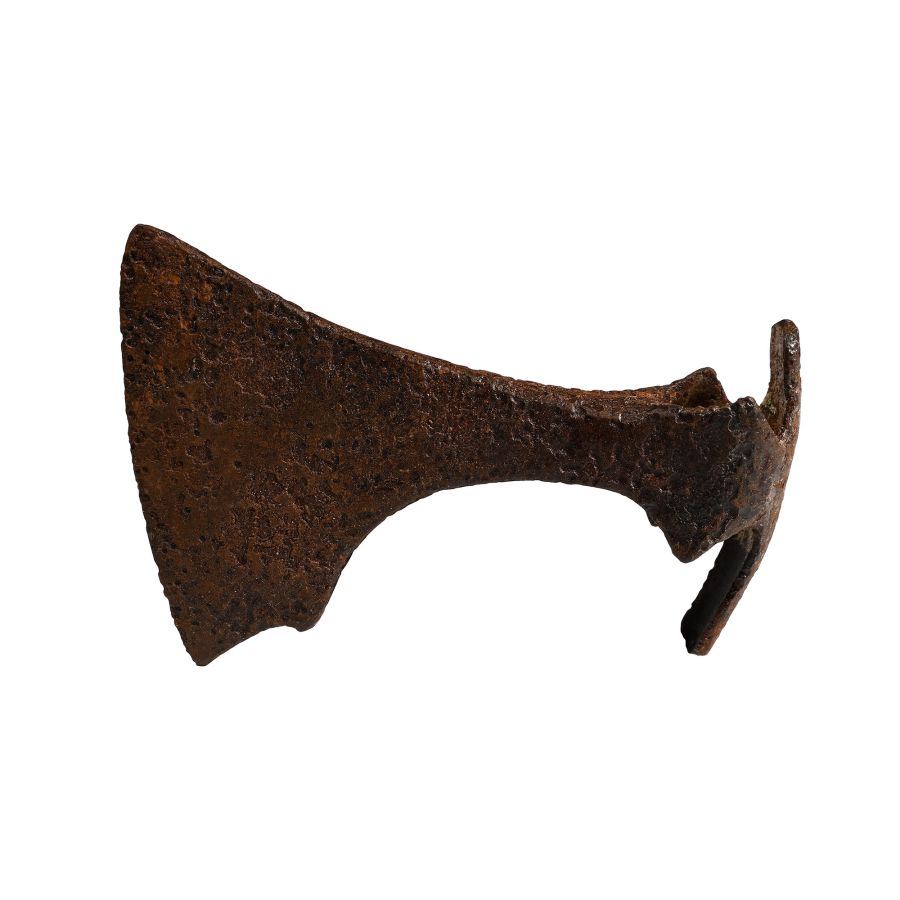
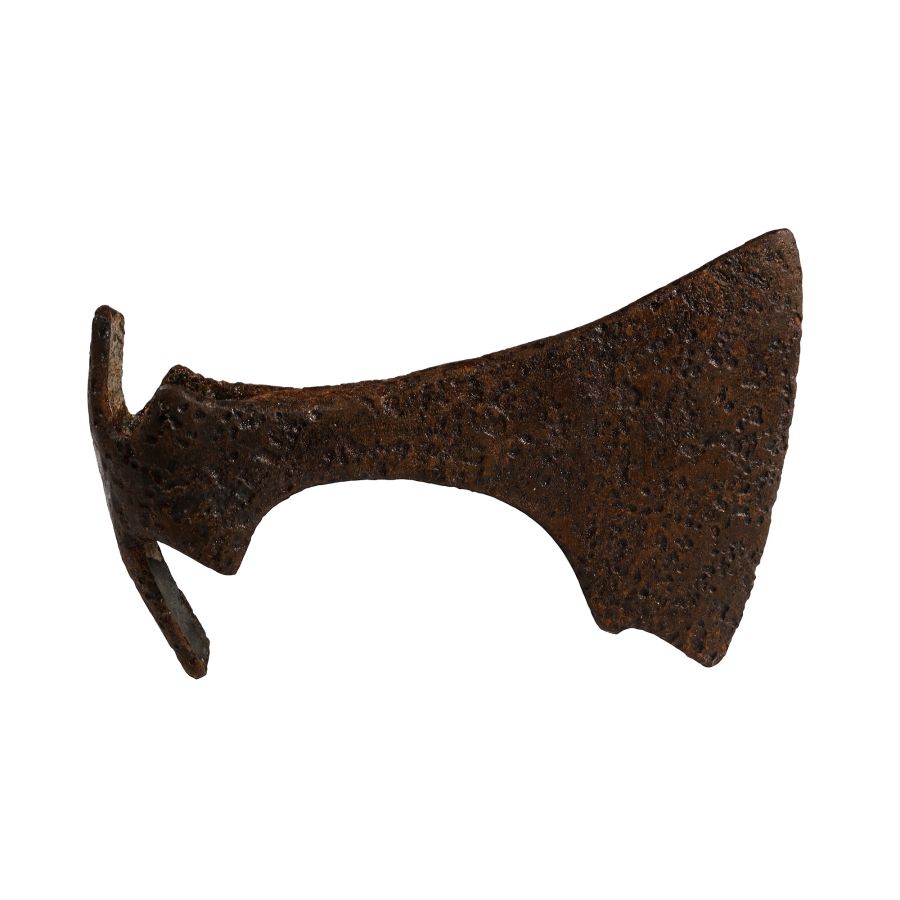
Viking Age Iron Bearded Axehead
9TH-11TH CENTURY A.D.
5 1/2 in. (331 grams, 14 cm).
With gently curving blade, long neck with a spur, round socket with vertical flanges. [No Reserve]
ProvenanceFrom a North American collection formed in the 1970s-1990s.
This lot is accompanied by an illustrated lot declaration signed by the Head of the Antiquities Department, Dr Raffaele D'Amato.
Exhibited at the Harwich Museum, Harwich, Essex, UK, 12th March-9th June 2025; accompanied by a copy of a photograph of the artefacts on display.
LiteratureCf. Arbman, H., Birka I: Die Gräber, Uppsala, 1940, pl.14(1).
CONDITIONTimeLine Auctions follows a vetting process to ensure the authenticity and legality of all items, reinforcing our commitment to integrity and responsible trading. Each antiquity, antique, and coin lot undergoes thorough examination by a vetting committee of at least ten external specialists, professional trade association members, scientists, and archaeologists: Our Vetting Process
AUCTIONS:
TimeLine is a leading auction house specialising in antiquities, ancient art, collectables, natural history, coins, medals, and books. Our auctions offer museums, collectors, historians, and enthusiasts the opportunity to acquire unique and historically significant pieces.
-
Hellenistic Bronze Cuirass Section
3rd-1st century B.C.Sold for (Inc. bp): £286
Possibly the upper right front element of a composite cuirass for a cataphract (armoured horseman), part of the edge around the neck and shoulders preserved, rivets and clasp for attachment of the back section present. 261 grams, 23 cm
UK private collection, acquired in 1996. This lot is accompanied by an illustrated lot declaration signed by the Head of the Antiquities Department, Dr Raffaele D'Amato.
A near complete armour for cataphract was found in the French excavations in Al-Khanoum, a Hellenistic city in Afghanistan. The cavalry of Seleucid, Ptolemaic and other Hellenistic Kingdoms formed regiments of heavy armoured horsemen, who in the west, employed a combination of lamellar and segmented armour together with muscled armour of Greek type. Cataphract armour in the West had more Greek element, for example more plate armour and less scale and lamellar. -
Luristan Long Sword with Handle
Circa 9th-8th century B.C.Sold for (Inc. bp): £1,170
With a slender double-edged blade and a narrow handle with conical pommel. 809 grams, 76.3 cm
Ex Deutsch Auctioneers, Vienna, 25 February 2020, no.7. with Galerie Rhéa, Zurich, Switzerland. This lot is accompanied by an illustrated lot declaration signed by the Head of the Antiquities Department, Dr Raffaele D'Amato.
The Luri people produced a quantity of fine metalwork, which according to Dr Khorasani, could be due to a settled period which arose as a result of the defeat of the Elamites by the Babylonians, leaving the Luristani people in relative peace for a period of time after 1200 BC. According to Khorasani, 'A culture of innovation and experimentation flourished, and the repertoire of the Luristan smiths expanded in the period between 1150–1050 BC.' -
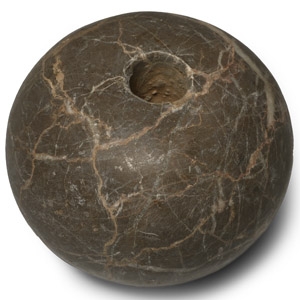
Western Asiatic Stone Macehead
3rd-2nd millennium B.C.Estimate: £80 - 100 (+bp*)
Opening Bid: £44
Toroid and drilled vertically to accommodate a wooden shaft. 453 grams, 74 mm
From the collection of a London, UK, gentleman, 1990s. This lot is accompanied by an illustrated lot declaration signed by the Head of the Antiquities Department, Dr Raffaele D’Amato. This lot is accompanied by an illustrated lot declaration signed by the Head of the Antiquities Department, Dr Raffaele D'Amato.
