
Loading, please wait...
LOT 1363
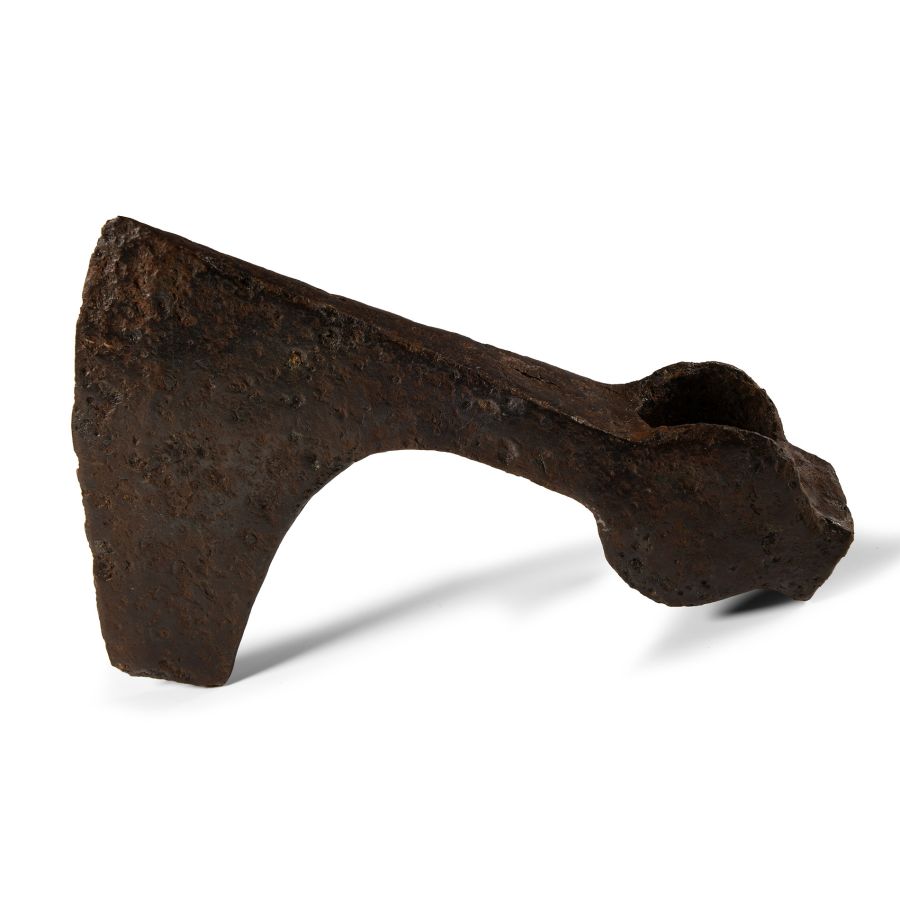
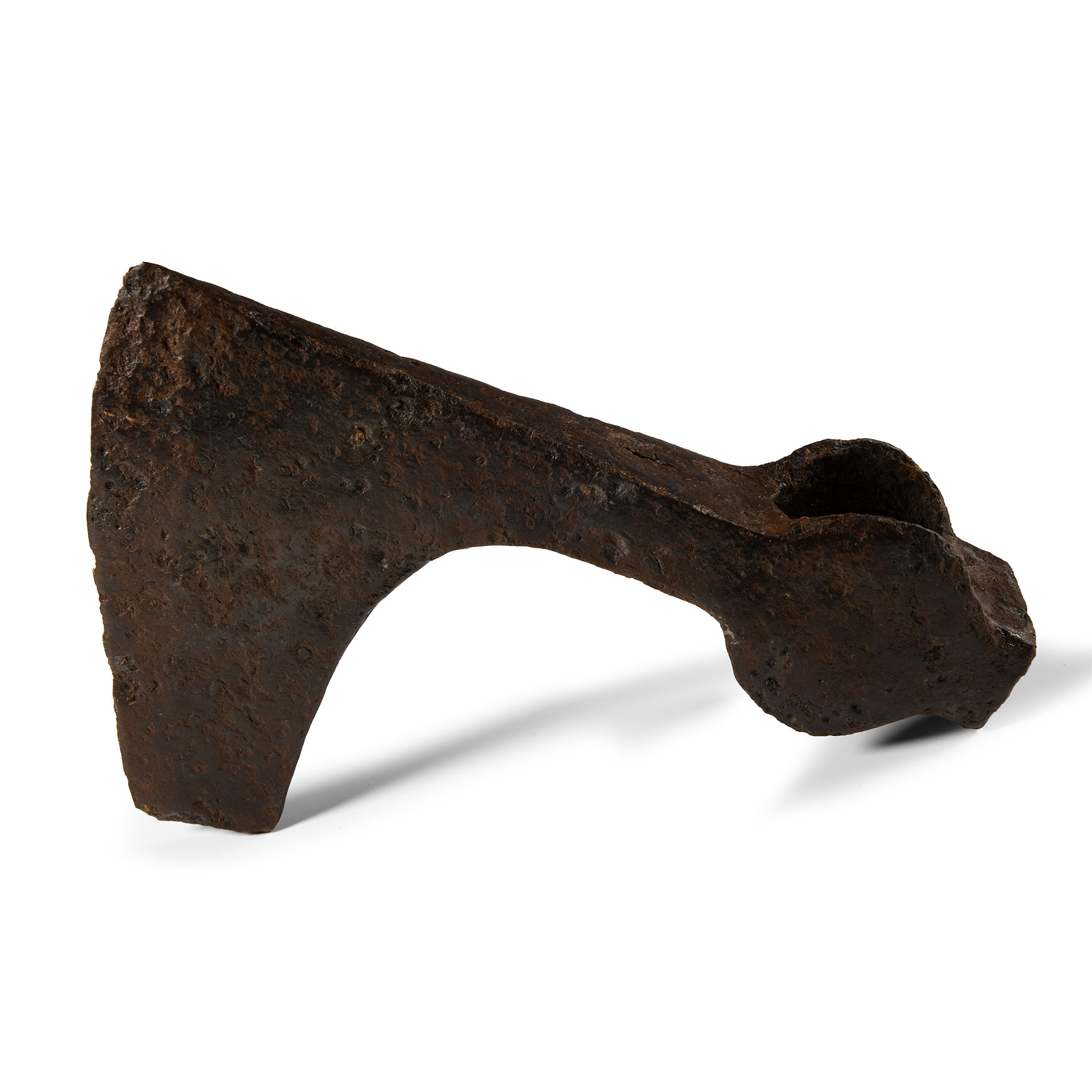
Viking Age Iron Bearded Axehead
9TH CENTURY A.D.
7 1/4 in. (758 grams, 18.5 cm).
With triangular section narrow blade widening to a broad bevelled edge with square chin, lateral flanges to the socket.
ProvenanceFrom the private collection of a London gentleman, from his grandfather's collection formed before the early 1970s.
LiteratureCf. Hjardar, K. & Vike, V., Vikings at war, Oxford-Philadelphia, 2016, p.163, for the typology of Viking axes, letter B.
FootnotesThe axe belongs to a category of bearded axes. The skeggöks (bearded axes) had a long edge, designed to split tree-trunks into planks and beams. Usually the beard was at the bottom end of the blade, but some axes did sometimes have extra long blades.
CONDITIONTimeLine Auctions follows a vetting process to ensure the authenticity and legality of all items, reinforcing our commitment to integrity and responsible trading. Each antiquity, antique, and coin lot undergoes thorough examination by a vetting committee of at least ten external specialists, professional trade association members, scientists, and archaeologists: Our Vetting Process
AUCTIONS:
TimeLine is a leading auction house specialising in antiquities, ancient art, collectables, natural history, coins, medals, and books. Our auctions offer museums, collectors, historians, and enthusiasts the opportunity to acquire unique and historically significant pieces.
-
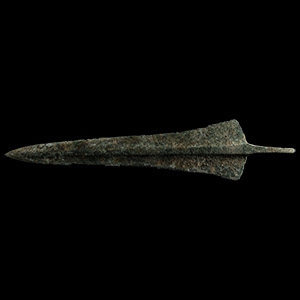
Western Asiatic Bronze Tanged Spearhead
Circa 13th-6th century B.C.Estimate: £100 - 140 (+bp*)
Opening Bid: £50
With leaf-shaped blade and rounded tip, pronounced medial rib and shoulder flanges, short flat-section tang. 255 grams, 31 cm
Acquired 1980-2015. Ex Abelita family collection.
The spearhead belongs to type 2 of spearheads according to the classification of Khorasani. A similar specimen was excavated by Negahban in Marlik. -
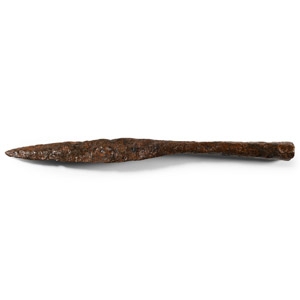
Anglo-Saxon Iron Socketted Spearhead
6th-8th century A.D.Sold for (Inc. bp): £163
Lentoid-section narrow blade with thick shoulder, closed socket; Swanton's Group I2. 159 grams, 26 cm
Found near Wetwang, East Yorkshire, UK. Acquired circa 2005. Ian Wilkinson collection, Nottinghamshire, UK.
The spear-heads of group I2 belong to a larger number of blades with more slender and regularly curved leaf-shapes than previous types. The majority present profiles more regularly curved from junction to tip, the broader part of the blade near the middle, with the fuller comformably longer. All of the group are much of the length varying between some 25 and 35 cm. -
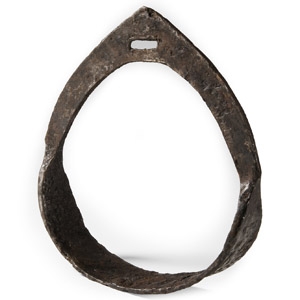
Viking Age Iron Stirrup with Laten Inlay
9th-11th century A.D.Sold for (Inc. bp): £72
Comprising an ovoid body with a rectangular void to accept a strap; the lower section broad with a rib to the underside, the upper flat in section with latten panel inlay to one face. 291 grams, 16 cm
From the private collection of a London gentleman, from his grandfather's collection formed before the early 1970s.
