
Loading, please wait...
LOT 1374
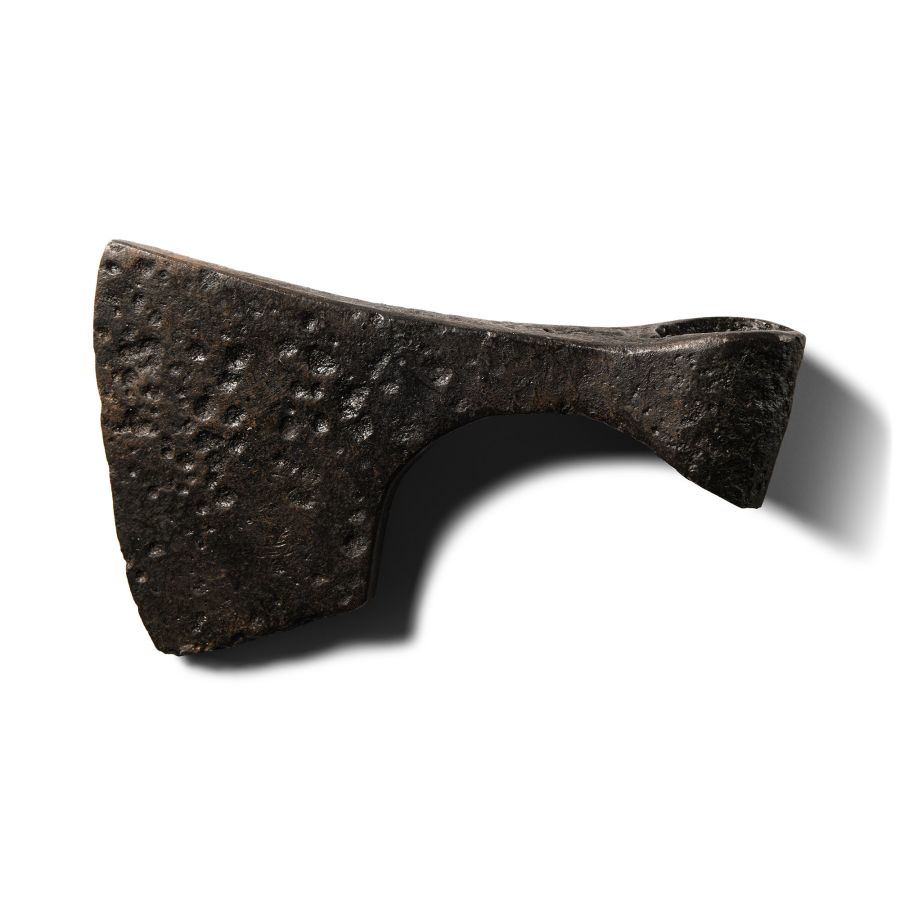
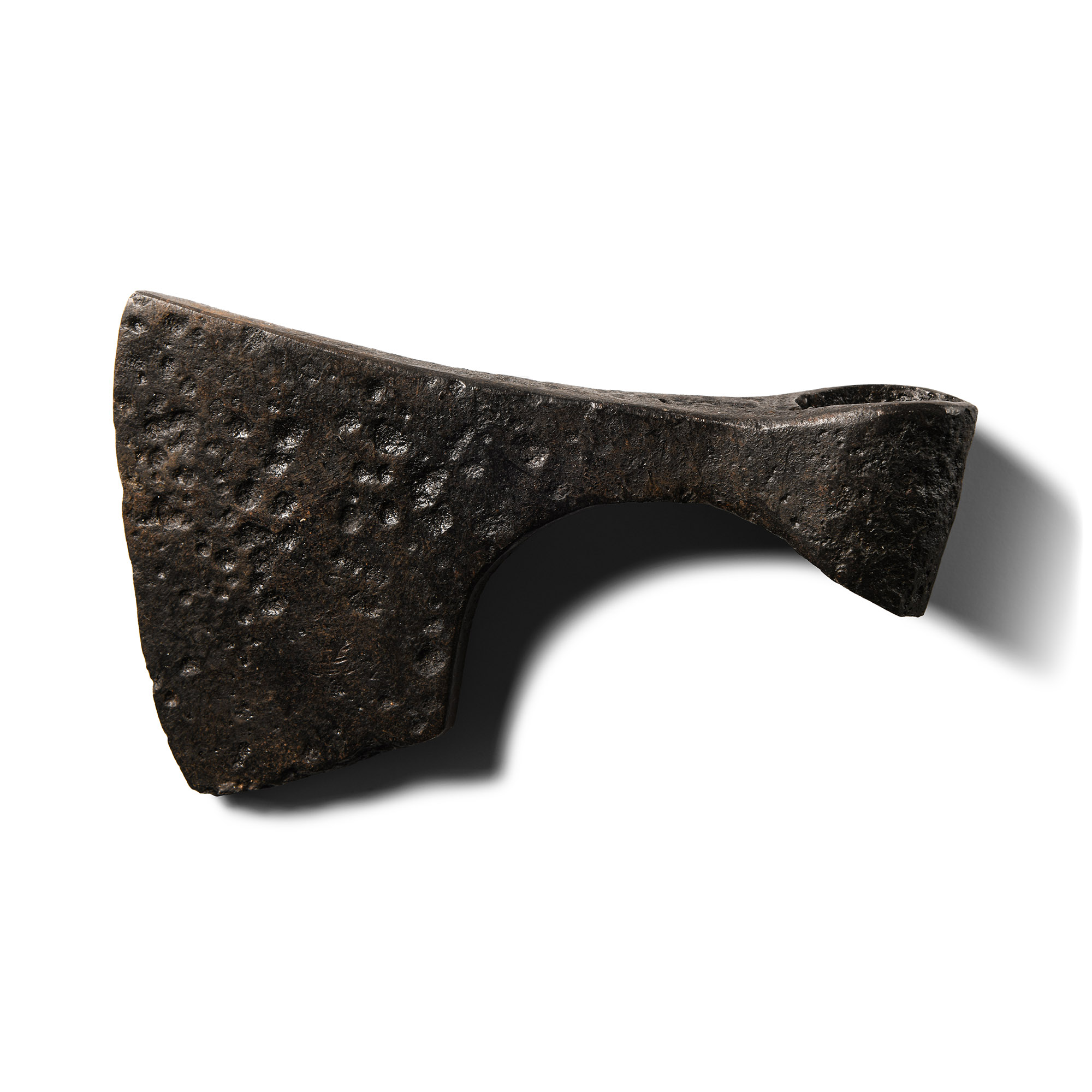
Viking Age Iron Bearded Axehead
CIRCA 9TH-11TH CENTURY A.D.
4 3/8 in. (221 grams, 11.1 cm).
With triangular-section narrow blade widening to a broad bevelled edge and square chin, flared socket. [No Reserve]
ProvenanceFrom the collection of a Californian, USA, gentleman, dating back to the late 1960s.
LiteratureCf. Sedov, B.B., Finno-Ugri i Balti v Epokhi Srednevekovija, Moscow, 1987, pl.CXXIV, item 3.
FootnotesThe more commonly used weapons of the Finno-Ugrian people were axes, commonly found in all Finnic areas, as well as spears. Iron axeheads of this typology show a sub-trapezoidal asymmetrical blade, often perforated through the centre.
CONDITIONTimeLine Auctions follows a vetting process to ensure the authenticity and legality of all items, reinforcing our commitment to integrity and responsible trading. Each antiquity, antique, and coin lot undergoes thorough examination by a vetting committee of at least ten external specialists, professional trade association members, scientists, and archaeologists: Our Vetting Process
AUCTIONS:
TimeLine is a leading auction house specialising in antiquities, ancient art, collectables, natural history, coins, medals, and books. Our auctions offer museums, collectors, historians, and enthusiasts the opportunity to acquire unique and historically significant pieces.
-
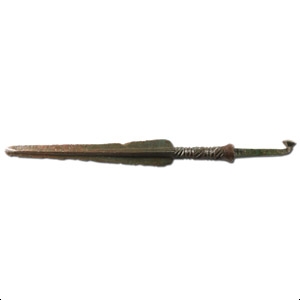
Western Asiatic Bronze Spearhead with Decorative Supports and Blood Channels
2nd millennium B.C.Estimate: £400 - 600 (+bp*)
Opening Bid: £200
With a long triangular blade, strongly marked midrib divided into five grooves, rectangular-section tang; engraved and reinforced shaft with diagonal and horizontal grooves. 474 grams, 43 cm
Acquired 1980-2015. Ex Abelita family collection.
This homogeneous subtype (LF 2a of Gernez) is characterised by a set of morphological particularities which constitute a functional and aesthetic outcome. The tapered blade, triangular (like in our case) or ogival, is reinforced by a strong median bulge. The intermediate part often bears an incised or moulded decoration and the base is with a marked widening or with a stopper disc. The tang, square in section, is curved and widens at the end almost at a right angle. -
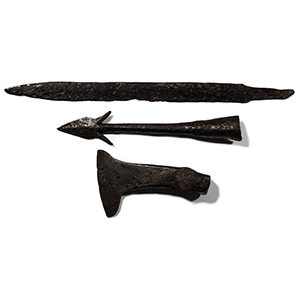
Saxon Iron Armory Group
Circa 6th-7th century A.D.Sold for (Inc. bp): £260
Comprising: axehead with sturdy square-section neck, T-shaped blade, hammer-face to rear of the socket; barbed spearhead with split socket; long single-edged knife with stub tang. 1.37 kg total, 16.5-43 cm
From the private collection of a London gentleman, from his grandfather's collection formed before the early 1970s. -
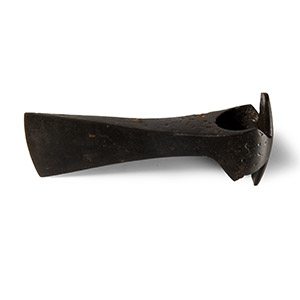
Viking Age Narrow Iron Axehead
Circa 9th-11th century A.D.Sold for (Inc. bp): £234
With triangular-section long blade extending to a socket with small lateral flanges and rectangular extension to the rear. 229 grams, 12.6 cm
Property of London businessman, from his grandfather's collection after WW2; thence by family descent. From the private collection of John Lawton, Surrey, UK. Accompanied by a copy of a previous catalogue information page.
