
Loading, please wait...
LOT 1046
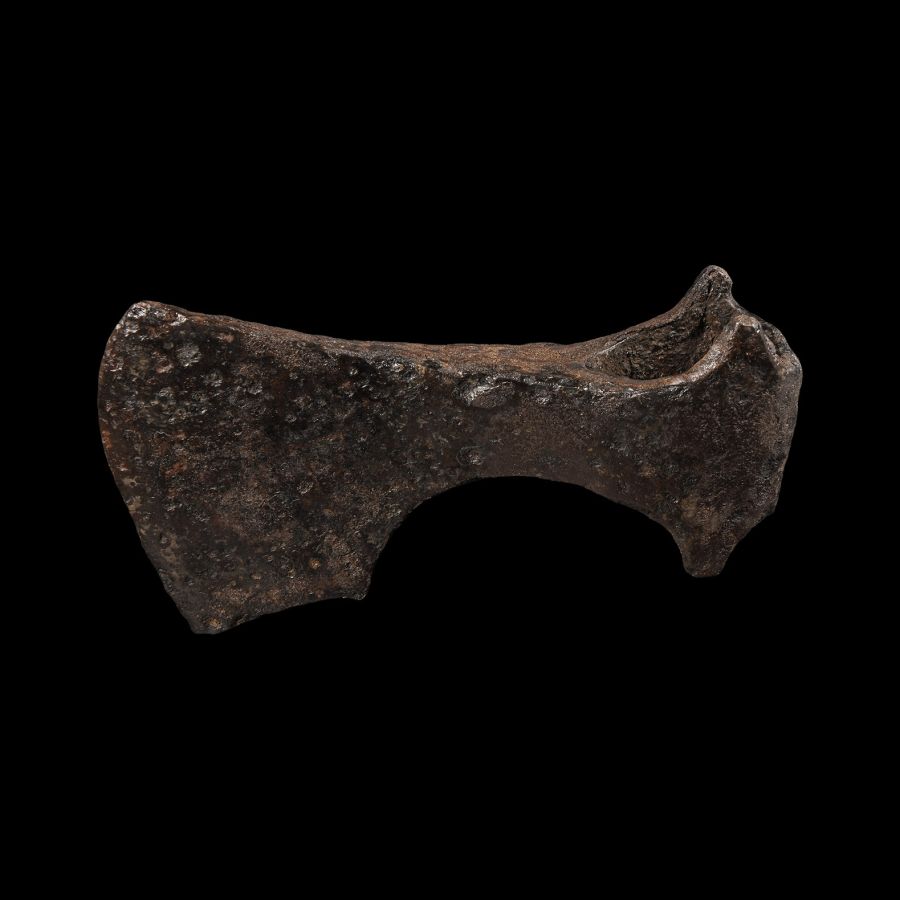
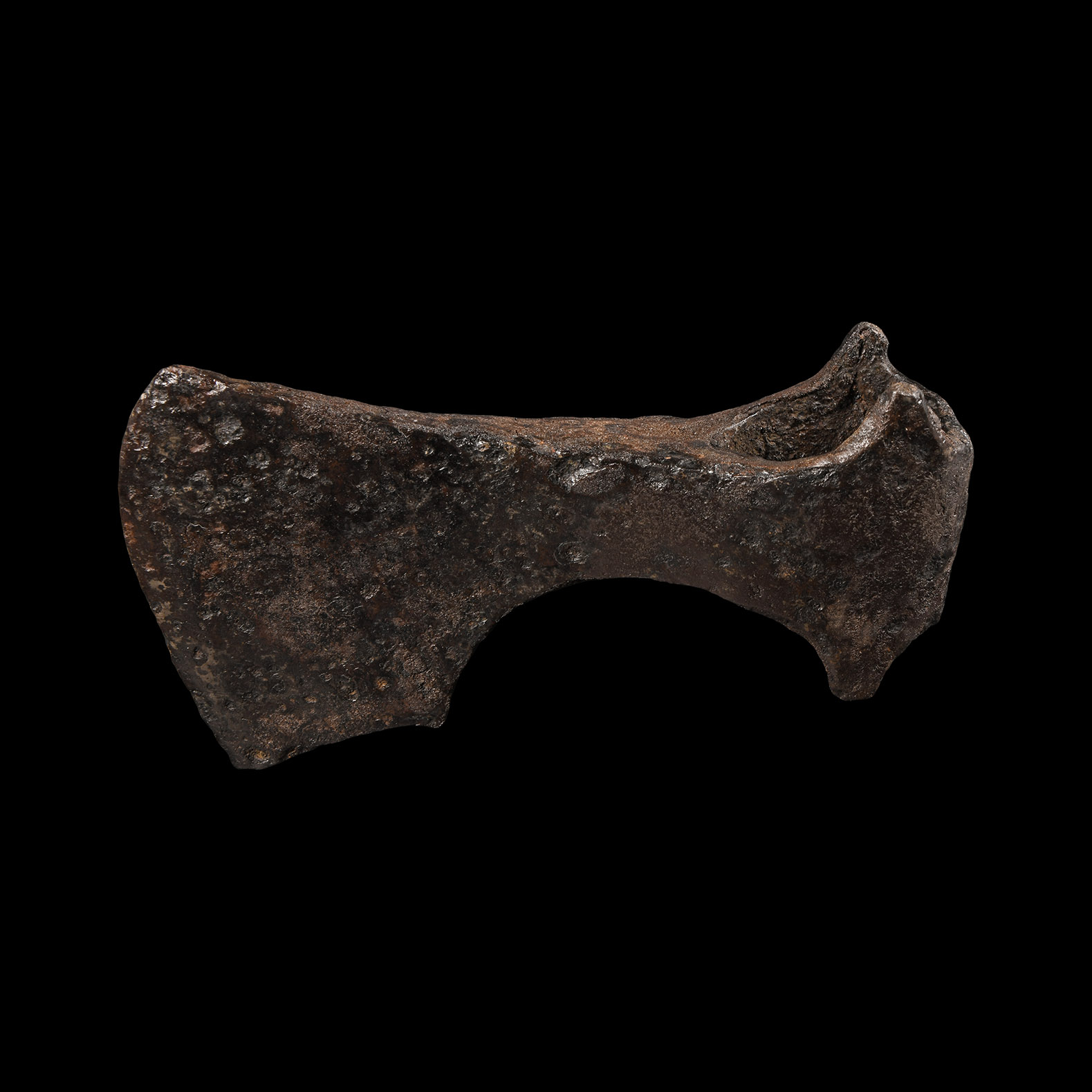
Viking Age Iron Bearded Axehead
10TH-13TH CENTURY A.D.
6 3/4 in. (821 grams, 17 cm).
Finno-Ugrian iron forged with triangular-section narrow blade widening to a broad bevelled edge with square chin and spur to the rear, socket with flanges to the rear. [No Reserve]
ProvenanceAcquired 1971-1972.
From the collection of the vendor's father.
Property of a London, UK, collector.
Cf. for similar axes Nicolle, D., 'Raiders of the Ice War' in Military Illustrated, March 1996, no.94, pp.26-29, fig.p.28; Sedov, B.B., Finno-Ugri i Balti v Epokhi Srednevekovija, Moscow, 1987, pl.CX, item 44.
FootnotesDuring the mid 13th century, the axes were favourite weapons among Baltic people. For instance the Curonian army included lightly armed soldiers who fought with spears, shields, fighting knives and axes. A heavily armed soldier could also carry a sword, a helmet, a shield and a wide bladed axe.
CONDITIONTimeLine Auctions follows a vetting process to ensure the authenticity and legality of all items, reinforcing our commitment to integrity and responsible trading. Each antiquity, antique, and coin lot undergoes thorough examination by a vetting committee of at least ten external specialists, professional trade association members, scientists, and archaeologists: Our Vetting Process
AUCTIONS:
TimeLine is a leading auction house specialising in antiquities, ancient art, collectables, natural history, coins, medals, and books. Our auctions offer museums, collectors, historians, and enthusiasts the opportunity to acquire unique and historically significant pieces.
-
.jpg)
Evans Transitional 34-Shot Musket
1866-1867 A.D.Sold for (Inc. bp): £1,404
By Evans Repeating Co, with 71 cm (28") round barrel with 34 shot tubular magazine in butt and hinged back-sight, two-piece wood stock with steel butt plate, sling swivels, and collars; action working well and believed only 150 made. 3.85 kg, 117 cm
Acquired from M J Noble Ltd, UK, 2015. The Kusmirek Collection, UK. Accompanied by copies of the purchase invoice and listing.
Sold as an exempt item under Section 58 (2) of the Firearms Act, 1968, to be held as a curiosity or ornament. No license required but buyer must be over 18 years of age. Overseas bidders should note that, due to UK regulations governing export of all firearms, overseas buyers will need to make arrangements for shipping this lot out of the UK directly, by air freight, with a specialist company or agent. -
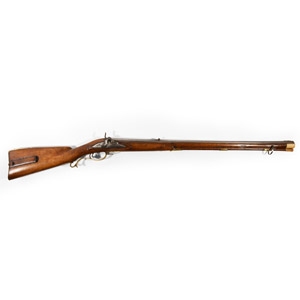
German Jager Set Trigger Percussion Rifle
1730-1830 A.D.Sold for (Inc. bp): £780
Converted from a flintlock of about 3/4" bore with lock modified having 77cm (30¾") rifled barrel swamped to muzzle with set and hair triggers, with full wood stock and shaped butt with patch compartment and sliding top and fitted with brass butt plate, trigger guard, ferrules and engraved side plates and a bone fore-end; the wood ramrod with bone tip; fitted with hinged sling loops; action working well to half cock, full cock and set. 3.70 kg, 116 cm
Acquired from M J Noble, UK, 2015. The Kusmirek Collection, UK. Accompanied by copy of an invoice and information.
Sold as an exempt item under Section 58 (2) of the Firearms Act, 1968, to be held as a curiosity or ornament. No license required but buyer must be over 18 years of age. Overseas bidders should note that, due to UK regulations governing export of all firearms, overseas buyers will need to make arrangements for shipping this lot out of the UK directly, by air freight, with a specialist company or agent. -
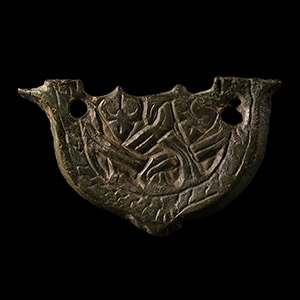
Viking Age Bronze Jellinge Sword Scabbard Chape
10th century A.D.Sold for (Inc. bp): £130
Plate with lip to the outer curved edges, knop to the centre of the bow and spurs to the angles; low-relief design of interlaced foliage within a braided band; lateral mounting holes, three studs to the reverse. 14.7 grams, 52 mm
From the collection of a North American gentleman, formed in the 1990s.
