
Loading, please wait...
LOT 1569
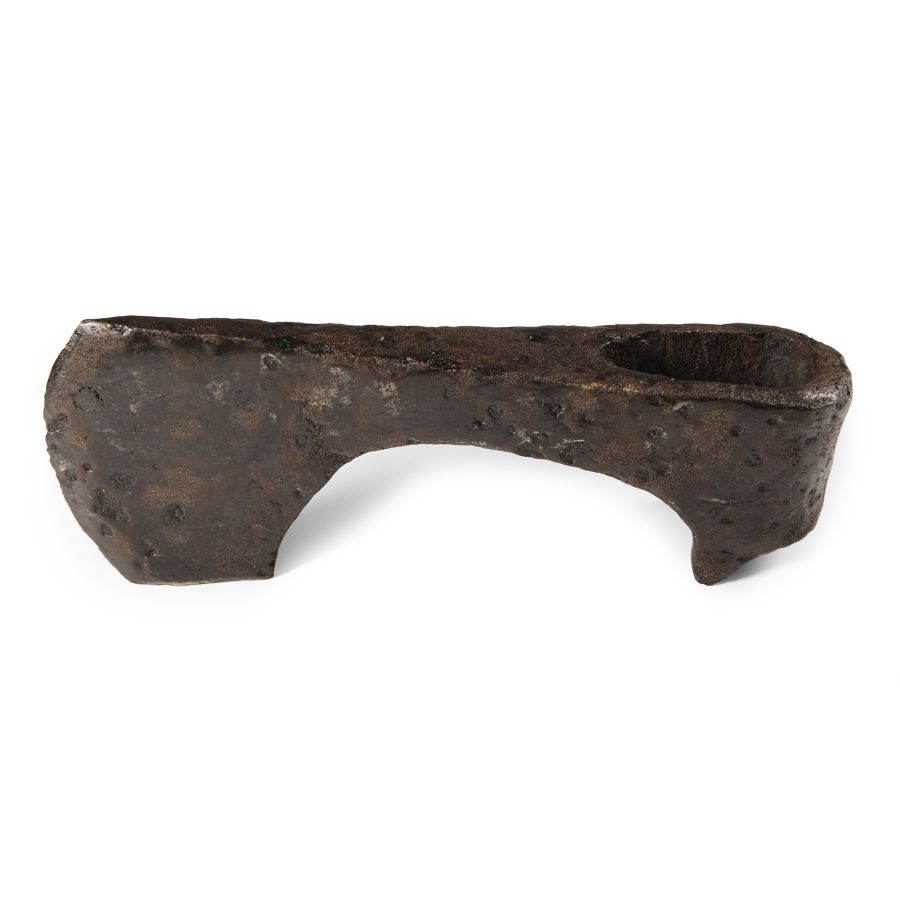
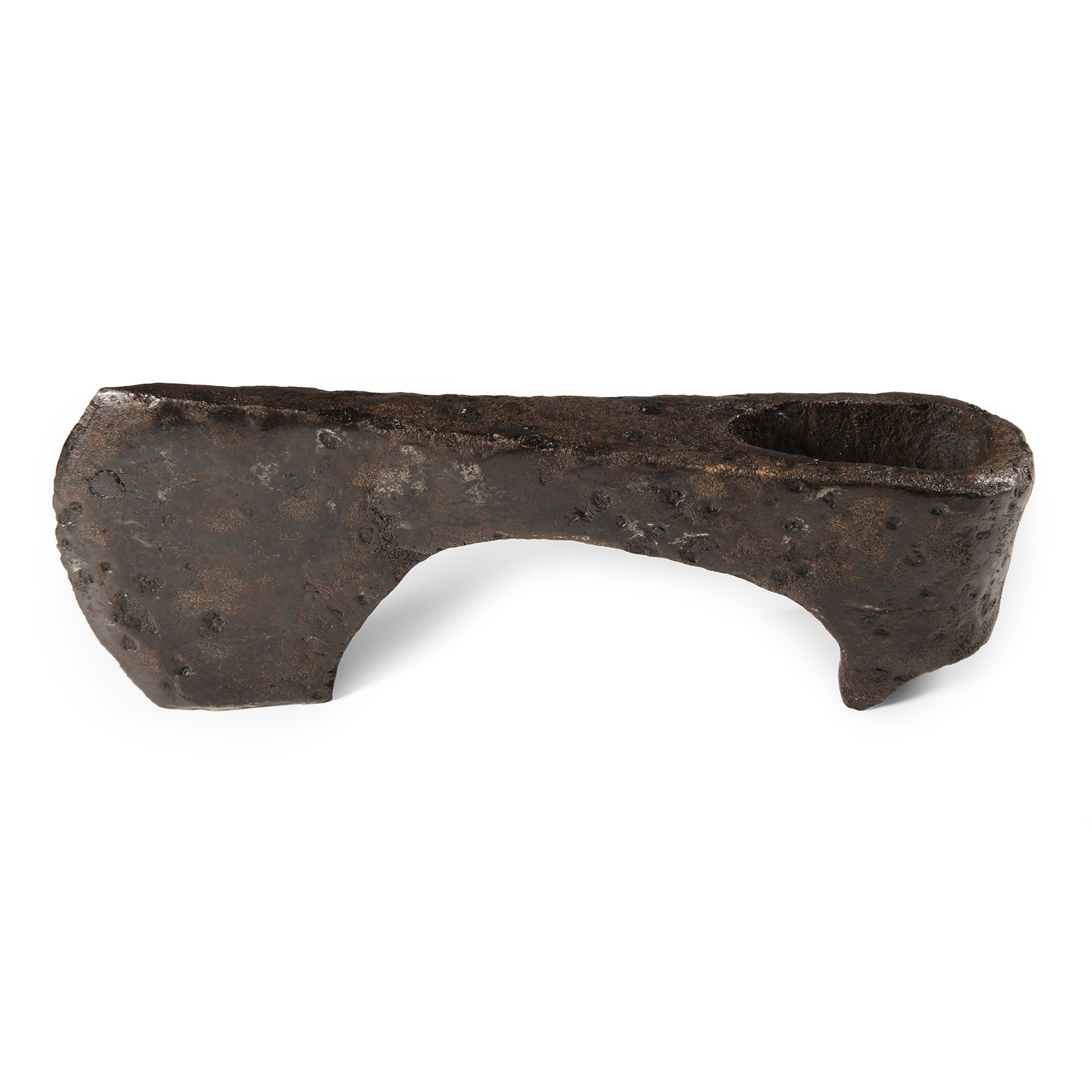
Viking Age Iron Beaded Axehead
9TH-11TH CENTURY A.D.
7 1/4 in. (681 grams, 18.5 cm).
With triangular-section narrow blade widening to a broad bevelled edge with square chin, socket with lateral flanges. [No Reserve]
ProvenanceFrom the private collection of a London gentleman, from his grandfather's collection formed before the early 1970s.
LiteratureCf. Thunmark-Nylén, L., Die Wikingerzeit Gotlands I.: Abbildungen der Graubfunde, Stockholm, 1992, pl.13, item 14.
CONDITIONTimeLine Auctions follows a vetting process to ensure the authenticity and legality of all items, reinforcing our commitment to integrity and responsible trading. Each antiquity, antique, and coin lot undergoes thorough examination by a vetting committee of at least ten external specialists, professional trade association members, scientists, and archaeologists: Our Vetting Process
AUCTIONS:
TimeLine is a leading auction house specialising in antiquities, ancient art, collectables, natural history, coins, medals, and books. Our auctions offer museums, collectors, historians, and enthusiasts the opportunity to acquire unique and historically significant pieces.
-
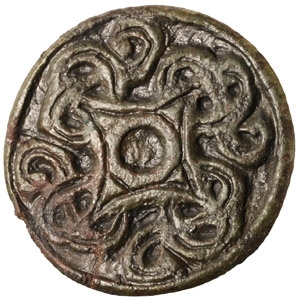
Anglo-Scandinavian Viking Bronze Borre Knot Disc Brooch
11th century A.D.Sold for (Inc. bp): £286
Disc brooch with low-relief Borre style looped tendrils motif, lug and catch to the reverse. 6.56 grams, 28 mm
Acquired on the UK art market in the 1980s. From an East Anglian private collection. -
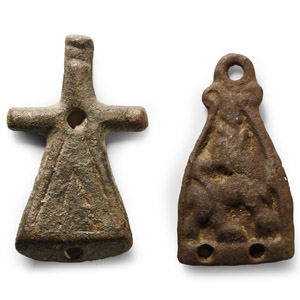
Anglo-Scandinavian Viking Bronze Stirrup Apex Mount Group
11th century A.D.Estimate: £150 - 200 (+bp*)
Opening Bid: £75
Comprising: a tongue-shaped mount of Williams's Class A Type II with pierced trefoil final, high-relief wolf in profile with head raised, two rivet-holes to the base and narrow ledge to the reverse; a triangular mount of Williams' Class A Type 14 with three radiating arms at the apex and rivet-hole between, low-relief chevron to the plaque, angled ledge to the lower edge with median rivet-hole. 43.3 grams total, 49-53 mm
Acquired on the UK art market in the 1980s. From an East Anglian private collection. -
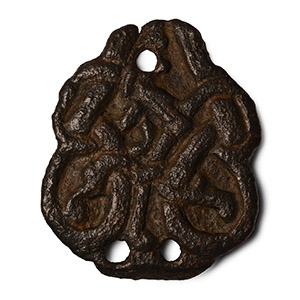
Anglo-Scandinavian Viking Bronze Apex Stirrup Mount with Urnes Entwined Beasts
9th-11th century A.D.Estimate: £400 - 600 (+bp*)
Opening Bid: £200
An exceptionally rare tulip-shaped mount with Urnes Style interlace, pierced at the apex and twice at the base above the shallow rear ledge. 23 grams, 48 mm
Found whilst searching with a metal detector in East Anglia, UK.
