
Loading, please wait...
LOT 1027
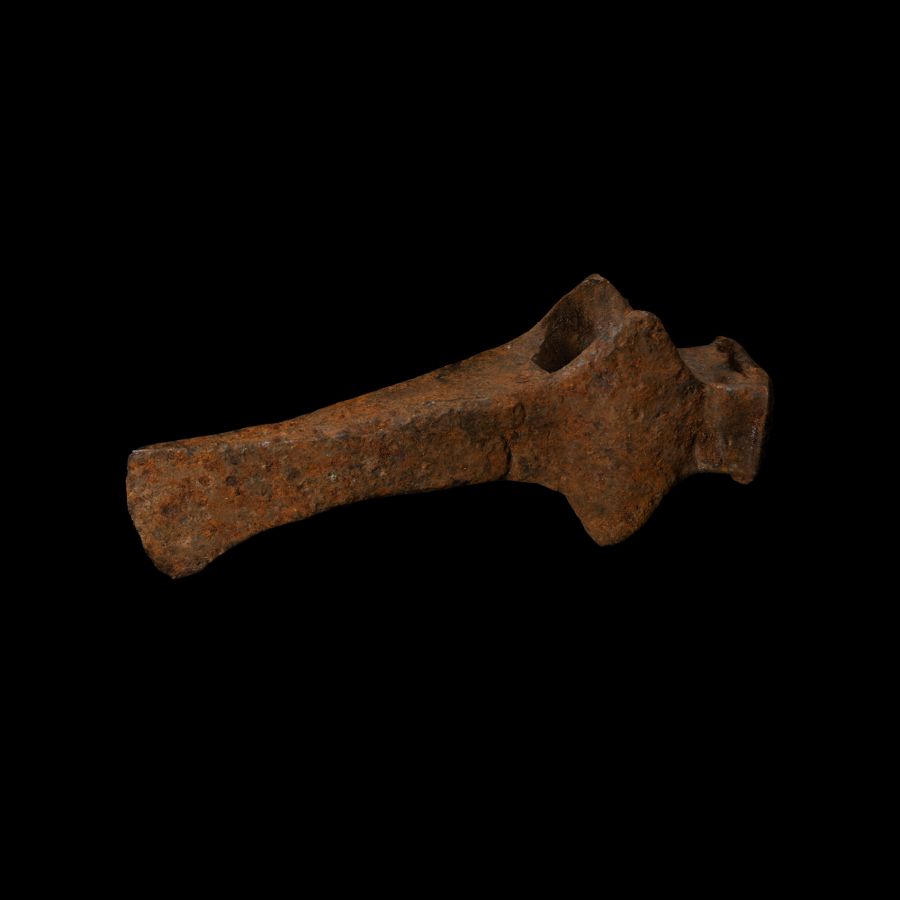
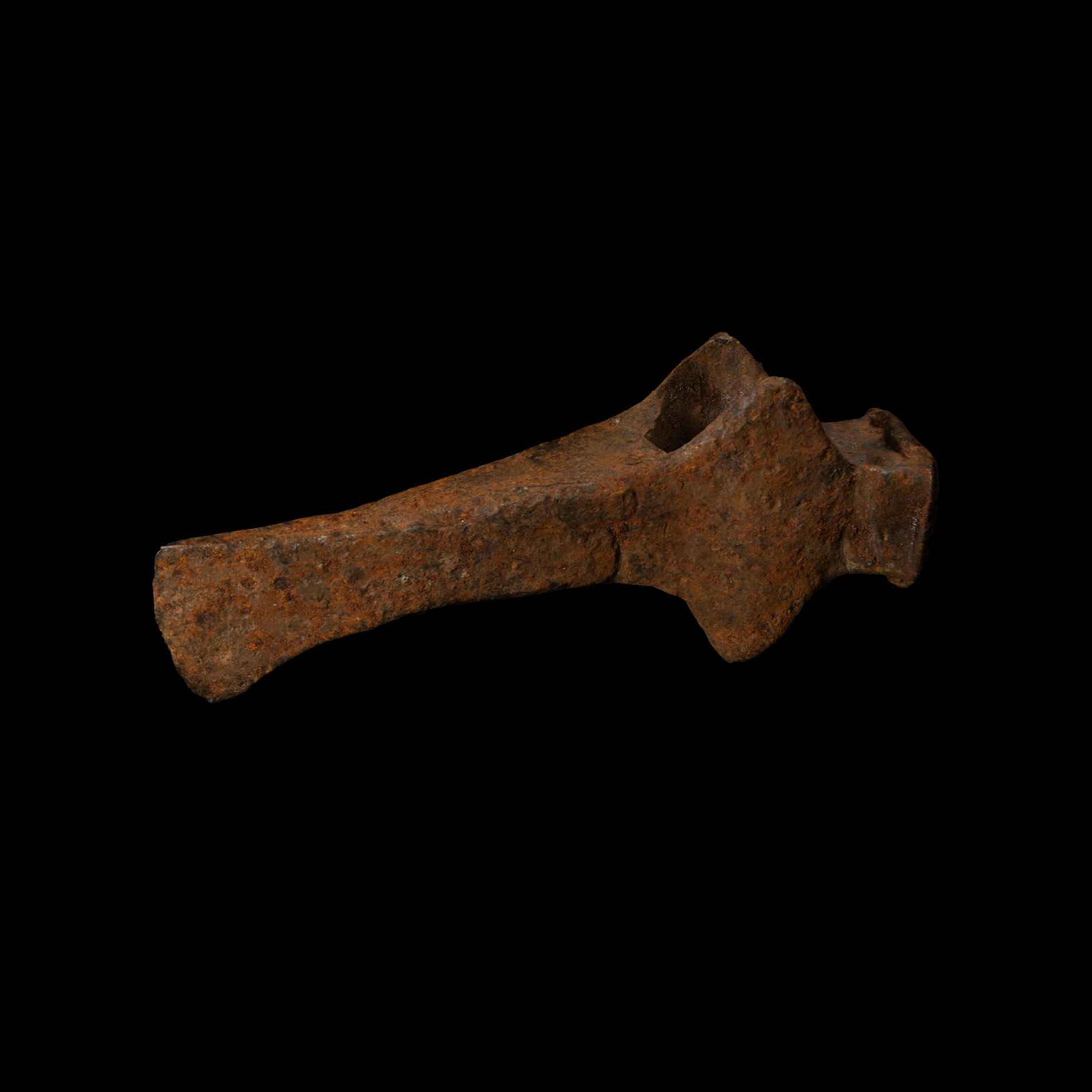
Viking Age Iron Axehead
11TH-12TH CENTURY A.D.
7 in. (729 grams, 17.8 cm).
Composed of a sub-circular socket, lozengiform flanges above and below, rectangular hammer-style butt and axe head with straight upper and curved lower edge, convex cutting edge. [No Reserve]
ProvenanceAcquired 1990s-early 2000s.
East Anglian private collection.
TimeLine Auctions follows a vetting process to ensure the authenticity and legality of all items, reinforcing our commitment to integrity and responsible trading. Each antiquity, antique, and coin lot undergoes thorough examination by a vetting committee of at least ten external specialists, professional trade association members, scientists, and archaeologists: Our Vetting Process
AUCTIONS:
TimeLine is a leading auction house specialising in antiquities, ancient art, collectables, natural history, coins, medals, and books. Our auctions offer museums, collectors, historians, and enthusiasts the opportunity to acquire unique and historically significant pieces.
-
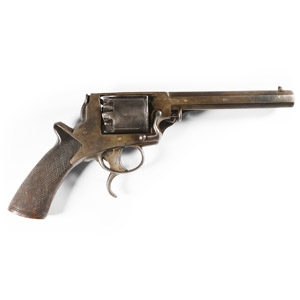
Tranter 3rd Model Double Trigger Percussion Revolver
From 1860 A.D.Sold for (Inc. bp): £819
Solid frame, double trigger 54 bore revolver with 15cm (6") barrel, five-shot cylinder bearing London proof marks, hinged left side loading arm screwed to frame with unclear serial number to right frame and marked 'TRANTER' to cocking trigger; foliate engraved frame and chequered wood grip; action working. 975 grams, 29 cm
Acquired from Michael J Noble Ltd, 2015. The Kusmirek Collection, UK. Accompanied by a copy of the Noble invoice.
Sold as an exempt item under Section 58 (2) of the Firearms Act, 1968, to be held as a curiosity or ornament. No license required but buyer must be over 18 years of age. Overseas bidders should note that, due to UK regulations governing export of all firearms, overseas buyers will need to make arrangements for shipping this lot out of the UK directly, by air freight, with a specialist company or agent. -
.jpg)
Luristan Bronze Blade Collection
Early 1st millennium B.C.Sold for (Inc. bp): £260
Comprising six bronze short tapering blades, all with rounded shoulders and flattened mid-ribs, four with tapering tangs, one with tang pierced at tip; one of the narrowest blades is without a tang. 485 grams total, 20-24 cm
Fine condition.
Acquired 1980-2015. Ex Abelita family collection.
Moorey, Gordon and Khorasani created a classification of bladed weapons, according to which daggers are edged weapons not greater than 36cm in length, dirks (short swords) are between 36cm and 50cm in length, and swords are edged weapons greater than 50cm in length. These weapons belong to the dagger category. -
.jpg)
Post Medieval Iron Socketted Spearhead
18th-19th century A.D.Sold for (Inc. bp): £33
Composed of a tapering tubular socket and short triangular blade. 158 grams, 28.5 cm
Fair condition.
Acquired on the UK art market before 1980. Private British collection 1980. Private collection of a Devonshire, UK, collector.
