
Loading, please wait...
LOT 1603
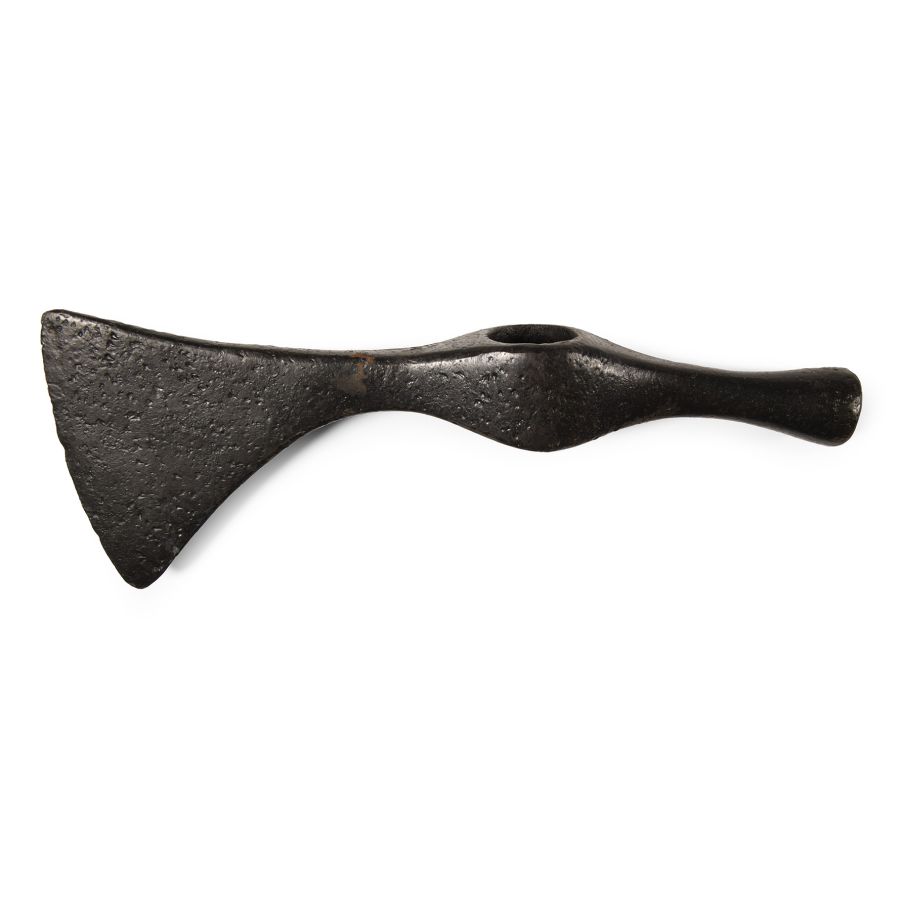
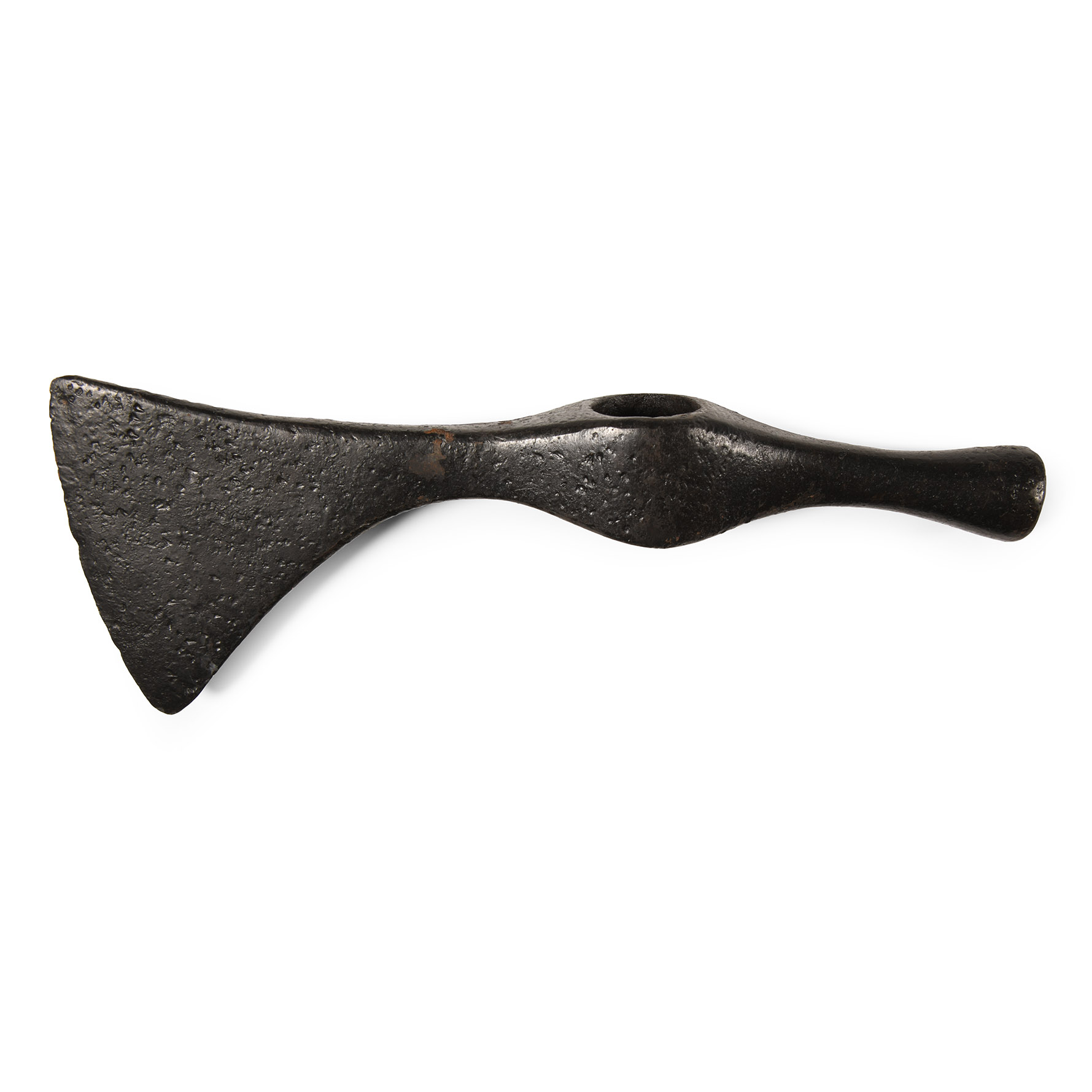
Viking Age Iron Axe-Hammer
CIRCA 11TH-12TH CENTURY A.D.
7 3/4 in. (324 grams, 19.5 cm).
With a broad curved blade, narrow neck and hammer extension to the rear; round socket. [No Reserve]
ProvenanceFrom the collection of a Californian, USA, gentleman, dating back to the late 1960s.
LiteratureCf. Sedov, B.B. Finno-Ugri i Balti v Epokhi Srednevekovija, Moscow, 1987, plate LII, item 15.
FootnotesThe more common weapons of Finno-Ugrian people were axes commonly found from all Finnic areas, as well as spears. Among Baltic-Finnic people, especially in Finland and Karelia, knives called 'puukko' were common, as well as axes, spears, flat bows and long bows, while swords were usually imported from Germanic areas, Sweden or from elsewhere Scandinavia, some having often typically Scandinavian animal ornaments, although there are some Finnish made finds too.
CONDITIONTimeLine Auctions follows a vetting process to ensure the authenticity and legality of all items, reinforcing our commitment to integrity and responsible trading. Each antiquity, antique, and coin lot undergoes thorough examination by a vetting committee of at least ten external specialists, professional trade association members, scientists, and archaeologists: Our Vetting Process
AUCTIONS:
TimeLine is a leading auction house specialising in antiquities, ancient art, collectables, natural history, coins, medals, and books. Our auctions offer museums, collectors, historians, and enthusiasts the opportunity to acquire unique and historically significant pieces.
-
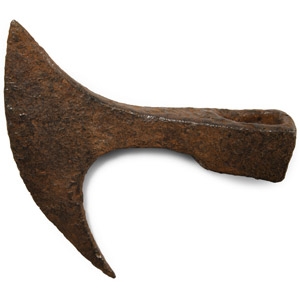
Viking Age Iron Broad Axehead
Circa 9th-11th century A.D.Sold for (Inc. bp): £286
With broad curved blade and pointed chin, broad neck, deep socket with square reverse. 222 grams, 13 cm
From the collection of a Californian, USA, gentleman, dating back to the late 1960s. -
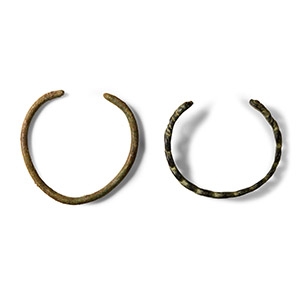
Viking Age Bronze Bracelet Group
Circa 9th-11th century A.D.Sold for (Inc. bp): £52
Comprising: one with body formed as a guilloche, serpent-head finials; one with rounded ends to the shank. 37.2 grams total, 61-62 mm
From a collection acquired on the UK art market from various auction houses and collections mostly before 2000. From an important Cambridgeshire estate; thence by descent. -
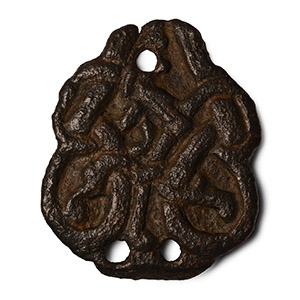
Anglo-Scandinavian Viking Bronze Apex Stirrup Mount with Urnes Entwined Beasts
9th-11th century A.D.Estimate: £400 - 600 (+bp*)
Opening Bid: £200
An exceptionally rare tulip-shaped mount with Urnes Style interlace, pierced at the apex and twice at the base above the shallow rear ledge. 23 grams, 48 mm
Found whilst searching with a metal detector in East Anglia, UK.
