
Loading, please wait...
LOT 1391
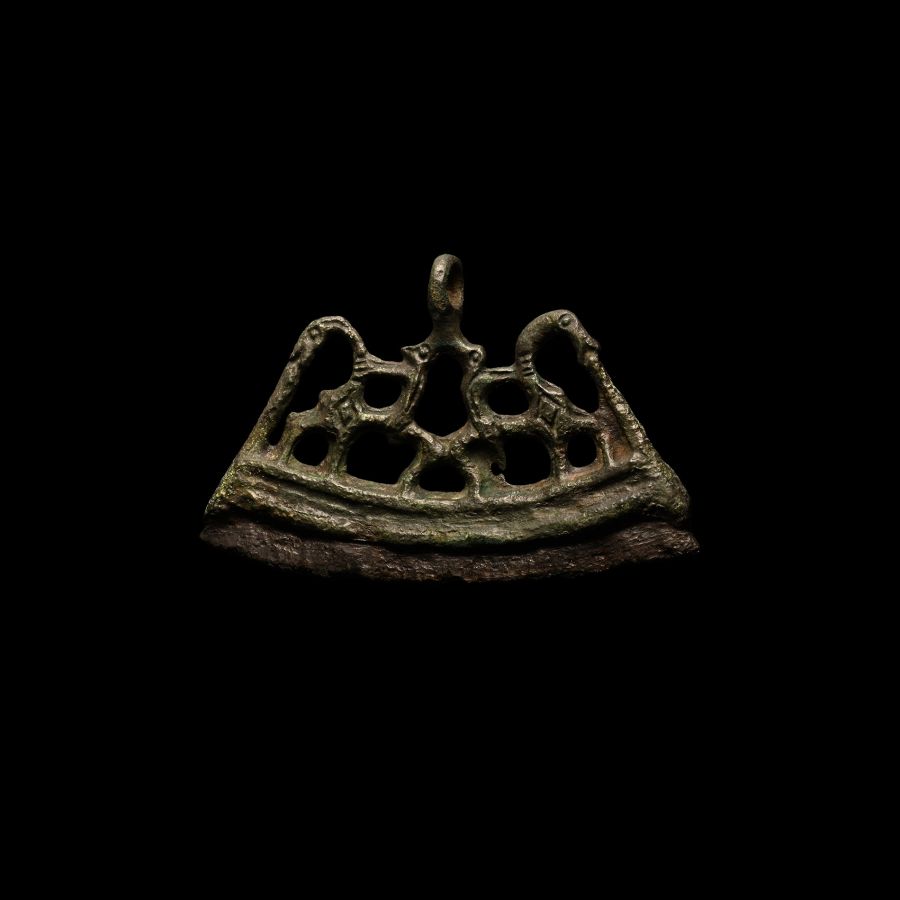
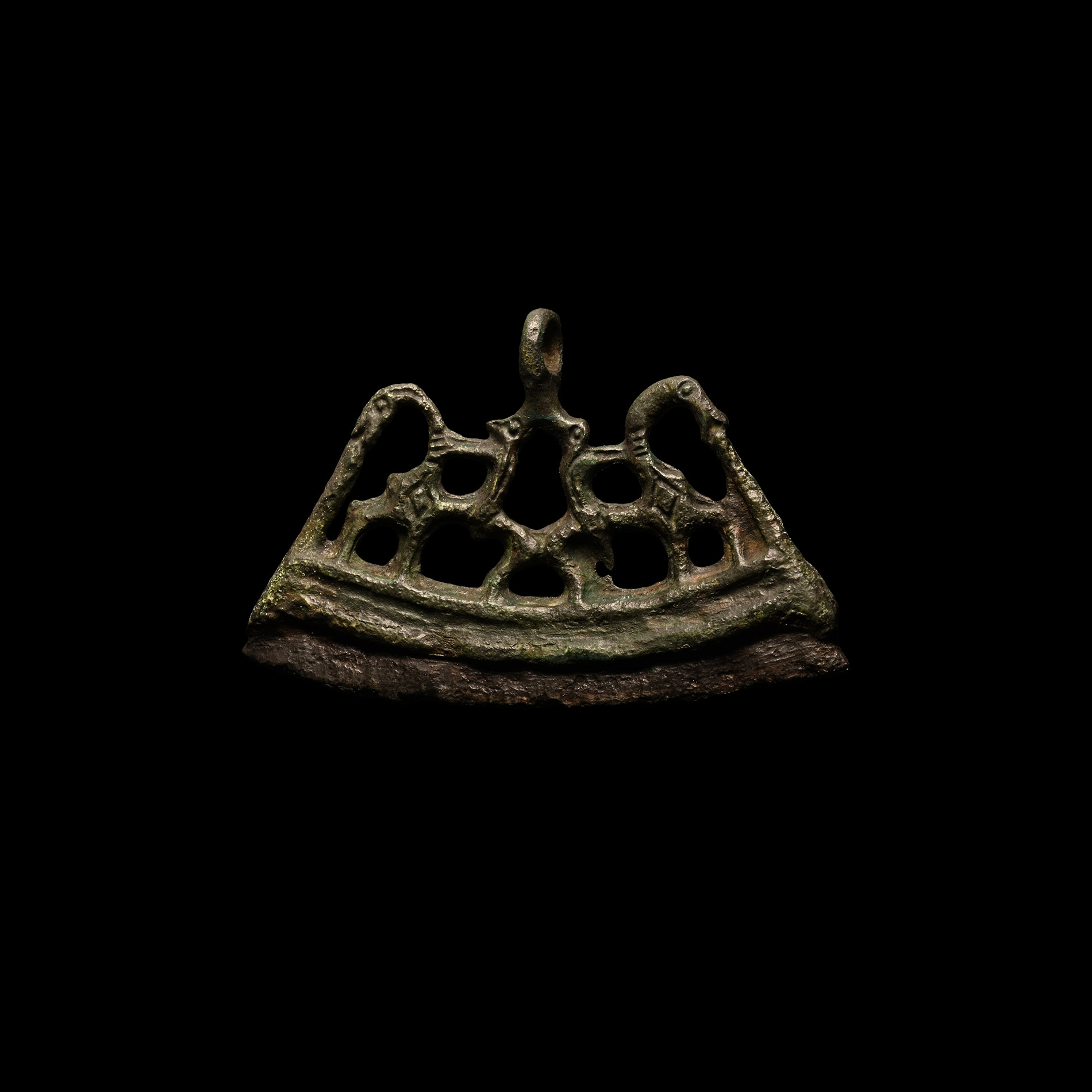
Viking Age Fire Steel with Bronze Handle with Horse and Riders
10TH-11TH CENTURY A.D.
2 5/8 in. (27 grams, 66 mm).
Shown addorsed in a stylised openwork design, central suspension loop and iron steel with crescentic profile. [No Reserve]
ProvenanceFrom the collection of a North American gentleman, formed in the 1990s.
LiteratureCf. Arbman, H., Birka I: Die Gräber, Uppsala, 1940, pl.144, item 1.
CONDITIONTimeLine Auctions follows a vetting process to ensure the authenticity and legality of all items, reinforcing our commitment to integrity and responsible trading. Each antiquity, antique, and coin lot undergoes thorough examination by a vetting committee of at least ten external specialists, professional trade association members, scientists, and archaeologists: Our Vetting Process
AUCTIONS:
TimeLine is a leading auction house specialising in antiquities, ancient art, collectables, natural history, coins, medals, and books. Our auctions offer museums, collectors, historians, and enthusiasts the opportunity to acquire unique and historically significant pieces.
LOT 1391
Viking Age Fire Steel with Bronze Handle with Horse and Riders
Sold for (Inc. bp): £130
-
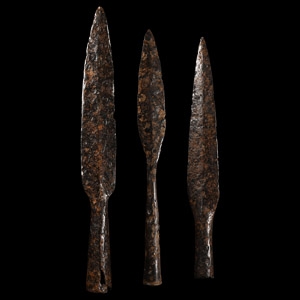
Viking Age Iron Socketted Spearhead and Javelinhead Group
7th-10th century A.D.Sold for (Inc. bp): £338
Comprising three Baltic short spear and javelins heads with lentoid-section lanceolate blade, two with short neck and one with elongated socket, all with tapering circular socket with forge-welded split, remains of wood inside the shafts. 545 grams total, 25.5-30 cm
Acquired 1971-1972. From the collection of the vendor's father. Property of a London, UK, collector.
The Curonians were known as fierce warriors, excellent sailors and pirates. They were involved in several wars and alliances with Swedish, Danish and Icelandic Vikings. Baltic tribes created an original and impressive set of weaponry. They included battle knives, battle axes and spears and javelins with medium sized heads of a characteristic shape. -
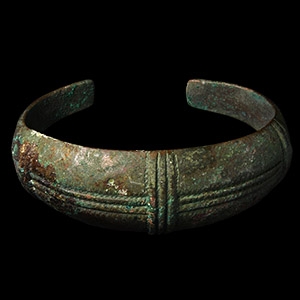
Viking Age Bronze Bracelet with Rope Design
8th-10th century A.D.Sold for (Inc. bp): £78
Composed of a tapering penannular body with convex outer face and collared terminals. 64 grams, 69 mm wide
From the collection of a North American gentleman, formed in the 1990s. -
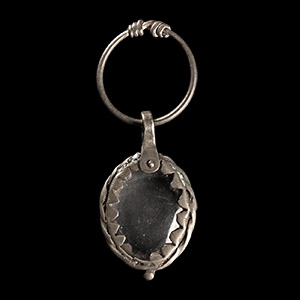
Viking Age Silver Pendant with Crystal Magnifier
9th-11th century A.D.Sold for (Inc. bp): £234
Displaying a ropework border enclosing a polished rock crystal magnifier; applied suspension loop with a separate coiled hoop. 3.8 grams, 47mm
Ex property of a professional collector; acquired before 1990.
