Loading, please wait...

Viking Age Decorated Silver Bracelet Viking Age Decorated Silver Bracelet Viking Age Decorated Silver Bracelet Viking Age Decorated Silver Bracelet Viking Age Decorated Silver Bracelet Viking Age Decorated Silver Bracelet Viking Age Decorated Silver Bracelet Viking Age Decorated Silver Bracelet Viking Age Decorated Silver Bracelet
Use mousewheel to zoom in and out, click to enlarge
Details

LOT 1595

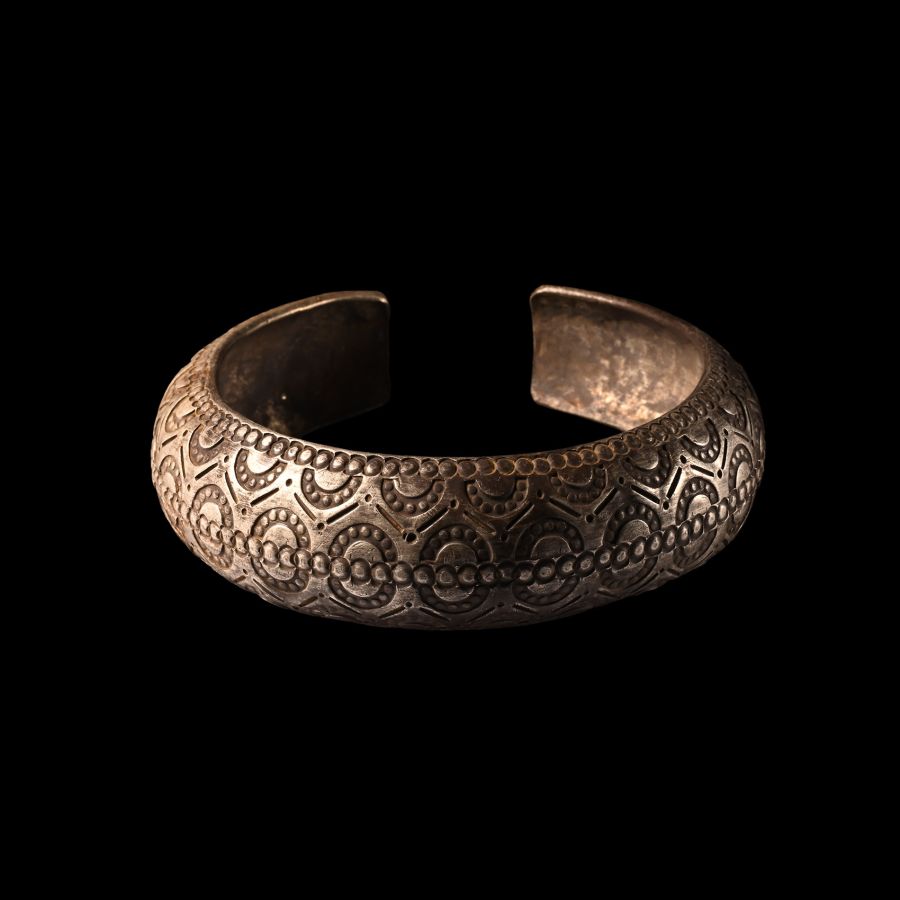
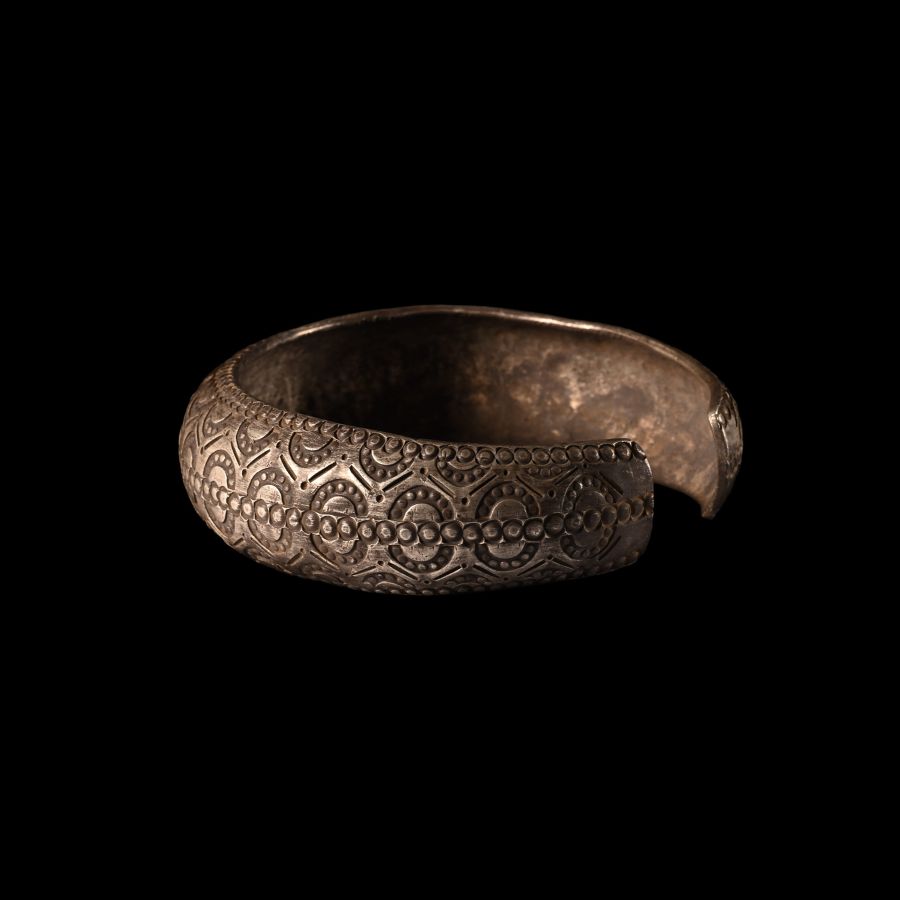
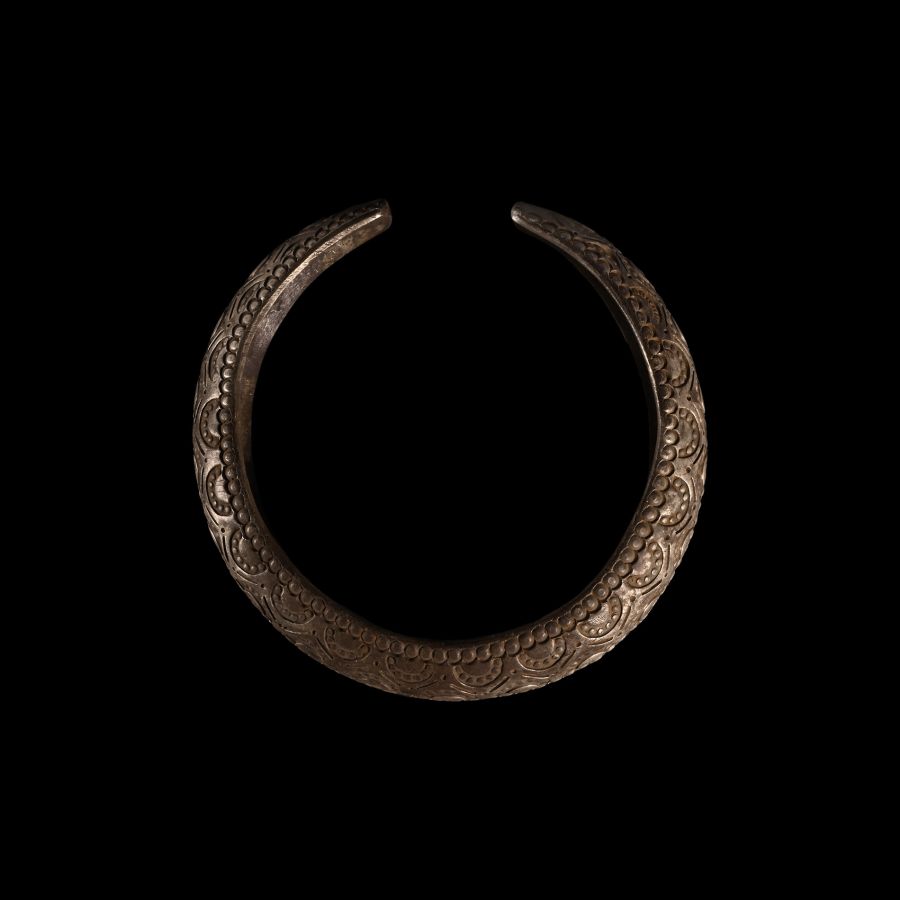
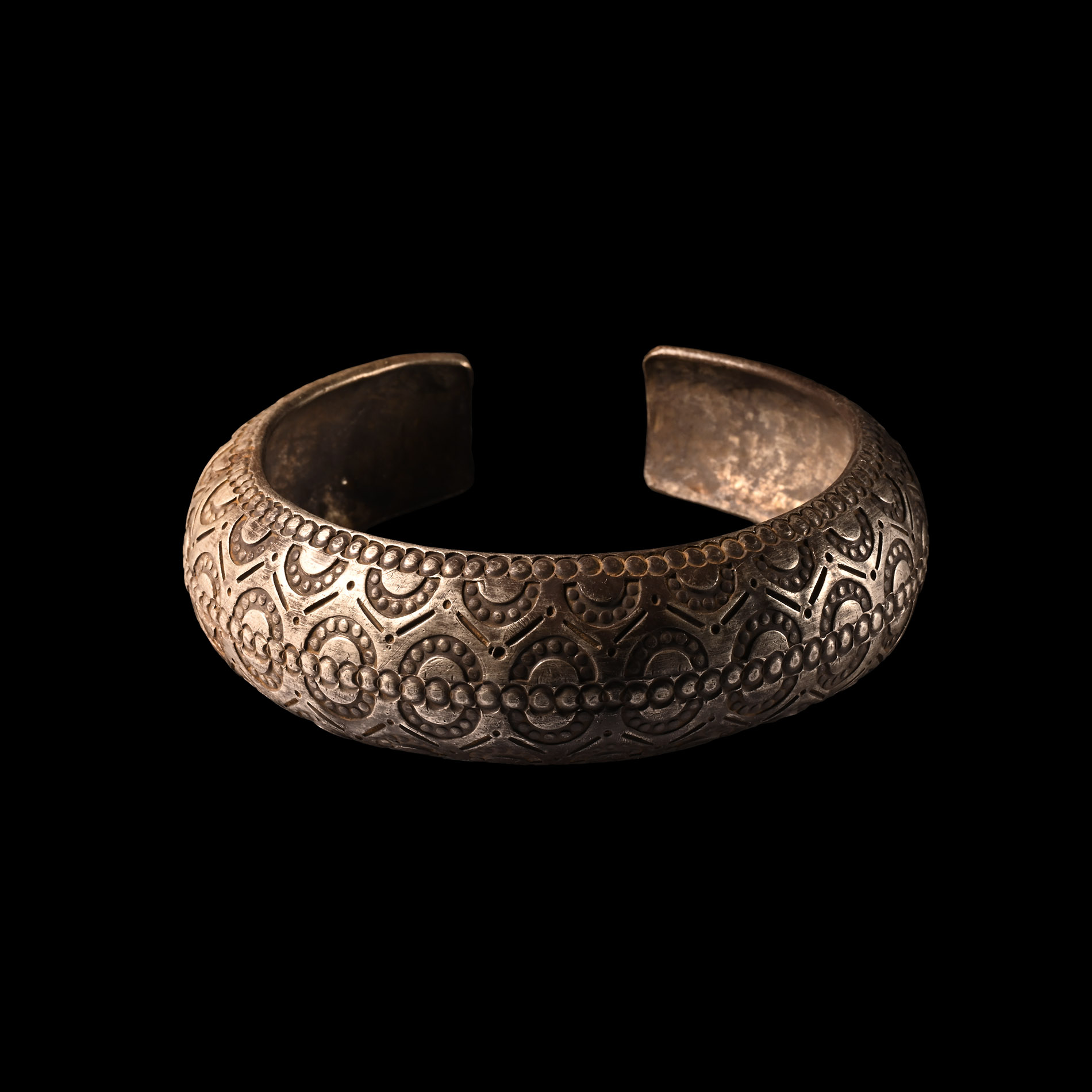
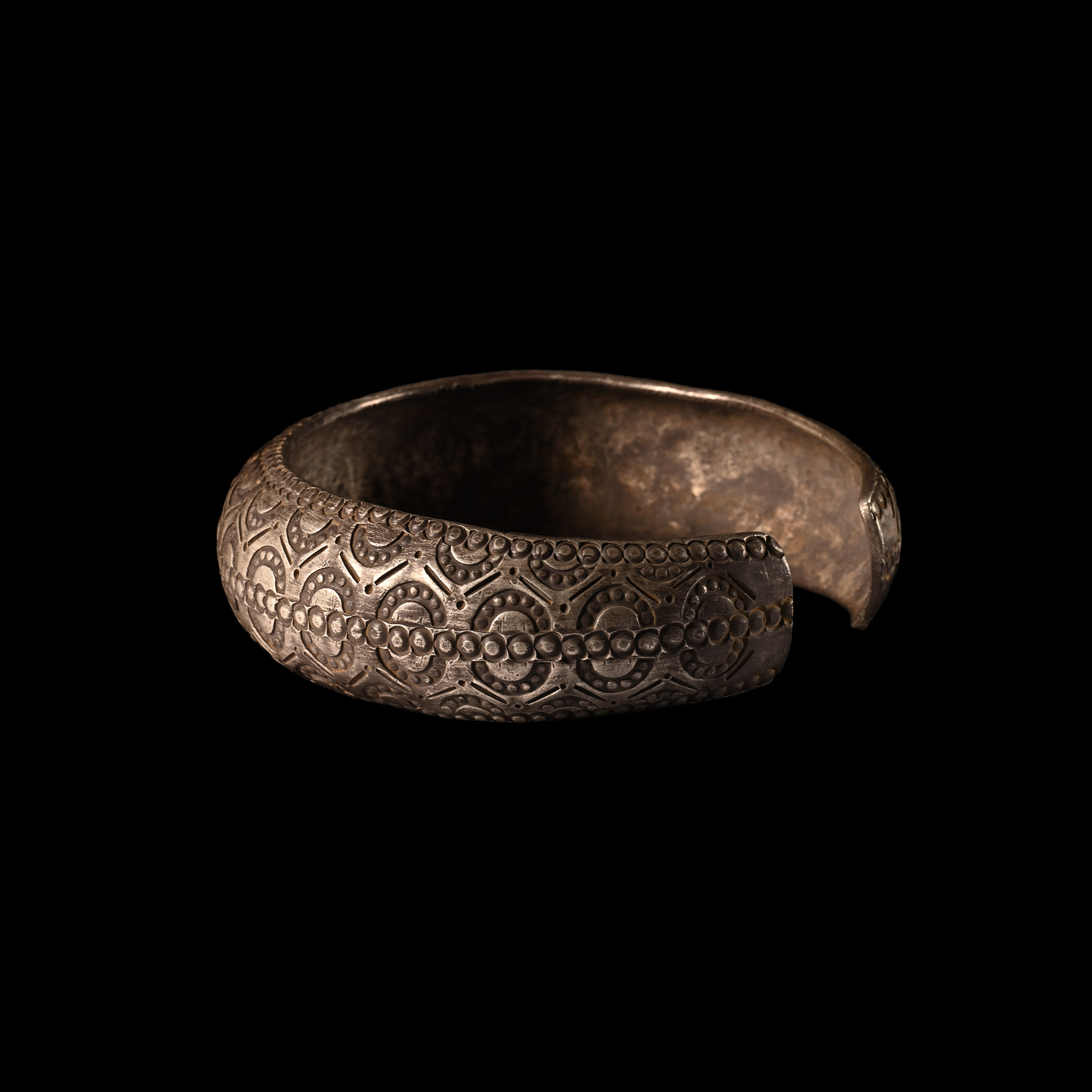
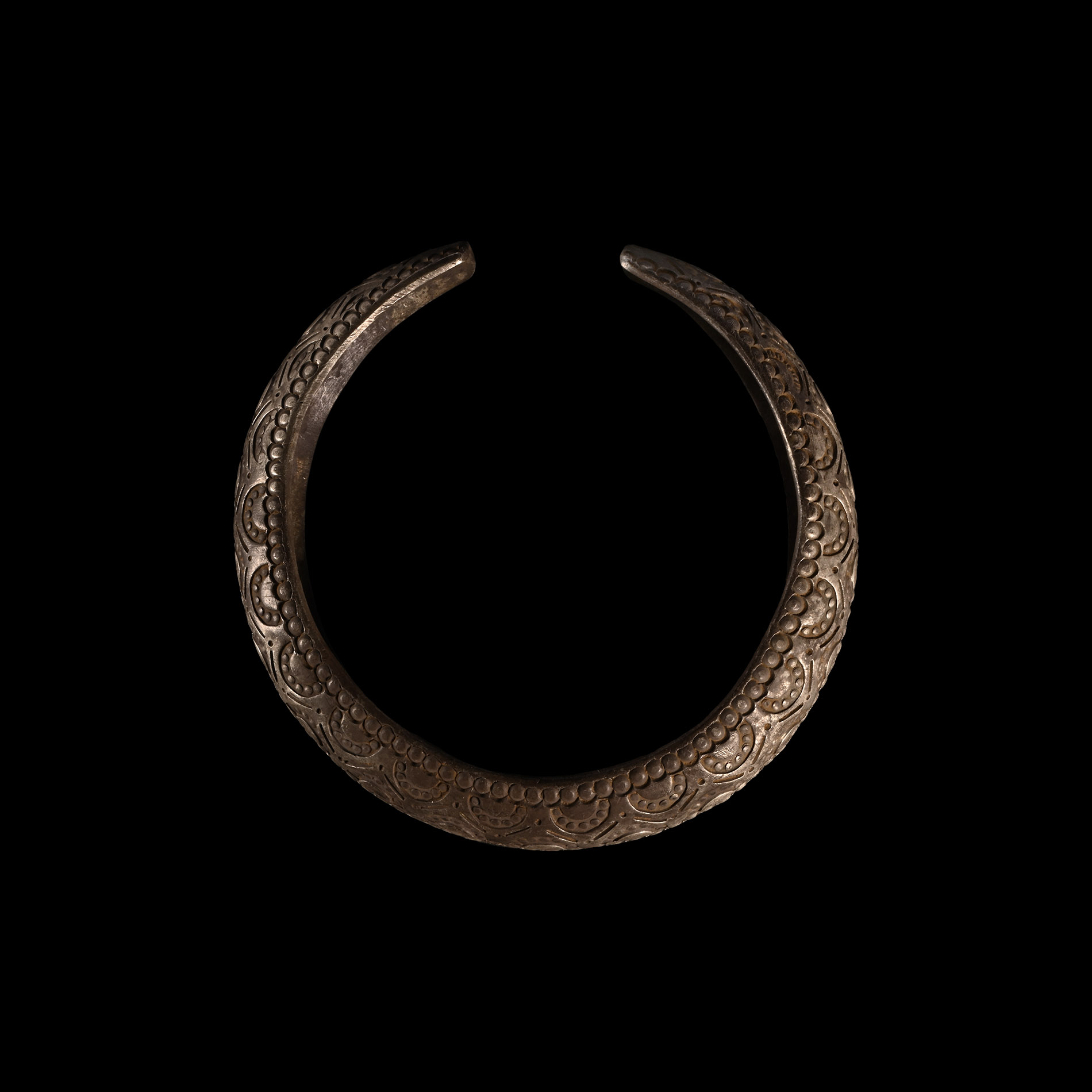
Viking Age Decorated Silver Bracelet

CIRCA 9TH-11TH CENTURY A.D.

3 in. (81 grams, 76 mm).

C-shaped in section with square butts, bands of punched linear, crescent and pellet ornament. [No Reserve]

Provenance

Private collection formed in Europe in the 1980s.
Westminster collection, central London, UK.

CONDITION
VETTING:

TimeLine Auctions follows a vetting process to ensure the authenticity and legality of all items, reinforcing our commitment to integrity and responsible trading. Each antiquity, antique, and coin lot undergoes thorough examination by a vetting committee of at least ten external specialists, professional trade association members, scientists, and archaeologists: Our Vetting Process


AUCTIONS:

TimeLine is a leading auction house specialising in antiquities, ancient art, collectables, natural history, coins, medals, and books. Our auctions offer museums, collectors, historians, and enthusiasts the opportunity to acquire unique and historically significant pieces.

LOT 1595

Viking Age Decorated Silver Bracelet

Sold for (Inc. bp): £845

Print page

RELATED LOTS
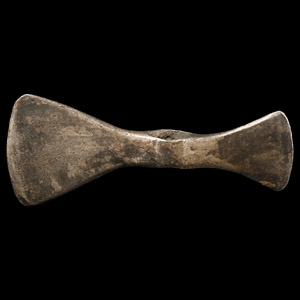
  • Viking Age Silver Broad Axe Pendant with Radiant Sun
    Viking Age Silver Broad Axe Pendant with Radiant Sun
    Circa 9th-11th century A.D. or earlier

    Sold for (Inc. bp): £364

    Axehead with sunburst motif to one face, on suspension loop with coiled ends. 1.92 grams, 32 mm


    Ex German art market, 2000s. Acquired from an EU collector living in London. From the collection of Surrey, UK, gentleman.

    Lot Details

  • Viking Age Bronze Sword Scabbard Chape Collection
    Viking Age Bronze Sword Scabbard Chape Collection
    10th-11th century A.D.

    Estimate: £500 - 700 (‡+bp*)

    Opening Bid: £275

    Comprising: a long and narrow tongue-shaped type (Paulsen's Gruppe V 2A, Untergruppe C) with scooped upper edge and palmette motif to the centre, spurs to the a vertical band of reserved stylised ring-chain decoration on a pounced field, long lateral straps and a knop finial; a heater-shaped type (Paulsen's Gruppe I 2, Untergruppe C) with central openwork panel displaying a bird in flight with the fan-shaped tail marked with radiating lines, guilloche bands to the outer sides, upper edges angled and with lobe at the apex; an elongated type (Gruppe V 1) with low-relief pointillé bands to each face and a palmette at the apex of the central spur; a long tongue-shaped type (Paulsen's Gruppe I 1) with an openwork centre and Ringerike Style bird formed with looped bands, pellets to the pinions, a triangular in plan head joined to the inner faces of the ropework border forming the upper edge of the chape, with a wolf's head at the apex and stepped knop finial; a single plaque (Gruppe V 1) from a two-part chape, long and rounded with palemete detailing to the upper edge, tendrils and scrolls to the body, pierced in two places to accept rivets. 178 grams total, 51-70 mm


    From the collection of a North American gentleman, formed in the 1990s.

    Most of these chapes originate in Sweden or the western Baltic according to Paulsen's classification.

    Lot Details

  • Viking Age Gold Elf Shot Pendant
    Viking Age Gold 'Elf Shot' Pendant
    9th-10th century A.D. or earlier

    Sold for (Inc. bp): £1,105

    Bell-shaped cup with suspension loop, inset irregular amethyst. 0.73 grams, 15 mm


    From a late Japanese specialist collector, 1970-2000s.

    This amulet was believed to offer protection against 'Elfshot'. The attack of elves was believed responsible for mysterious suffering in men and livestock. 'Elfshot' described sudden shooting pains localised to a particular area of the body, such as in rheumatism, arthritis or muscle stitches or cramps. Elves were thought to shoot darts or arrows where such pains had no obvious external cause. Belief in elfshot persisted into the 20th century in rural areas, and as proof country folk would sometimes find small arrowheads (the remains of Neolithic or Mesolithic flints, or naturally-occurring spear-shaped stones) that were believed to be the magical weapons that caused the afflictions. Belief in elfshot began in the Pagan Germanic period.

    Lot Details

Stay up-to-date with the latest from TimeLine Auctions by joining our mailing list