
Loading, please wait...
LOT 1678
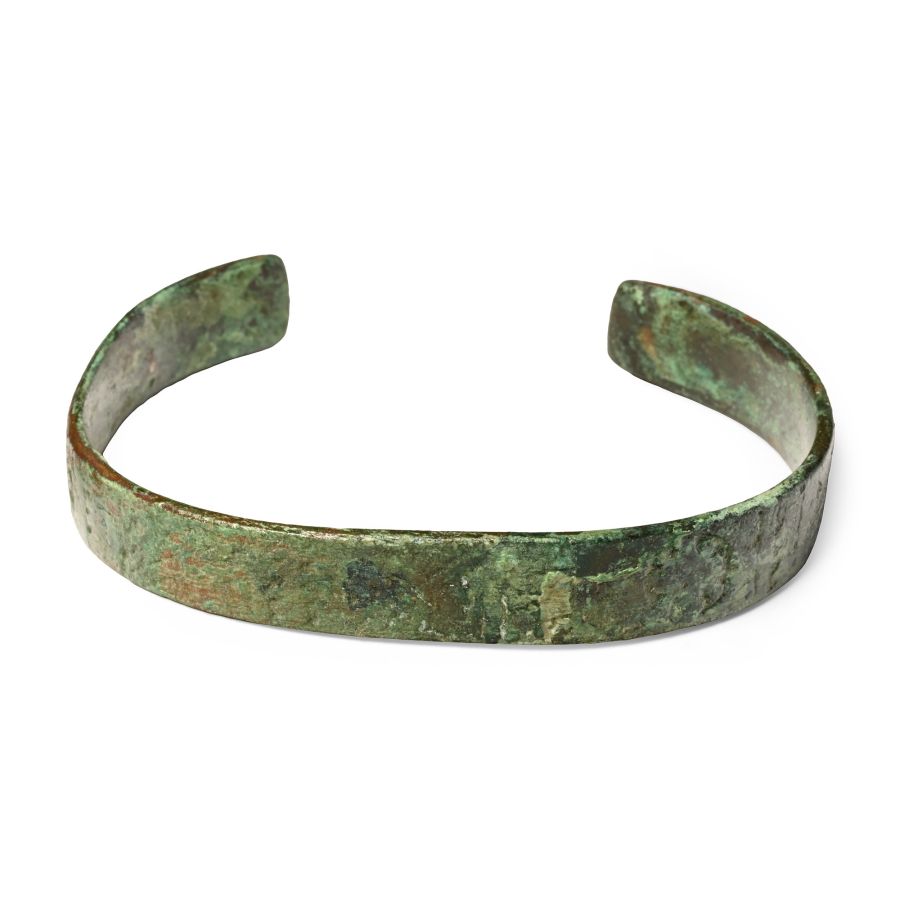
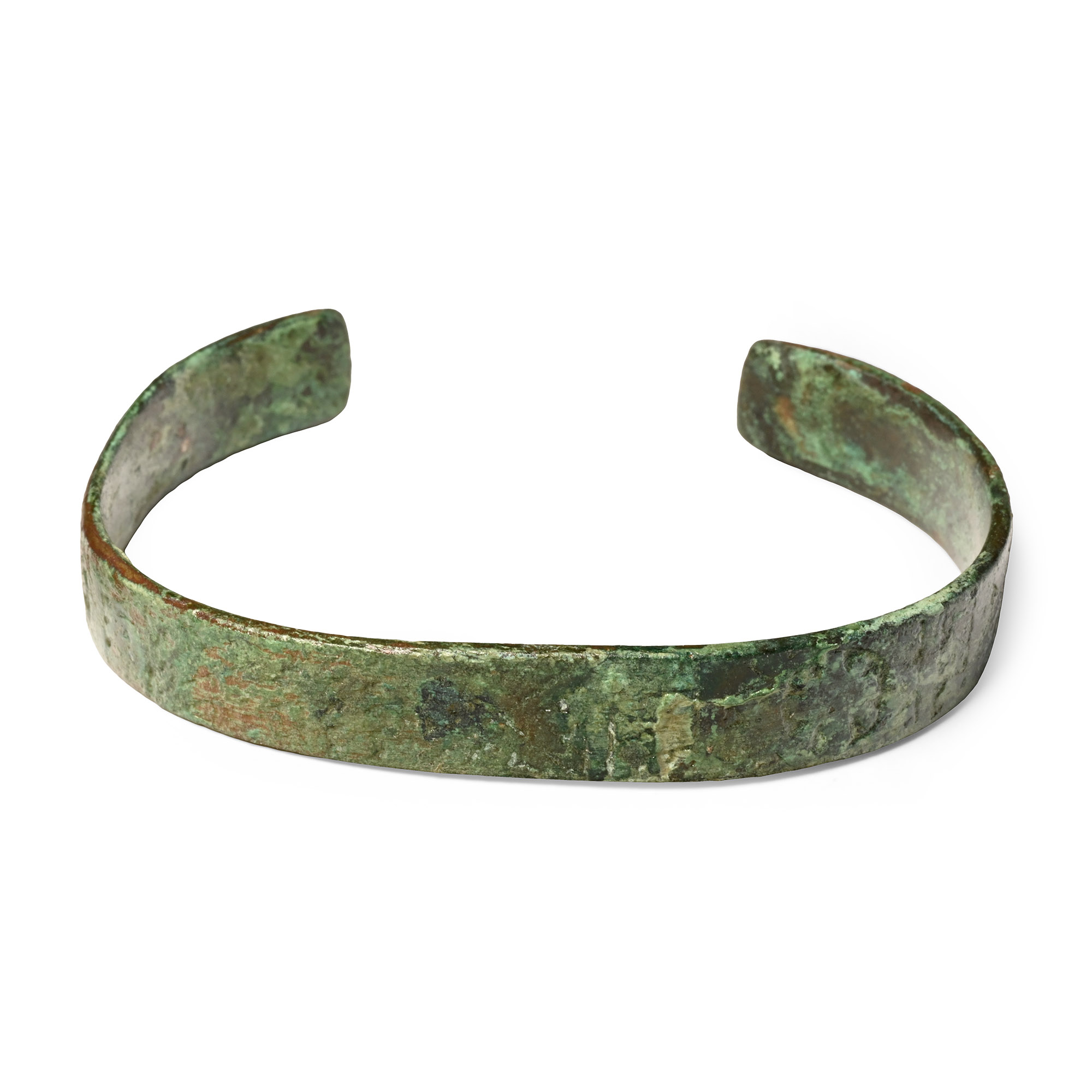
Viking Age Decorated Bronze Bracelet
CIRCA 900-1100 A.D.
2 3/8 in. (17.14 grams, 62 mm).
Penannular type with flat-section body and stamped and incised decoration to the outer face. [No Reserve]
ProvenanceFrom a UK private collection.
Ex Apollo Art Auction, 13 November 2022, no.459.
TimeLine Auctions follows a vetting process to ensure the authenticity and legality of all items, reinforcing our commitment to integrity and responsible trading. Each antiquity, antique, and coin lot undergoes thorough examination by a vetting committee of at least ten external specialists, professional trade association members, scientists, and archaeologists: Our Vetting Process
AUCTIONS:
TimeLine is a leading auction house specialising in antiquities, ancient art, collectables, natural history, coins, medals, and books. Our auctions offer museums, collectors, historians, and enthusiasts the opportunity to acquire unique and historically significant pieces.
-
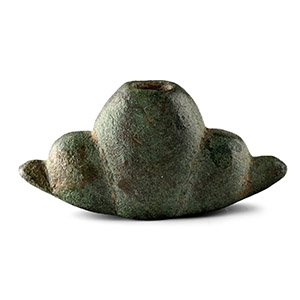
Anglo-Scandinavian Viking Bronze Five-Lobed Pommel
10th-11th century A.D.Sold for (Inc. bp): £338
Of Petersen's Type S (Wheeler Type III) with five graduated lobes; hollow, the lower face a swept arc; pierced through the tallest lobe to accept the tang of the sword's blade. 48.7 grams, 50 mm
Found Norfolk, UK. -
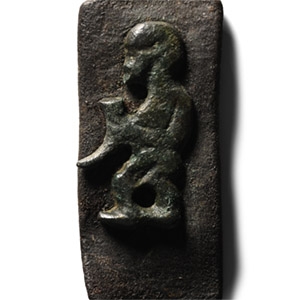
Scandinavian Pre-Viking Bronze Mount on Original Leather Strap Section
6th-7th century A.D.Estimate: £300 - 400 (+bp*)
Opening Bid: £120
Modelled in the half-round, profile figure with drinking horn, attached to a fragment of leather strap. 2.84 grams, 34 mm
From the private collection of a London gentleman, from his grandfather's collection formed before the early 1970s. This lot is accompanied by an illustrated lot declaration signed by the Head of the Antiquities Department, Dr Raffaele D'Amato. -
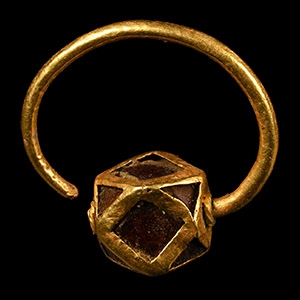
Merovingian Gold Hoop Earring with Garnets
5th-6th century A.D.Estimate: £1,000 - 1,400 (‡+bp*)
Opening Bid: £540
With a thick penannular loop and polyhedral finial set with twelve garnet cloisons, some detached. 6.36 grams, 34 mm
Acquired in the mid 1980s-1990s. Private collection, Switzerland, thence by descent. Private collection, since the late 1990s.
