
Loading, please wait...
LOT 1318
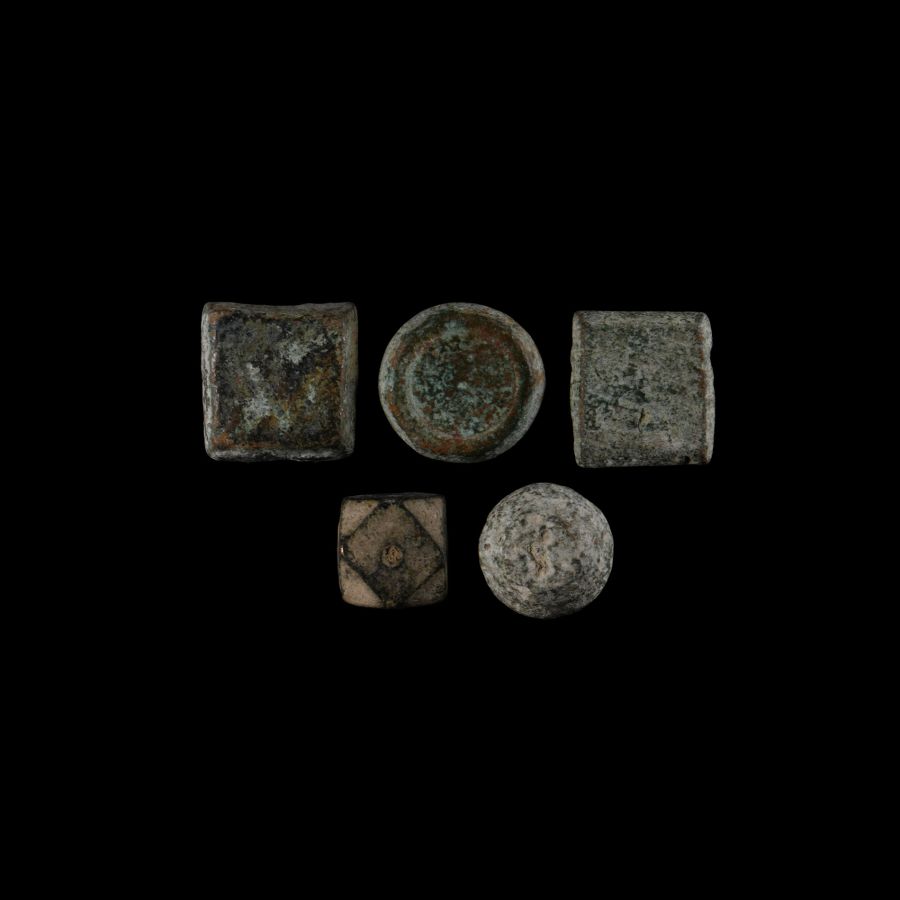
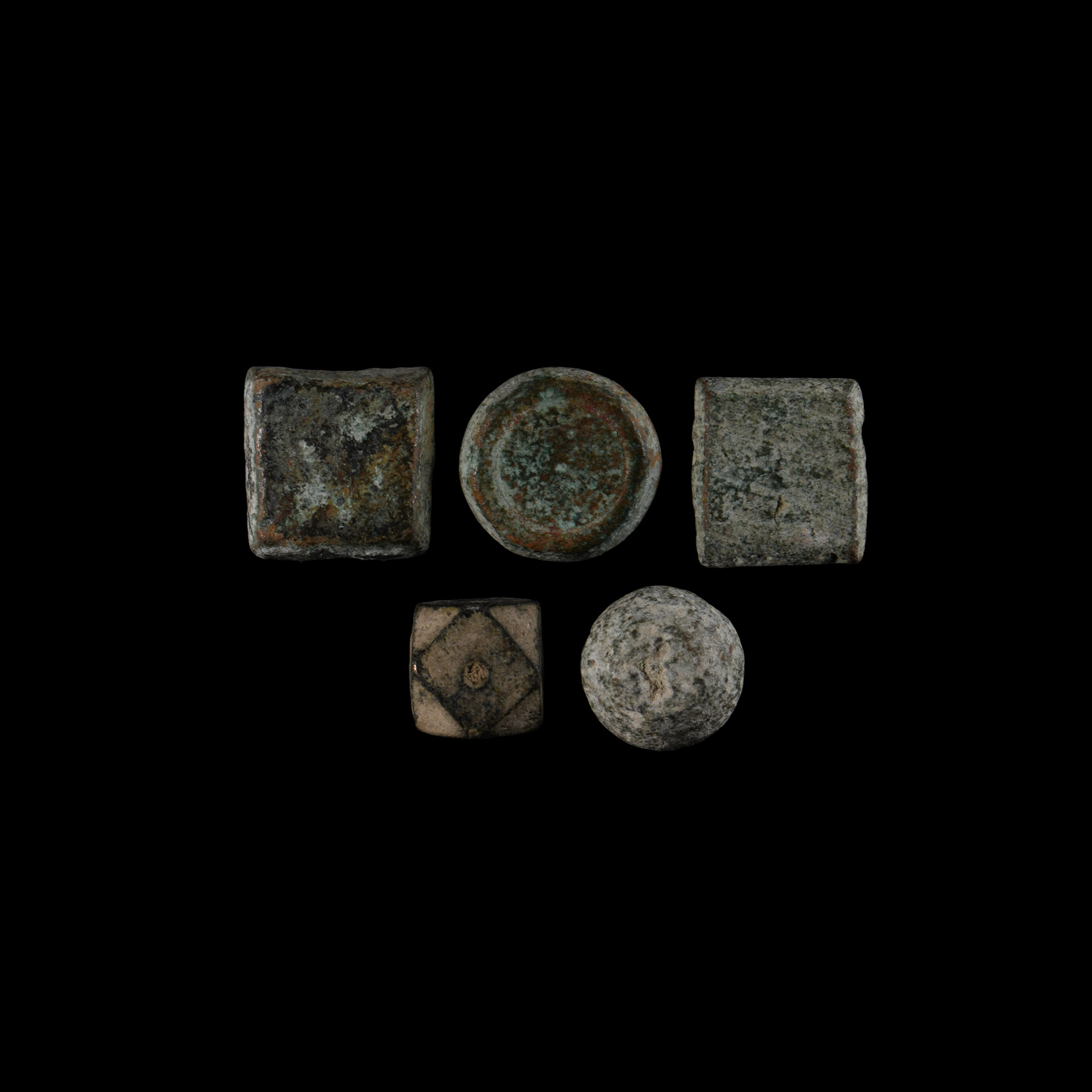
Viking Age Bronze Weight Group
CIRCA 9TH-11TH CENTURY A.D.
3/8 - 1/2 in. (18 grams, 10- 15 mm).
Comprising discoid, square-shaped and facetted weights, most displaying a varying number of dimples. [5, No Reserve]
ProvenanceUK private collection formed before 2000.
Ex North London, UK, gallery.
TimeLine Auctions follows a vetting process to ensure the authenticity and legality of all items, reinforcing our commitment to integrity and responsible trading. Each antiquity, antique, and coin lot undergoes thorough examination by a vetting committee of at least ten external specialists, professional trade association members, scientists, and archaeologists: Our Vetting Process
AUCTIONS:
TimeLine is a leading auction house specialising in antiquities, ancient art, collectables, natural history, coins, medals, and books. Our auctions offer museums, collectors, historians, and enthusiasts the opportunity to acquire unique and historically significant pieces.
-
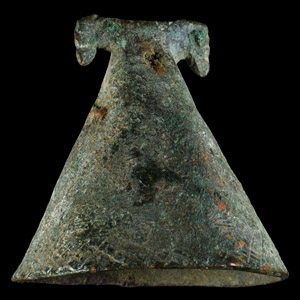
Viking Age Bronze Zoomorphic Bell
Circa 9th-11th century A.D.Sold for (Inc. bp): £20
Of conical form with occluded piercing to apex and hatching around base, the finial with addorsed animal heads. 22 grams, 3.7 cm
UK private collection formed before 2000. Ex North London, UK, gallery. -
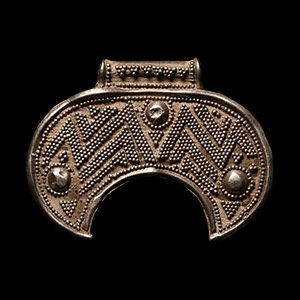
Large Scandinavian Viking Silver Filigree Lunate Pendant
10th-12th century A.D.Sold for (Inc. bp): £910
Of crescentic form and of Northern European type (also widespread in the historical Rus region), with beaded border, finely decorated integral loop, very fine granular decoration with three raised bosses. 5.97 grams, 45 mm
Acquired on the German art market before 2000. From an old Munich collection. -
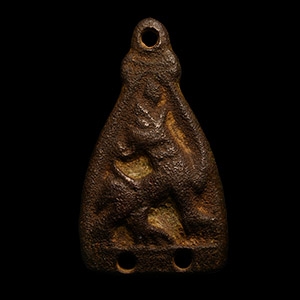
Viking Bronze Apex Stirrup Mount with Howling Beast
11th century A.D.Sold for (Inc. bp): £312
Formed with a tongue-shaped body, of Williams's Class A Type 11 with pierced trefoil lug above, ledge to the reverse, two fixing holes, high-relief profile wolf with head thrown back; Anglo-Scandinavian or Viking. 23.88 grams, 49 mm
Found near Lincoln, Lincolnshire, UK.
