
Loading, please wait...
_900x900.jpg "Viking Age Bronze Votive Miniature Horn")
_200x200.jpg "Viking Age Bronze Votive Miniature Horn")
.jpg "Viking Age Bronze Votive Miniature Horn")
LOT 1635
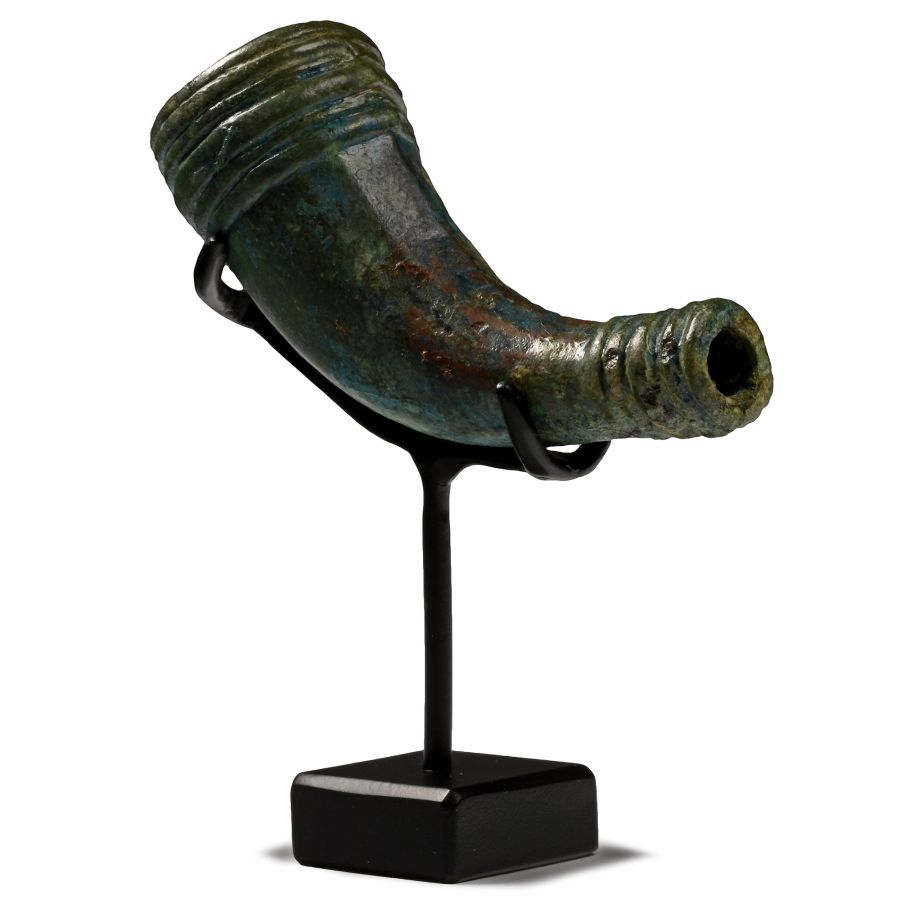
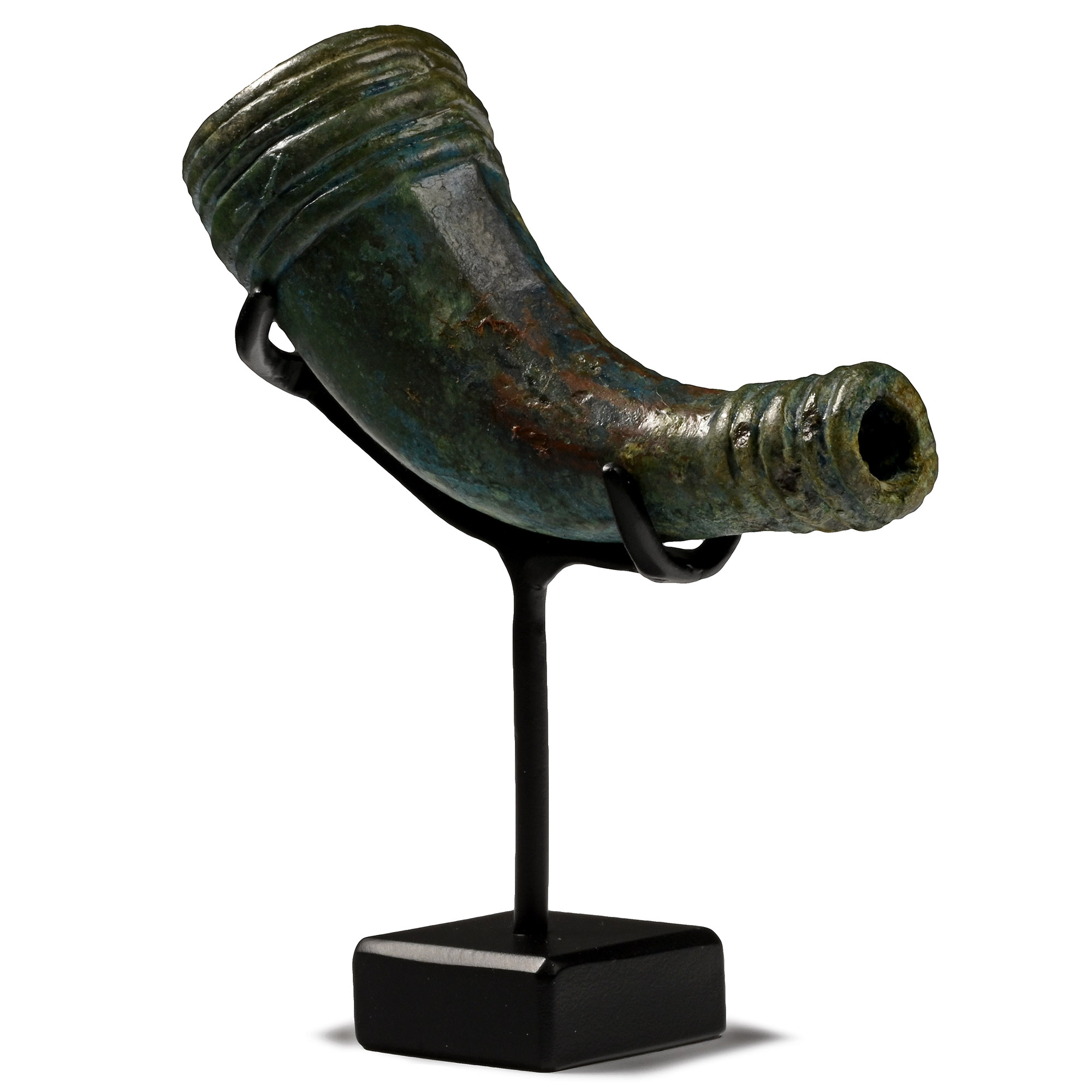
Viking Age Bronze Votive Miniature Horn
8TH-10TH CENTURY A.D.
2 1/2 in. (3 1/2 in.) (74 grams, 66 mm (128 grams total, 91 mm high including stand)).
Tubular in form with thick ribbing to the rim and mouthpiece; mounted on a custom-made stand. [No Reserve]
ProvenanceFrom the private collection of a London gentleman, from his grandfather's collection formed before the early 1970s.
This lot is accompanied by an illustrated lot declaration signed by the Head of the Antiquities Department, Dr Raffaele D’Amato.
This lot is accompanied by an illustrated lot declaration signed by the Head of the Antiquities Department, Dr Raffaele D'Amato.
The open end suggests that this is a blowing-horn rather than a drinking horn.
CONDITIONTimeLine Auctions follows a vetting process to ensure the authenticity and legality of all items, reinforcing our commitment to integrity and responsible trading. Each antiquity, antique, and coin lot undergoes thorough examination by a vetting committee of at least ten external specialists, professional trade association members, scientists, and archaeologists: Our Vetting Process
AUCTIONS:
TimeLine is a leading auction house specialising in antiquities, ancient art, collectables, natural history, coins, medals, and books. Our auctions offer museums, collectors, historians, and enthusiasts the opportunity to acquire unique and historically significant pieces.
-
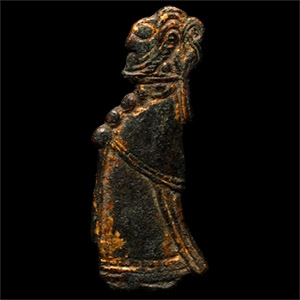
Scandinavian Viking Gilt Bronze 'Valkyrie' Plaque
9th-11th century A.D.Sold for (Inc. bp): £1,170
Profile image of a female in floor-length robe with shawl to her shoulders, stylised headdress and long plaited band of hair to the rear, shoes at the lower edge; pierced lug to the reverse. 9.16 grams, 48 mm
Private collection formed in Europe in the 1980s. Westminster collection, central London, UK. This lot is accompanied by an illustrated lot declaration signed by the Head of the Antiquities Department, Dr Raffaele D'Amato. -
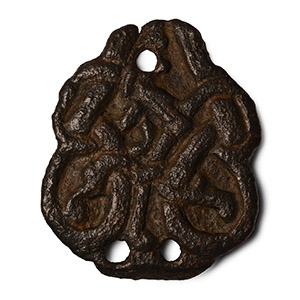
Anglo-Scandinavian Viking Bronze Apex Urnes-Style Stirrup Mount
9th-11th century A.D.Sold for (Inc. bp): £293
Tulip-shaped mount with Urnes Style interlace, pierced at the apex and twice at the base above the shallow rear ledge; a rare type. 23 grams, 48 mm
Found whilst searching with a metal detector in East Anglia, UK. This lot is accompanied by an illustrated lot declaration signed by the Head of the Antiquities Department, Dr Raffaele D'Amato. -
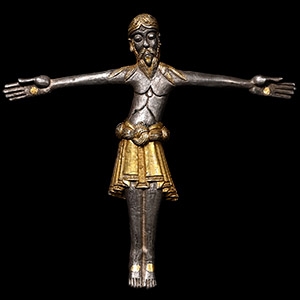
Scandinavian Viking Period Silver-Gilt Corpus Christi
Circa 11th century A.D.Estimate: £15,000 - 20,000 (+bp*)
Opening Bid: £7,500
Modelled in the half-round with elongated arms and exaggerated hands, head tilted and eyes downcast in solemn expression, long hair falling on his shoulders in hanks; wearing a knee-length pleated garment, secured to the waist with a thick knotted rope, gilt roundels to hands and feet to indicate wounds; attaches to lot 358. 70 grams, 11.7 cm wide
From the collection of an antiquarian and collector of medieval art. Acquired on the London art market. Private collection, London, UK. Accompanied by an academic report by Dr Raffaele D'Amato. This lot has been checked against the Interpol Database of stolen works of art and is accompanied by a search certificate number no.12731-234561. This lot has been cleared against the Art Loss Register database, and is accompanied by an illustrated lot declaration signed by the Head of the Antiquities Department, Dr Raffaele D'Amato.
The magnificent crucifix is paralleled by two wonderful crucifixes in the Danish Churches of Århus and Lisbjerg. In accordance with the old tradition derived from Byzantium, Christ is depicted as alive, standing in front of his cross, with nailed hands. It may have once been part of an altar decoration or rather have been placed above or in the chancel arch of a church.
