
Loading, please wait...
LOT 1591
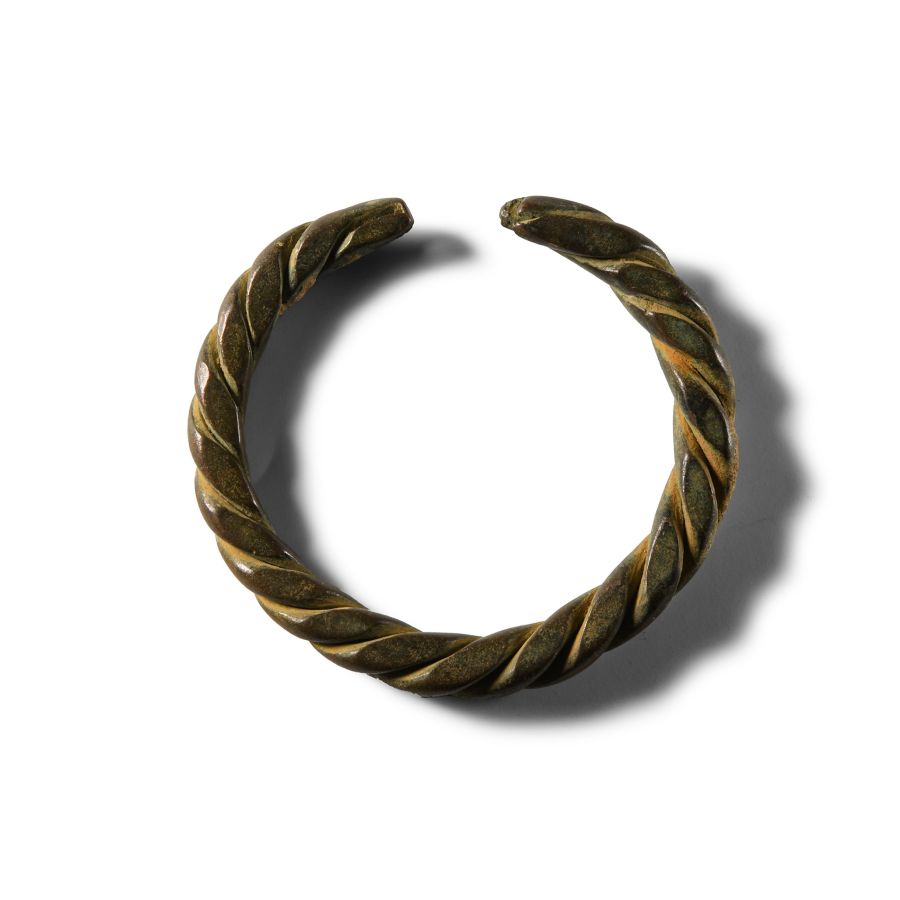
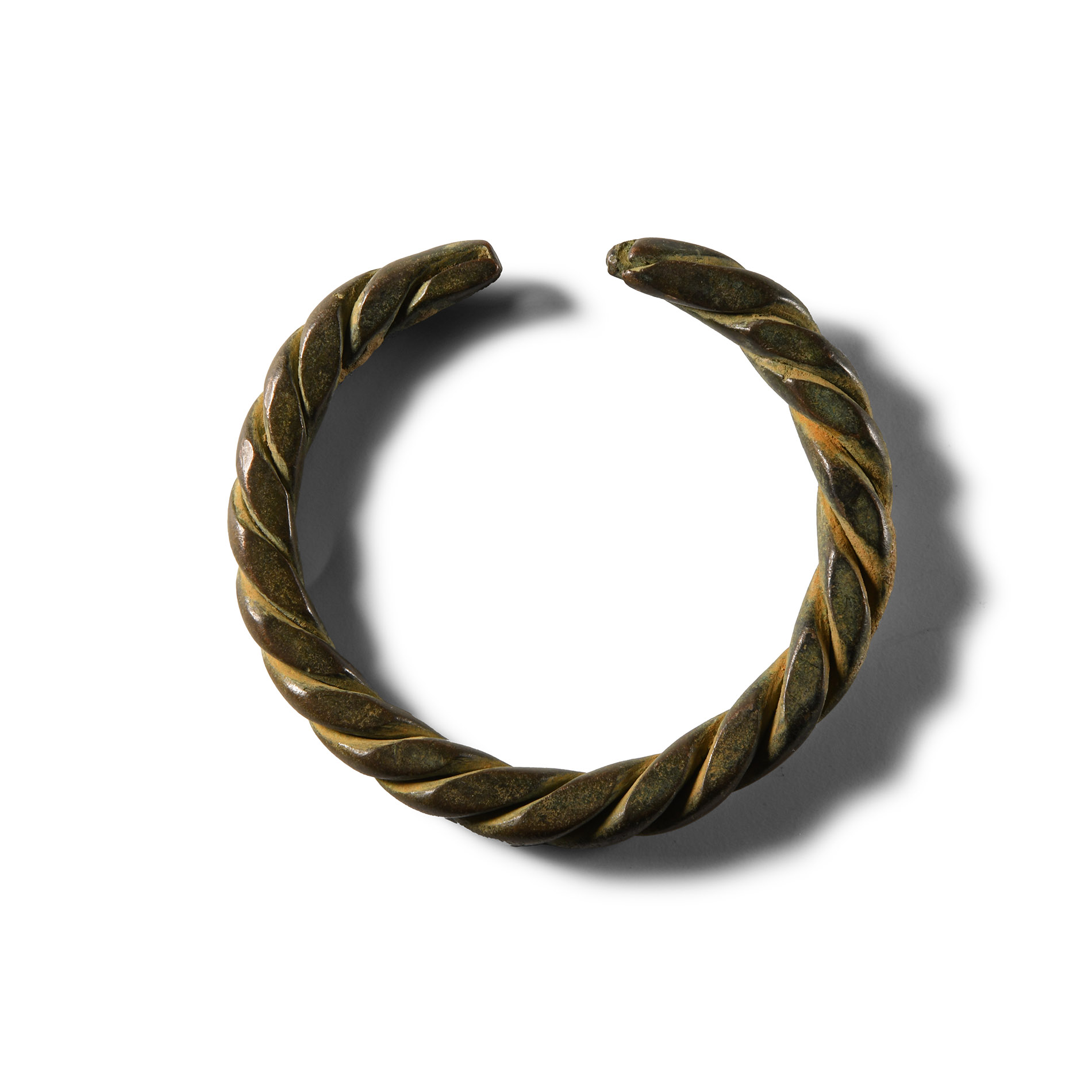
Viking Age Bronze Twisted Bracelet
CIRCA 9TH-11TH CENTURY A.D.
3 in. (80 grams, 76 mm).
Penannular in form with tightly twisted central band, pointed finials. [No Reserve]
ProvenanceFrom a London collection; acquired on the UK and European art markets before 2001.
LiteratureCf. Sedov, B.B., Finno-Ugri i Balti v Epokhi Srednevekovija, Moscow, 1987, pl.XLV(6), for type.
CONDITIONTimeLine Auctions follows a vetting process to ensure the authenticity and legality of all items, reinforcing our commitment to integrity and responsible trading. Each antiquity, antique, and coin lot undergoes thorough examination by a vetting committee of at least ten external specialists, professional trade association members, scientists, and archaeologists: Our Vetting Process
AUCTIONS:
TimeLine is a leading auction house specialising in antiquities, ancient art, collectables, natural history, coins, medals, and books. Our auctions offer museums, collectors, historians, and enthusiasts the opportunity to acquire unique and historically significant pieces.
-
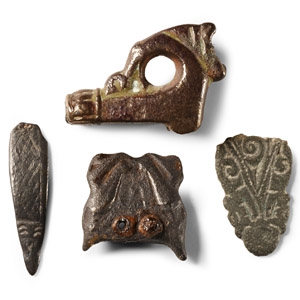
Viking and Saxon Artefact Group
8th-11th century A.D.Sold for (Inc. bp): £59
Including a narrow beast-head strap-end, a military strap-end fragment, a stirrup mount and looped fitting. 49.9 grams total, 26-40 mm
Acquired since the 1970s. From the private collection of a Surrey, UK, gentleman. -
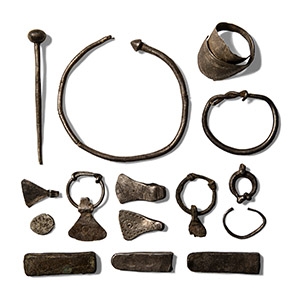
Viking Age Silver 'Hoard' Group
Circa 10th-12th century A.D.Estimate: £800 - 1,000 (+bp*)
Opening Bid: £400
Comprising: two dome-headed dress pins; three pieces of hack-silver ingot; five miniature axeheads; a mitre-shaped finger ring; and other items. 42.8 grams total, 9-53 mm
Acquired on the London art market in the late 1980s-1990s. From the family collection of an East London, UK, gentleman. -
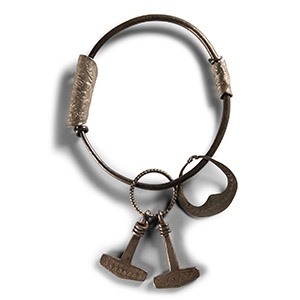
Viking Age Silver Bracelet with Pendants and Amulets
Circa 10th-12th century A.D.Sold for (Inc. bp): £1,300
With sliding closure, amuletic charms comprising two rolled silver dirhem coins, a 'firesteel' pendant, a beaded ring with two miniature Thor's hammers. 24.1 grams total, bracelet 72.52 mm wide
Ex property of a professional collector; acquired before 1990.
