
Loading, please wait...
LOT 0259
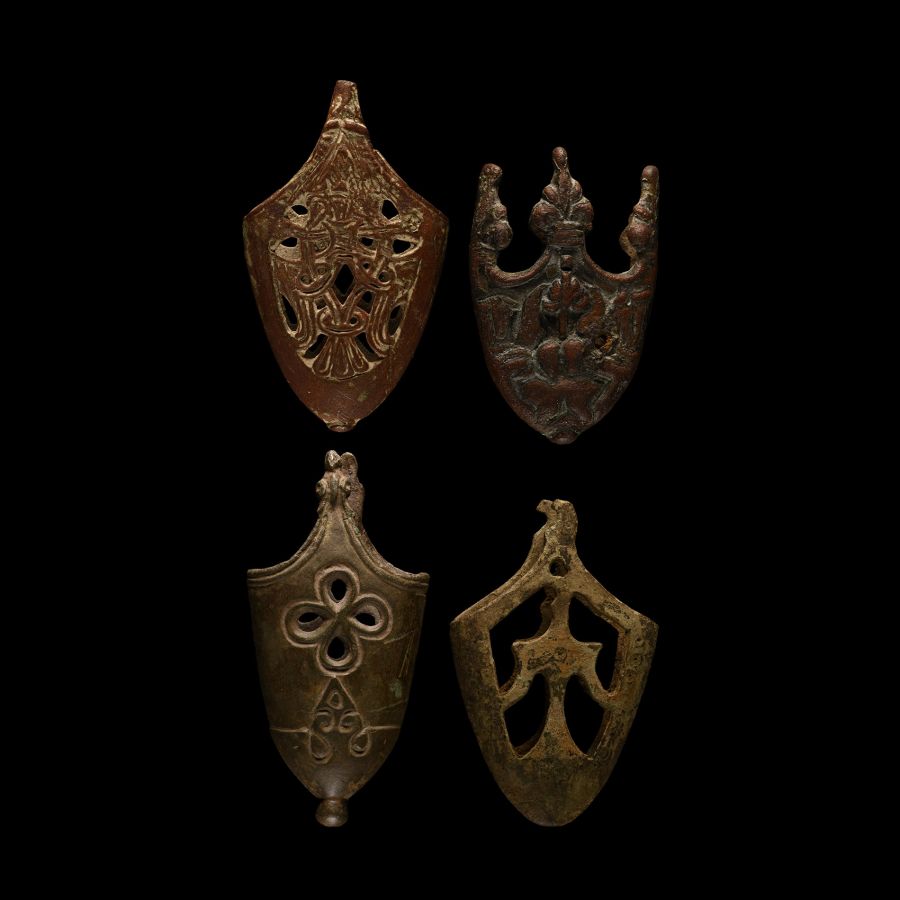
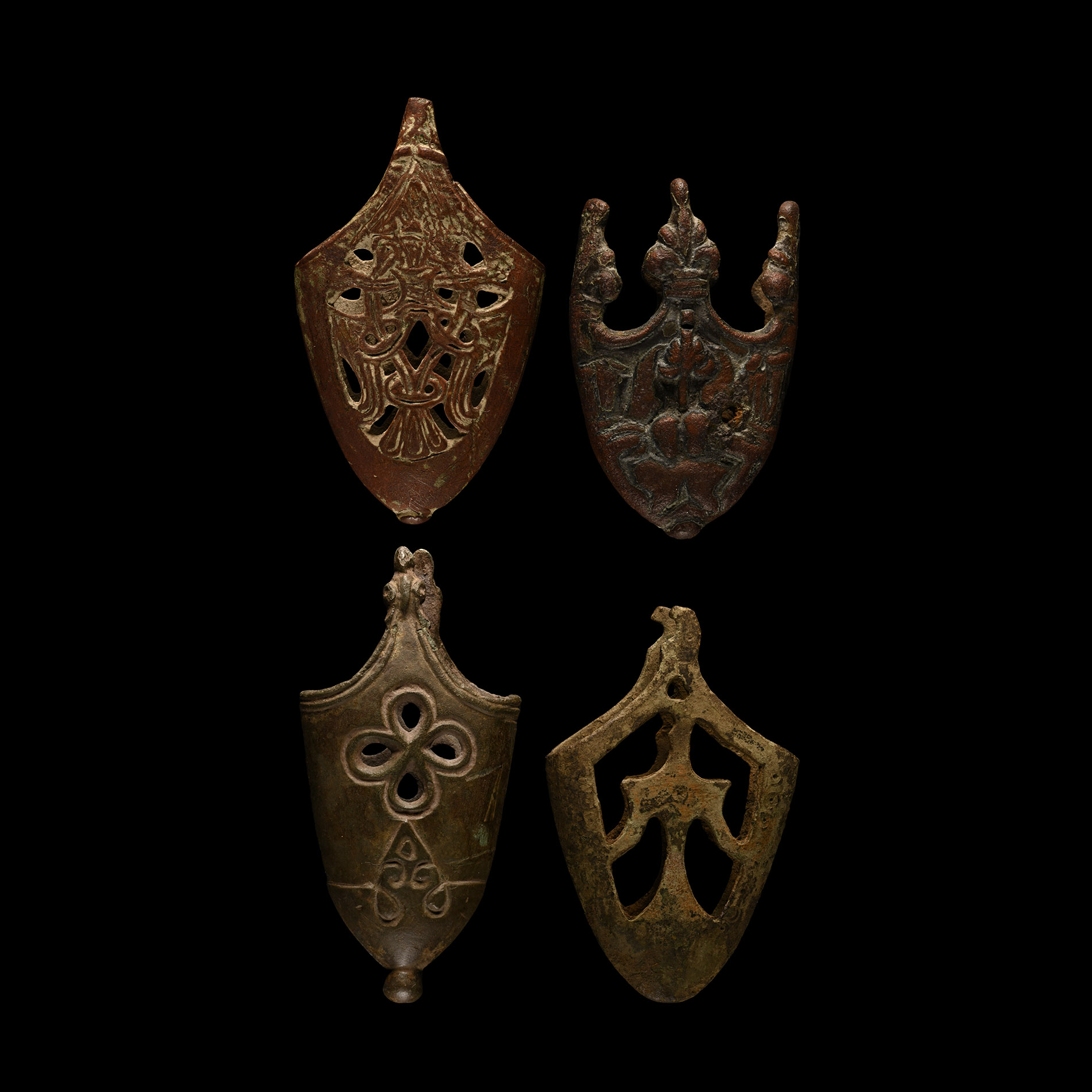
Viking Age Bronze Sword Scabbard Chape Collection
9TH-11TH CENTURY A.D.
21/8 - 3 3/8 in. (145 grams total, 55-85 mm).
Comprising: one heater-shaped with openwork raven motif to each face; one similar with openwork raven enmeshed in tendrils; one with fleur-de-lys to the centre of each upper edge and a lobed spur to each side; one with openwork quatrefoil to each face and knop finial to the apex. [4]
ProvenanceFrom the collection of a North American gentleman, formed in the 1990s.
LiteratureCf. Paulsen, P., Schwertortbänder der Wikingerzeit, Stuttgart, 1953, items 6, 31, 74, 177, for types.
CONDITIONTimeLine Auctions follows a vetting process to ensure the authenticity and legality of all items, reinforcing our commitment to integrity and responsible trading. Each antiquity, antique, and coin lot undergoes thorough examination by a vetting committee of at least ten external specialists, professional trade association members, scientists, and archaeologists: Our Vetting Process
AUCTIONS:
TimeLine is a leading auction house specialising in antiquities, ancient art, collectables, natural history, coins, medals, and books. Our auctions offer museums, collectors, historians, and enthusiasts the opportunity to acquire unique and historically significant pieces.
-
Iron Age Celtiberian Dagger
Circa 6th-5th century B.C. or laterSold for (Inc. bp): £1,235
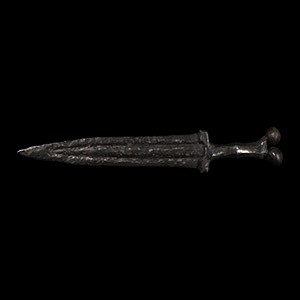
Featuring a leaf-shaped double-edged iron blade, shallow fullers tapering to a point, short straight quillons, a soldered two-part grip with ridged middle bulge, the flat pommel surmounted with two spherical finials. 255 grams, 31 cm
Acquired 1990s-early 2000s. East Anglian private collection.
This type of dagger presents a plate handle system, very similar to that of the Fronton sword and bilobular types, but unlike these, it develops to an antenna terminal on the pommel. It is a type of dagger that is documented in peninsular necropoleis of Hispania from the Iron Age II, such as La Mercadera, Requijana de Gormaz or Uxama. It is type V of short antennae daggers according the classification of F. Quesada Sanz, a possible ancestor of the Roman pugio. -
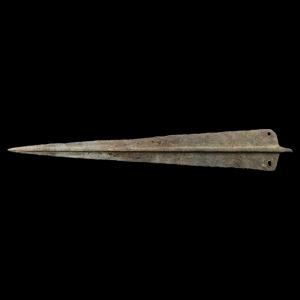
Luristan Bronze Blade
Late 2nd- early 1st millennium B.C.Sold for (Inc. bp): £140
Sharply pointed with raised midrib to each face, square shoulders pierced to accept the fixings for the hilt, stub tang. 217 grams, 35.5 cm
Ex German collection, Cologne, 1980-1990s.
The two holes on the shoulders of the blade provided attachment for a separate hilt. This could have been a penannular grip, which can be seen on some swords from Sangtarashan; or in north-west Iranian blades with rectangular guard and flanged hilt, where the guard was rivetted to the blade, like in some swords in the Axel Guttmann collection. -
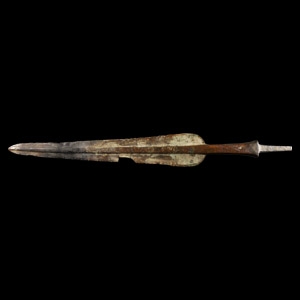
Amlash Tanged Spearhead
12th century B.C.Estimate: £250 - 350 (+bp*)
Opening Bid: £83
Composed of a tapering leaf-shaped blade with raised midrib, splayed neck and tapering tang. 637 grams, 49 cm
Acquired on the London art market, prior to 1980s. The Kusmirek Collection, UK.
The weapon belongs to the type 1 of the Khorasani spearhead classification, mainly from Marlik or Amlash areas. Similar pieces have been dated by Stutzinger to 1200-1100 B.C.
