
Loading, please wait...
LOT 1762
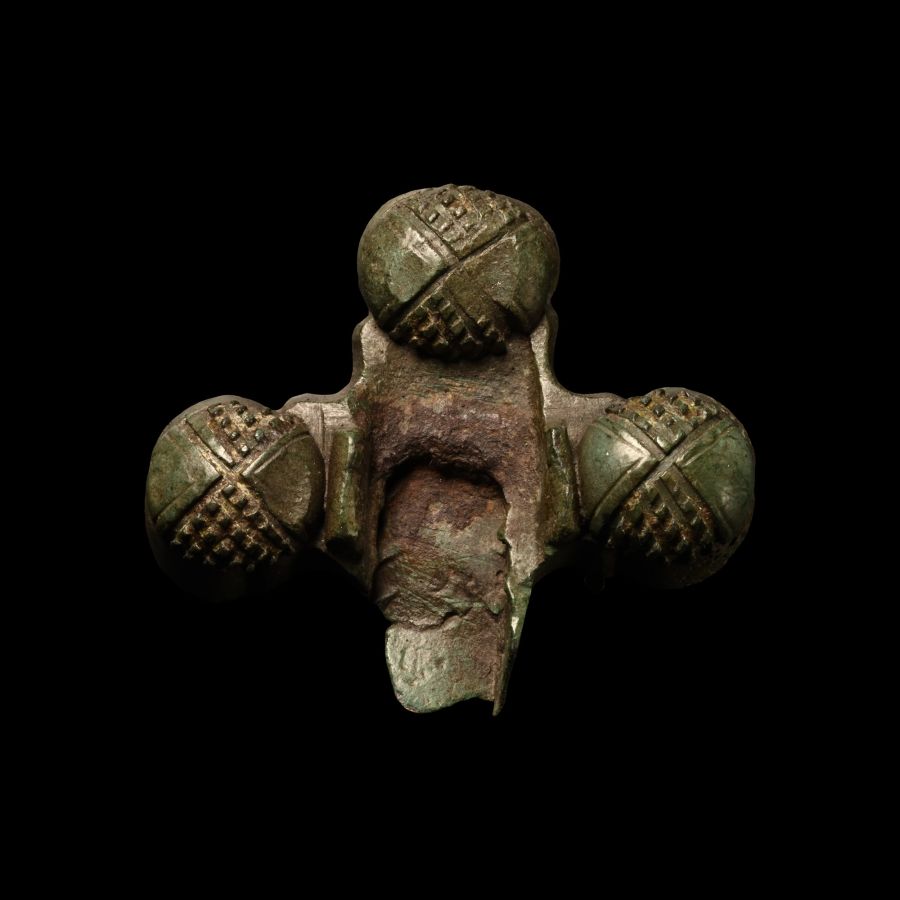
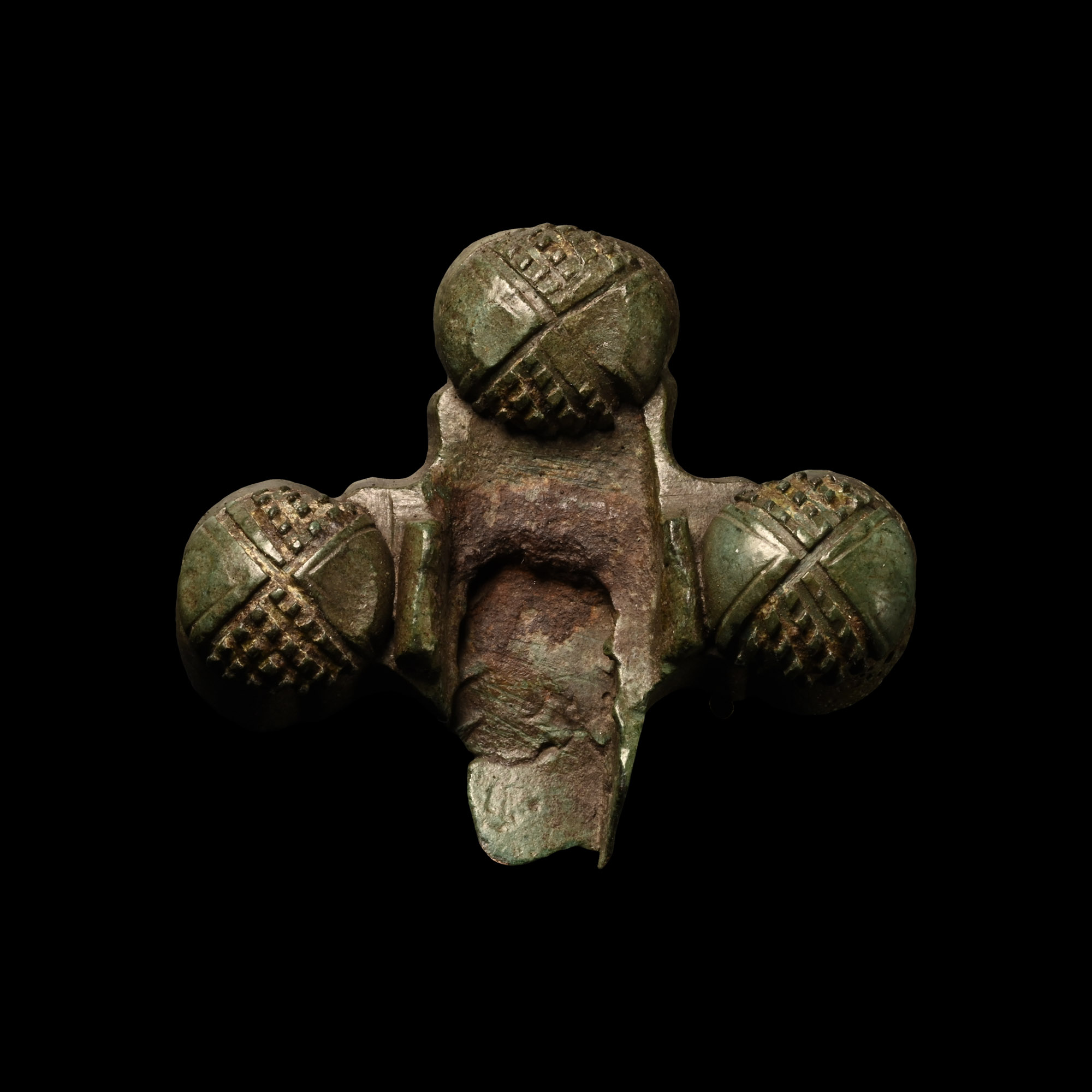
Viking Age Bronze Studded Cross Fitting
9TH-11TH CENTURY A.D.
2 in. (56 grams, 49 mm).
Cruciform mount with three radiating lobes and a fourth slotted section; each lobe with separately cast boss; each boss with upper face divided into four segments, two plain and two with deep hatching; ferrous stains to underside showing attachment points, ferrous stain to the slotted centre; possibly from a portable shrine or reliquary. [No Reserve]
ProvenanceFrom a North Yorkshire, UK, private collection.
Acquired from Adam Partridge Auctioneers, Macclesfield, UK.
Property of Mr A.B., an American collector.
Cf. Youngs, S. (ed.), The Work of Angels. Masterpieces of Celtic Metalwork, 6th-9th centuries AD, London, 1989, item 141, for type from an Insular (Irish) context.
CONDITIONTimeLine Auctions follows a vetting process to ensure the authenticity and legality of all items, reinforcing our commitment to integrity and responsible trading. Each antiquity, antique, and coin lot undergoes thorough examination by a vetting committee of at least ten external specialists, professional trade association members, scientists, and archaeologists: Our Vetting Process
AUCTIONS:
TimeLine is a leading auction house specialising in antiquities, ancient art, collectables, natural history, coins, medals, and books. Our auctions offer museums, collectors, historians, and enthusiasts the opportunity to acquire unique and historically significant pieces.
-
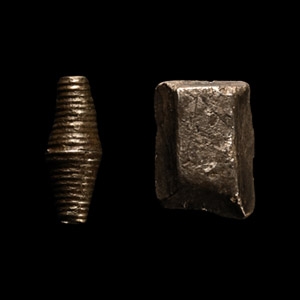
Viking Silver Bead and Hacked Bar Group
8th-11th century A.D.Sold for (Inc. bp): £98
Comprising: a fusiform bead with ribbed outer surface; roughly cut segment of a silver ingot often called 'hack silver'. 9.2 grams total, 16-17 mm
From the collection of the famous author, writer and speaker, Gordon Bailey, Essex, UK; formed since 1968. -
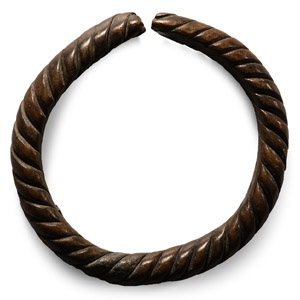
Viking Age Twisted Bronze Bracelet
Circa 9th-11th century A.D.Sold for (Inc. bp): £78
Formed from three round-section rods twisted around each other; clubbed ends. 97.9 grams, 72 mm
Private collection, Arundel, West Sussex, UK, 1975-late 1990s. -
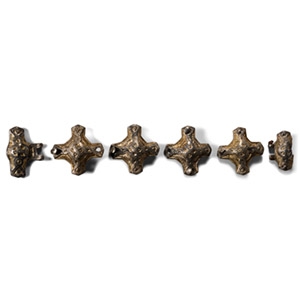
Pre-Viking Heavy Silver-Gilt Belt Attachments
5th-7th century A.D.Estimate: £4,000 - 6,000 (‡+bp*)
Opening Bid: £2,000
Comprising: four cruciform mounts, each domed with reserved silver niello-filled interlaced cross on a billeted parcel-gilt field, mounting hole to each end, some with studs; T-shaped mount with reserved loops and bars on a billeted parcel-gilt field, loops above the vertical shank and fixing pin to angle; similar mount with ferrous remains to the hinge. 74 grams total, 41-49 mm
European art market. Acquired in Münich in 2012. European private collection. This lot has been checked against the Interpol Database of stolen works of art and is accompanied by a search certificate number no.12289-222348.
