
Loading, please wait...
LOT 1401
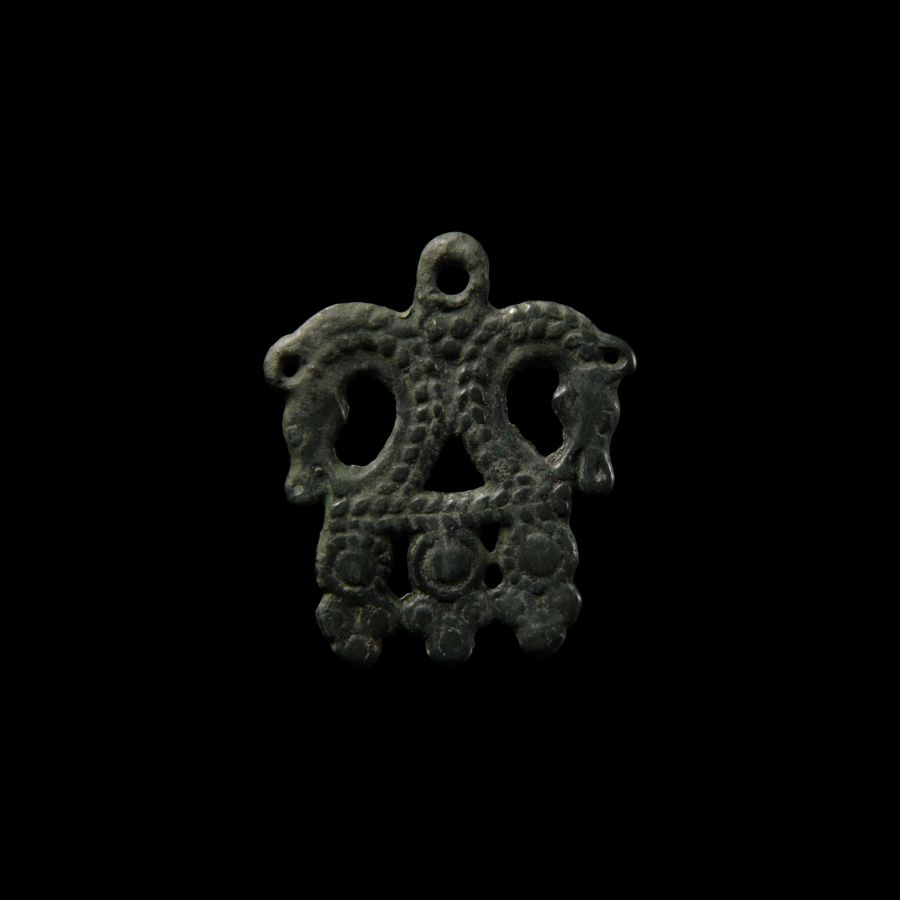
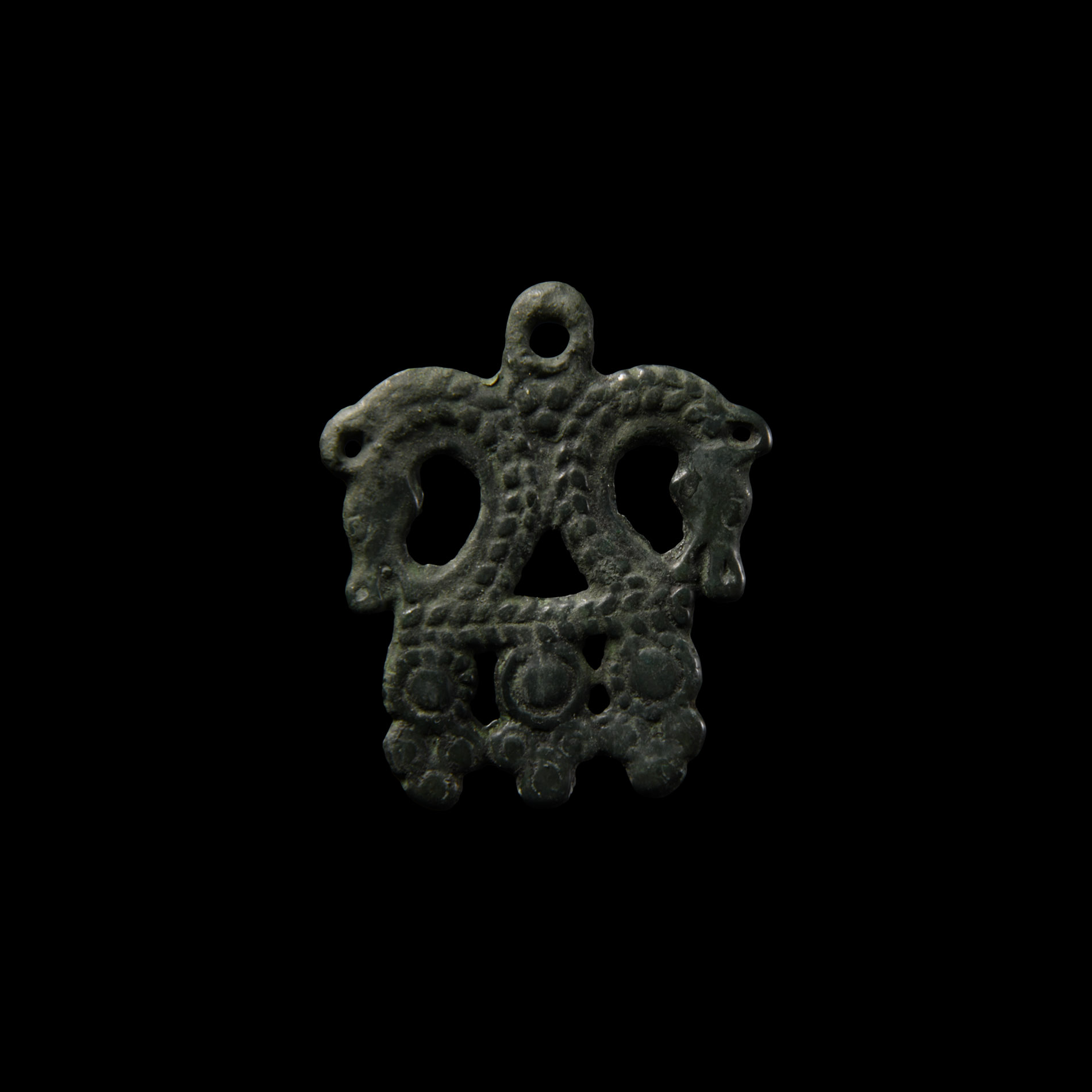
Viking Age Bronze Pendant with Opposed Horse Heads
9TH-10TH CENTURY A.D.
2 1/2 in. (24 grams, 64 mm).
Retaining its suspension loop to the top edge; three pendant rosettes beneath the openwork heads. [No Reserve]
ProvenanceAcquired before 1990.
Ex property of a professional collector.
Cf. Golubeva, L.A., Zoomorfnye Ukrashenija Finno-Ugrov, Moscow, 1979, plate 17, items 1-7.
CONDITIONTimeLine Auctions follows a vetting process to ensure the authenticity and legality of all items, reinforcing our commitment to integrity and responsible trading. Each antiquity, antique, and coin lot undergoes thorough examination by a vetting committee of at least ten external specialists, professional trade association members, scientists, and archaeologists: Our Vetting Process
AUCTIONS:
TimeLine is a leading auction house specialising in antiquities, ancient art, collectables, natural history, coins, medals, and books. Our auctions offer museums, collectors, historians, and enthusiasts the opportunity to acquire unique and historically significant pieces.
-
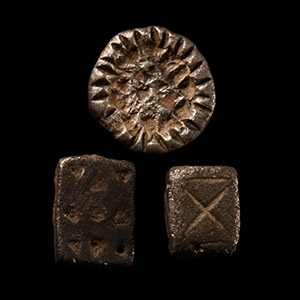
Viking Age Silver Trade Weight Group
9th-11th century A.D.Sold for (Inc. bp): £46
One a discoid bezel(?) with notched edge, two fragments of rectangular bar. 4.2 grams total, 6-9 mm
Acquired on the London art market, 1990s. -
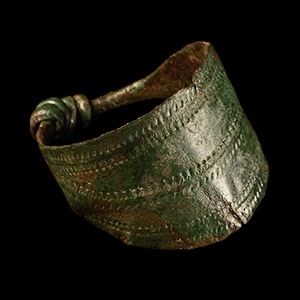
Viking Age Bronze Ring with Tremello Design
9th-11th century A.D.Sold for (Inc. bp): £46
The tapering arms coiled at the hoop base. 2.01 grams, 23.33 mm overall, 17.63 mm internal diameter (approximate size British O, USA 7, Europe 14.98, Japan 14)
London art market before 2000. Property of an Essex gentleman. -
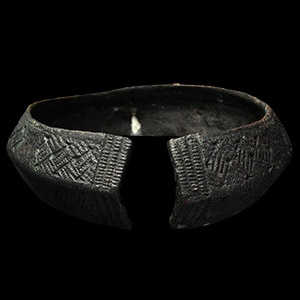
Viking Age Bronze Bracelet with Hatched Panels
9th-11th century A.D.Sold for (Inc. bp): £312
Formed as a penannular hoop and carinated outer face with expanded terminals. 70 grams, 70 mm wide
From the collection of a North American gentleman, formed in the 1990s.
