
Loading, please wait...
LOT 1689
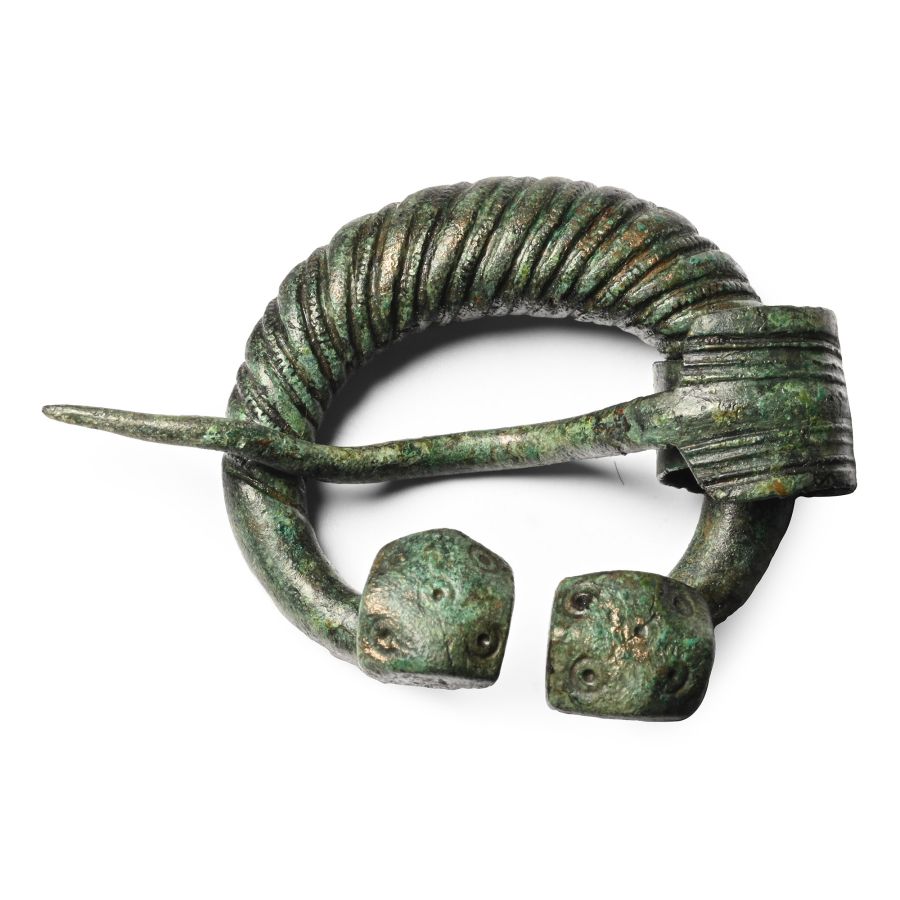
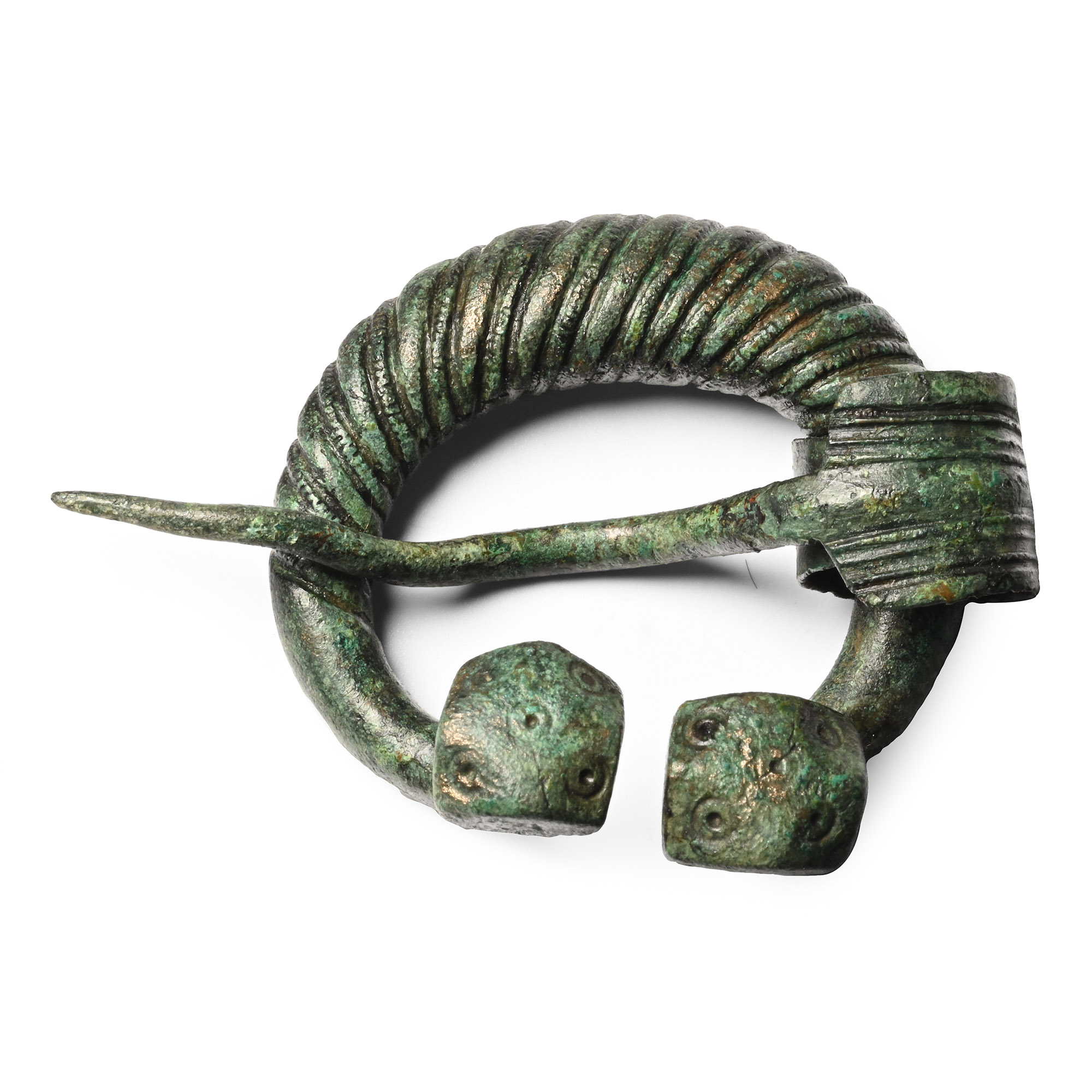
Viking Age Bronze Penannular Brooch
10TH-11TH CENTURY A.D.
2 1/4 in. (52 grams, 59 mm).
With polyhedral finials, twisted shank with applied filigree thread; tapering hooked pin coiled around the shank. [No Reserve]
ProvenanceFrom the private collection of a London gentleman, from his grandfather's collection formed before the early 1970s.
This lot is accompanied by an illustrated lot declaration signed by the Head of the Antiquities Department, Dr Raffaele D'Amato.
TimeLine Auctions follows a vetting process to ensure the authenticity and legality of all items, reinforcing our commitment to integrity and responsible trading. Each antiquity, antique, and coin lot undergoes thorough examination by a vetting committee of at least ten external specialists, professional trade association members, scientists, and archaeologists: Our Vetting Process
AUCTIONS:
TimeLine is a leading auction house specialising in antiquities, ancient art, collectables, natural history, coins, medals, and books. Our auctions offer museums, collectors, historians, and enthusiasts the opportunity to acquire unique and historically significant pieces.
-
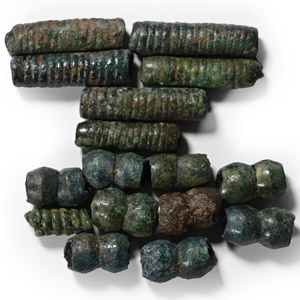
Viking Age Bronze Necklace Bead Group
Circa 9th-11th century A.D.Sold for (Inc. bp): £104
Comprising tubular beads with ribbed detailing and waisted tubular beads. 41 grams total, 13-28 mm
UK gallery, early 2000s. This lot is accompanied by an illustrated lot declaration signed by the Head of the Antiquities Department, Dr Raffaele D'Amato.
From the small number of identified child burials dating to the Viking-Age, it appears that small bronze bells, toys and mirrors are often artefacts associated with children. There is also some evidence that large numbers of beads were attached to outfits or worn as ornaments by children in certain areas, like those of Baltic Curonian. -
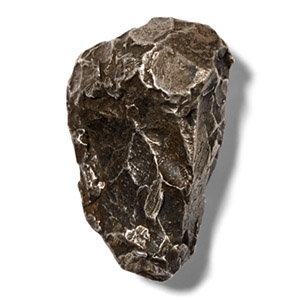
Viking Age Silver 'Currency' Ingot
Circa 9th-11th century A.D. or laterSold for (Inc. bp): £143
A hacked irregular hammered silver ingot, probably melted down loot creating a monetised piece of 'Hack' for Viking trade; X-ray Fluorescence analysis provides the following results: Ag (91.7%), Cu (4.09%), Fe (3.69%), Zn (0.19%), Au (0.19%), Pb (0.13%). 32 grams, 30 mm
Ex property of a UK gallery, early 2000s. This lot is accompanied by an illustrated lot declaration signed by the Head of the Antiquities Department, Dr Raffaele D'Amato.
Ingots of gold and silver were regularly produced in the Early Medieval period when trade took place between monetised economies (Anglo-Saxon England, Francia, Frisia) and their non-monetised neighbours in southern Scandinavia (Blackburn, 2011). Ingots were a convenient means of storing wealth which could be converted into display items (weapon fittings, clothing fasteners, tableware) or used to gild silver and bronze items (Hårdh, 1996). -
.jpg)
Viking Age Bronze Dragon Pendant with Foot Dangles
8th-10th century A.D.Sold for (Inc. bp): £234
Horizontal braided band with horse-head finial, loop to reverse, band of loops to lower edge, each with a duck-foot dangle; Finno-Ugric type; mounted on a custom-made stand. 79 grams total, pendant: 71 mm wide (13.2 cm including stand)
From the private collection of a London gentleman, from his grandfather's collection formed before the early 1970s. This lot is accompanied by an illustrated lot declaration signed by the Head of the Antiquities Department, Dr Raffaele D’Amato. This lot is accompanied by an illustrated lot declaration signed by the Head of the Antiquities Department, Dr Raffaele D'Amato.
