
Loading, please wait...

LOT 1694
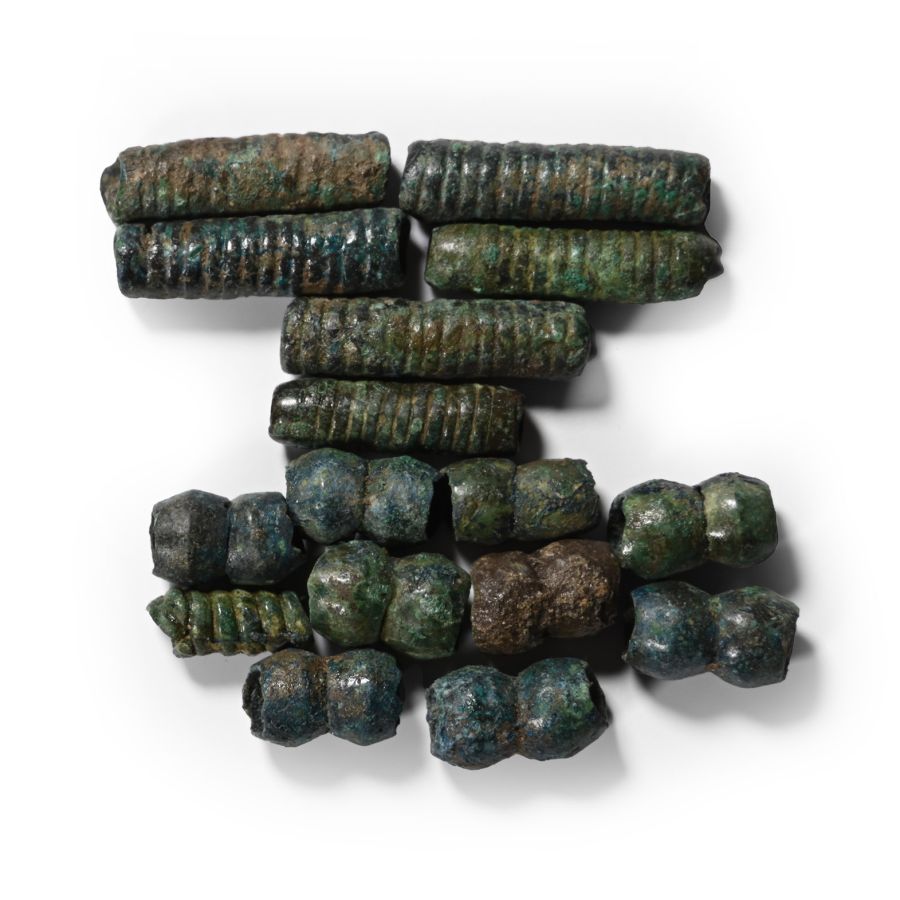
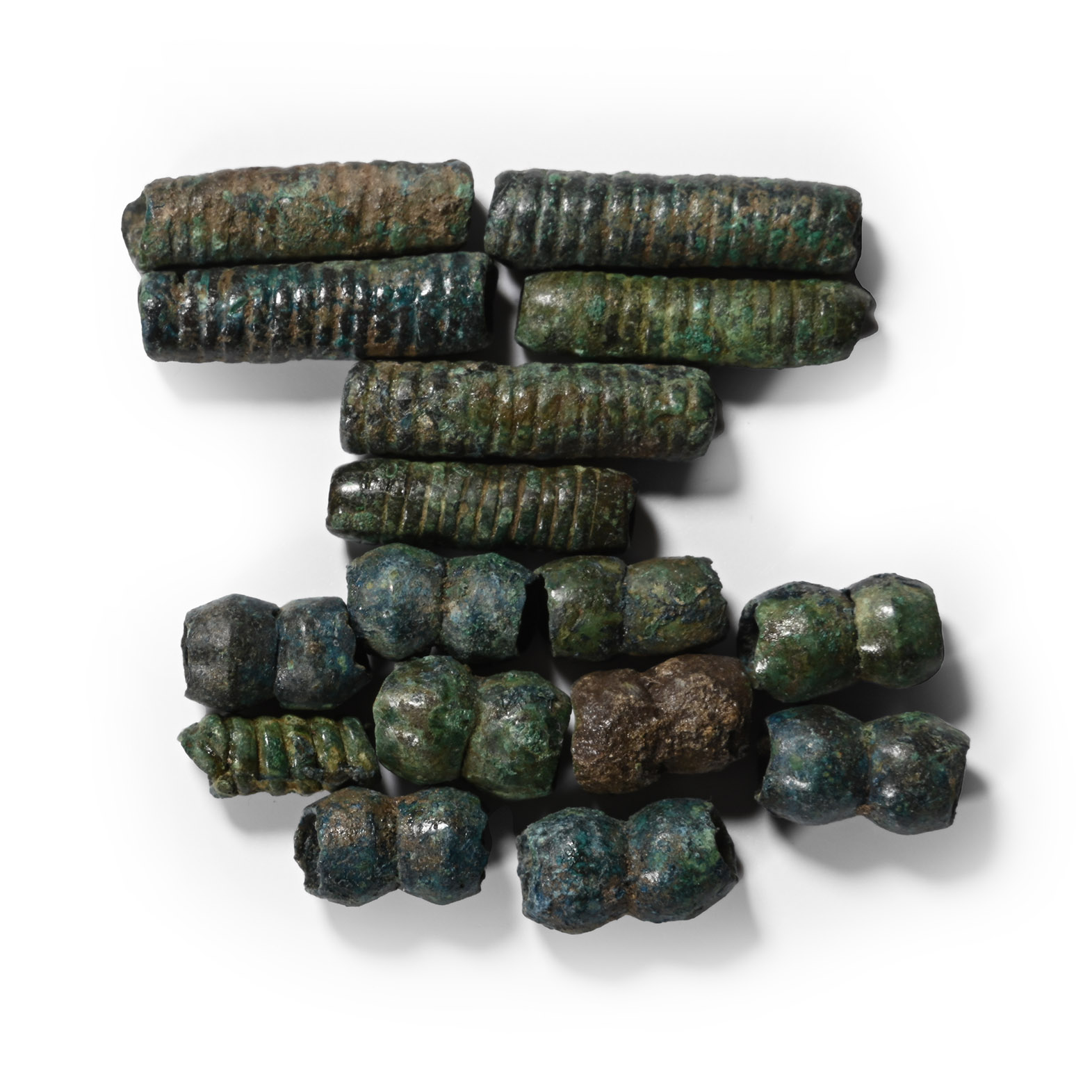
Viking Age Bronze Necklace Bead Group
CIRCA 9TH-11TH CENTURY A.D.
1/2 - 1 1/8 in. (41 grams total, 13-28 mm).
Comprising tubular beads with ribbed detailing and waisted tubular beads. [16, No Reserve]
ProvenanceUK gallery, early 2000s.
This lot is accompanied by an illustrated lot declaration signed by the Head of the Antiquities Department, Dr Raffaele D'Amato.
Cf. Bliujiene, A., ‘Curonian bead sets with bronze spacer plates and their Scandinavian parallels’ in Fornvannen, 2001, no.96, pp.235-242, fig.3 for similar bronze beads.
FootnotesFrom the small number of identified child burials dating to the Viking-Age, it appears that small bronze bells, toys and mirrors are often artefacts associated with children. There is also some evidence that large numbers of beads were attached to outfits or worn as ornaments by children in certain areas, like those of Baltic Curonian.
CONDITIONTimeLine Auctions follows a vetting process to ensure the authenticity and legality of all items, reinforcing our commitment to integrity and responsible trading. Each antiquity, antique, and coin lot undergoes thorough examination by a vetting committee of at least ten external specialists, professional trade association members, scientists, and archaeologists: Our Vetting Process
AUCTIONS:
TimeLine is a leading auction house specialising in antiquities, ancient art, collectables, natural history, coins, medals, and books. Our auctions offer museums, collectors, historians, and enthusiasts the opportunity to acquire unique and historically significant pieces.
-
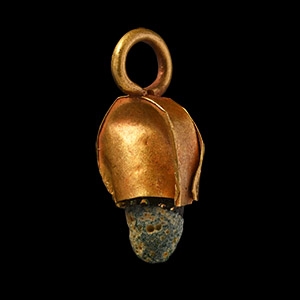
Viking Age Gold Elfshot Pendant
9th-11th century A.D. or earlierSold for (Inc. bp): £260
Comprising a D-shaped gold cap with integral loop above, inset glass bead. 1.30 grams, 19 mm
Ex property of a late Japanese collector, 1970-2000s. This lot is accompanied by an illustrated lot declaration signed by the Head of the Antiquities Department, Dr Raffaele D'Amato.
This amulet was believed to offer protection against 'Elfshot'. The attack of elves was believed responsible for mysterious suffering in men and livestock: sudden shooting pains localised to a particular area of the body, such as in rheumatism, arthritis or muscle stitches or cramps. Elves were thought to shoot darts or arrows where such pains had no obvious external cause. Belief in elfshot persisted into the 20th century in rural areas, and as proof country folk would sometimes find small arrowheads (the remains of Neolithic or Mesolithic flints, or naturally-occurring spear-shaped stones) that were believed to be the magical weapons that caused the afflictions. Belief in elfshot began in the Pagan Germanic period. -
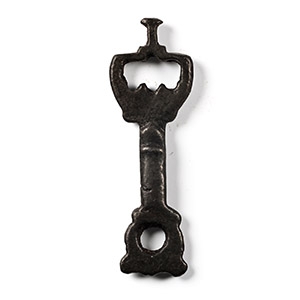
Late Anglo-Scandinavian Viking Bronze Casket Key
10th-13th century A.D.Sold for (Inc. bp): £46
For a slide lock, the shaft with an open circular projection to one end and a larger openwork rectangular projection to the other end terminating with a T-shaped extension. 7.67 grams, 54 mm
Acquired on the UK art market circa 2005. From an old North Country, UK, collection. This lot is accompanied by an illustrated lot declaration signed by the Head of the Antiquities Department, Dr Raffaele D'Amato.
There is much discussion among the scholars on such slide keys, known popularly as 'Viking' keys. According to Kevin Leahy '...they do look something like the keys that come from Viking graves and from Viking sites but I have never seen an example that had the 'T' shaped extension for the end of the bit and I can't actually see how this would have functioned in a slide lock.' An iron example was found at Coppergate in York, in a 12th to 13th century context. -
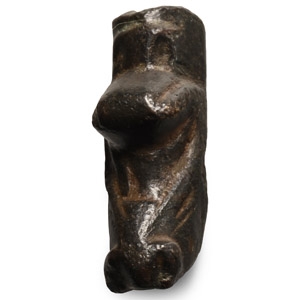
Anglo-Scandinavian Viking Stirrup Terminal with Beast
10th-11th century A.D.Sold for (Inc. bp): £59
With beast-head and other detailing, hollow to the underside. 15.3 grams, 31 mm
Found Cambridgeshire, UK. This lot is accompanied by an illustrated lot declaration signed by the Head of the Antiquities Department, Dr Raffaele D'Amato.
