
Loading, please wait...
LOT 1366
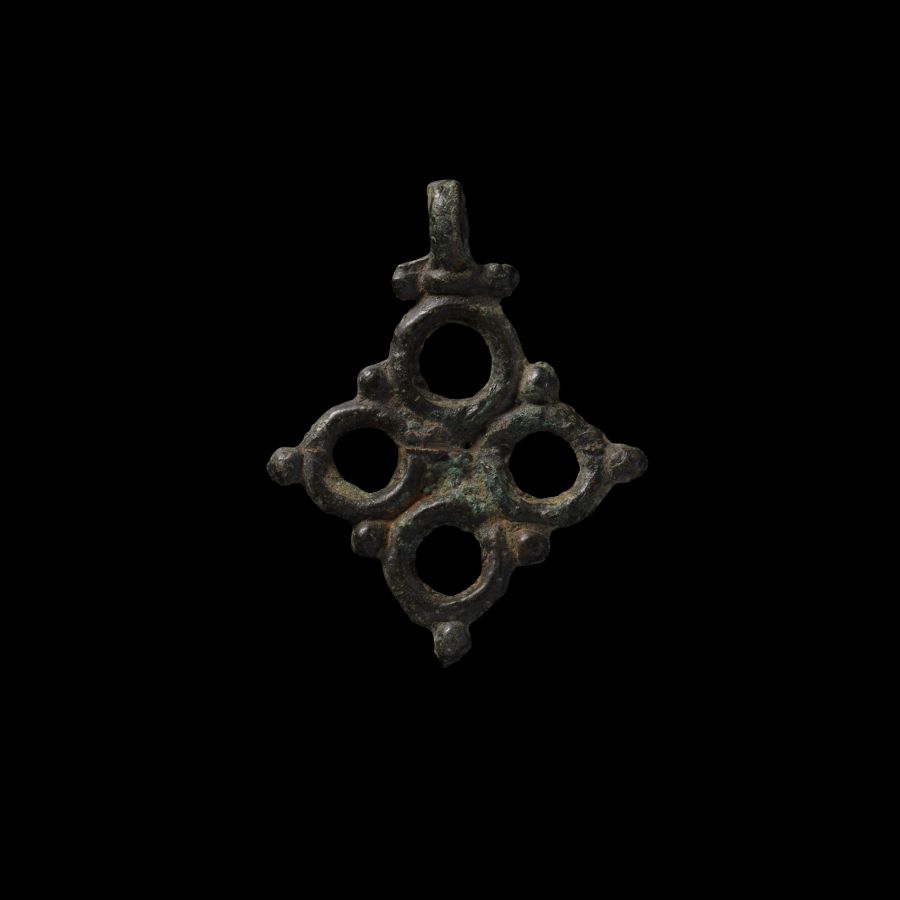
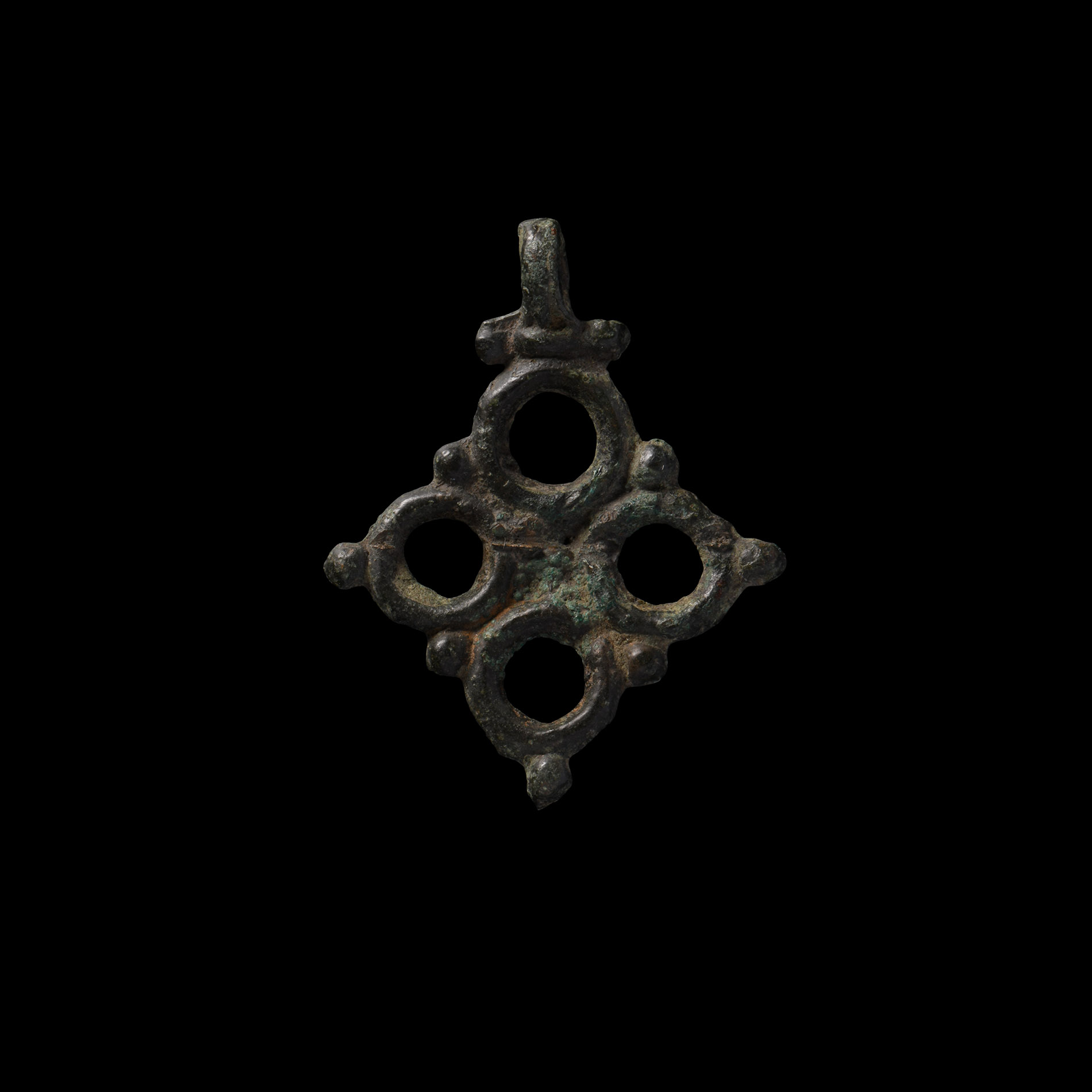
Viking Age Bronze Lozenge-Shaped Pendant
9TH-11TH CENTURY A.D.
1 3/8 in. (4.9 grams, 35 mm).
Composed of an openwork body adorned with bulbs, bar and loop above. [No Reserve]
ProvenanceFrom the collection of a North American gentleman, formed in the 1990s.
CONDITIONTimeLine Auctions follows a vetting process to ensure the authenticity and legality of all items, reinforcing our commitment to integrity and responsible trading. Each antiquity, antique, and coin lot undergoes thorough examination by a vetting committee of at least ten external specialists, professional trade association members, scientists, and archaeologists: Our Vetting Process
AUCTIONS:
TimeLine is a leading auction house specialising in antiquities, ancient art, collectables, natural history, coins, medals, and books. Our auctions offer museums, collectors, historians, and enthusiasts the opportunity to acquire unique and historically significant pieces.
-
.jpg)
Viking Age Gilt Bronze Openwork Roundel with Interlaced Snakes
10th-12th century A.D.Estimate: £400 - 600 (+bp*)
Opening Bid: £160
With rilled edge and pierced hub, the field a network of dense interlaced tendrils. 48.9 grams, 70.7 mm
Fine condition.
Acquired 1971-1972. From the collection of the vendor's father. Ex property of a London, UK, collector. -
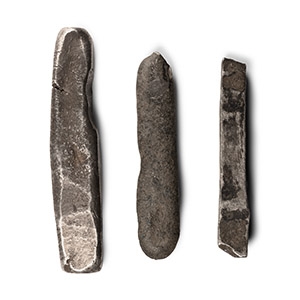
Viking Age Silver Ingot Group
9th-10th century A.D.Sold for (Inc. bp): £364
The trio comprising ingots of different lengths, weights and cross-sections. 62.5 grams total, 45-56 mm
Acquired on the London art market, 1980s-1990s. -
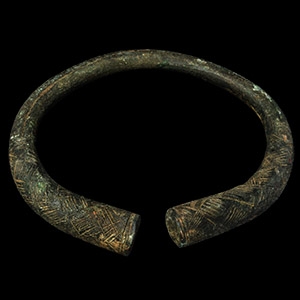
Viking Age Bronze Hatched Panel Bracelet with Trumpet Terminals
9th-11th century A.D.Sold for (Inc. bp): £124
Of penannular form, with a round-section body. 59 grams, 68 mm
From the collection of a North American gentleman, formed in the 1990s.
