
Loading, please wait...
LOT 1698
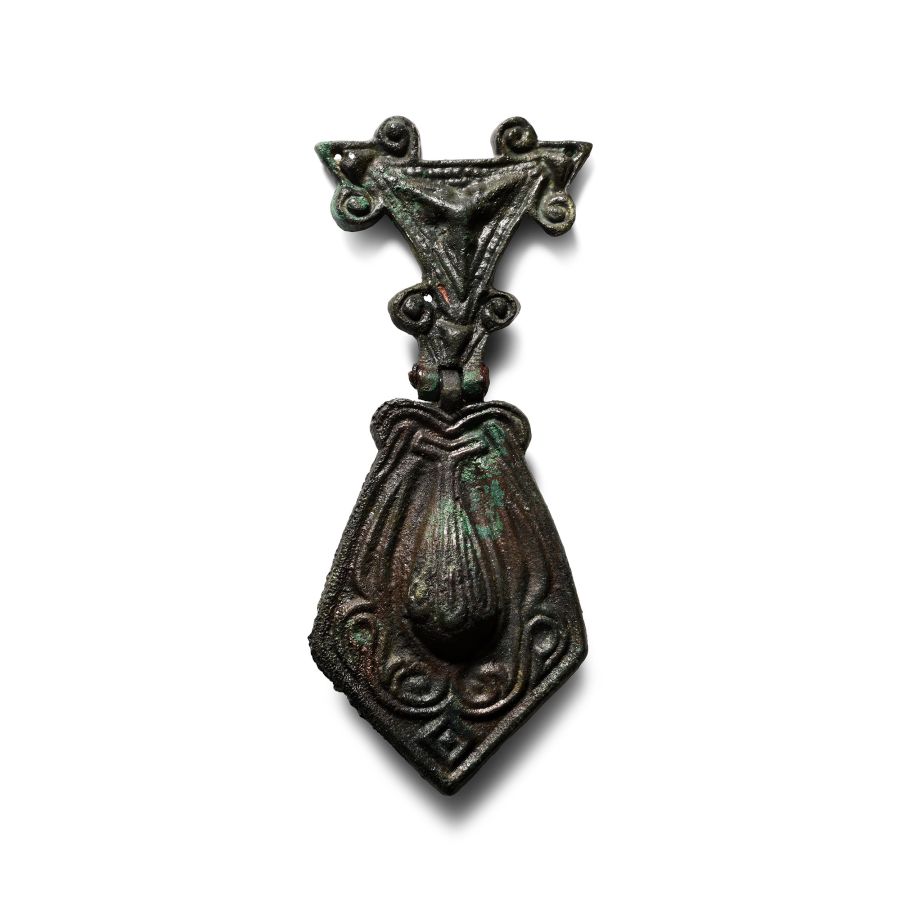
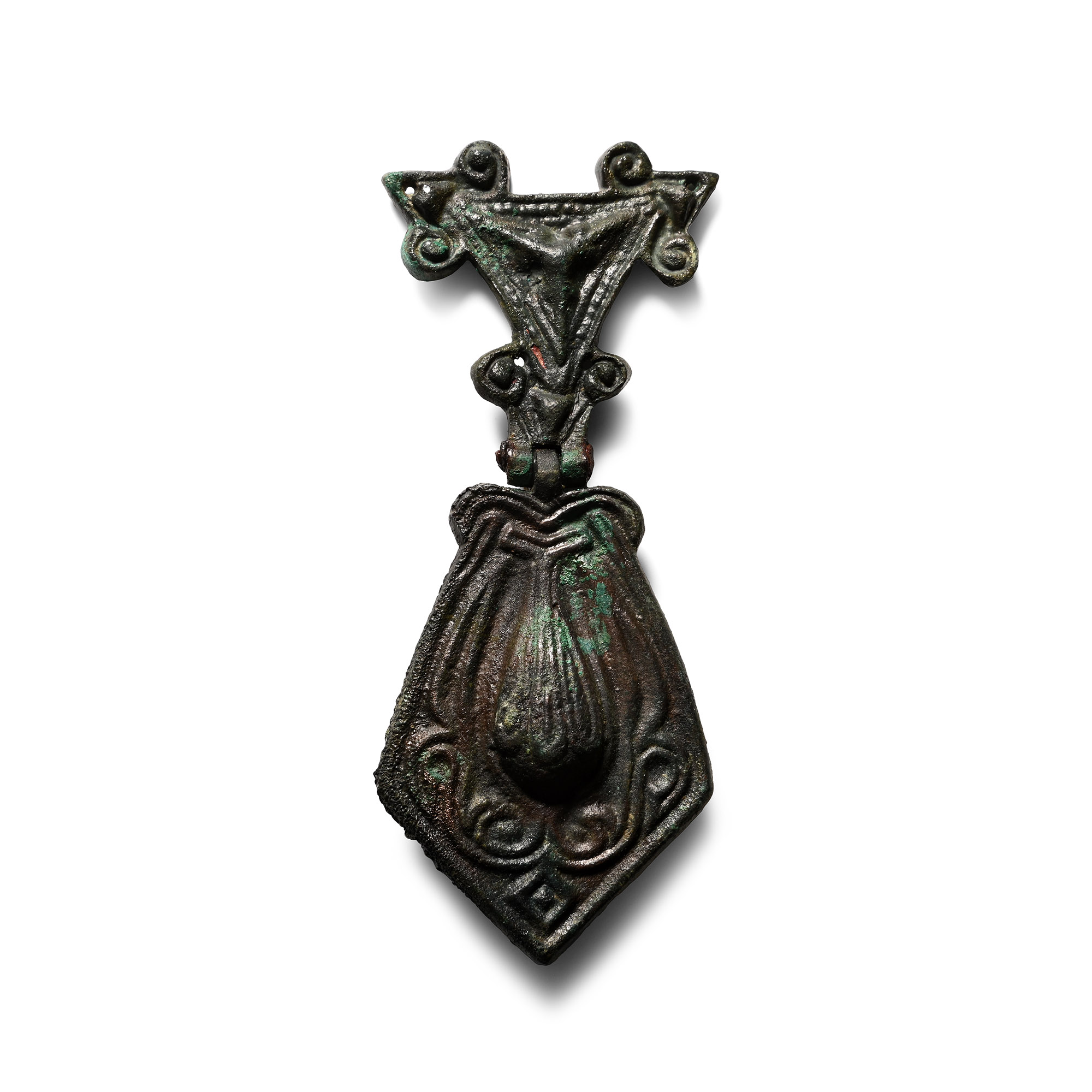
Viking Age Bronze Hinged Horse Harness Pendant
8TH-10TH CENTURY A.D.
3 1/2 in. (36 grams, 90 mm).
Comprising: triangular attachment plate with rivet-holes at the upper corners, Y-shaped motif in a beaded border, lateral scrolls; articulating joint connecting to a tongue-shaped bifacial pendant with ribbed bulb and scrollwork. [No Reserve]
ProvenanceFrom the private collection of a London gentleman, from his grandfather's collection formed before the early 1970s.
This lot is accompanied by an illustrated lot declaration signed by the Head of the Antiquities Department, Dr Raffaele D'Amato.
TimeLine Auctions follows a vetting process to ensure the authenticity and legality of all items, reinforcing our commitment to integrity and responsible trading. Each antiquity, antique, and coin lot undergoes thorough examination by a vetting committee of at least ten external specialists, professional trade association members, scientists, and archaeologists: Our Vetting Process
AUCTIONS:
TimeLine is a leading auction house specialising in antiquities, ancient art, collectables, natural history, coins, medals, and books. Our auctions offer museums, collectors, historians, and enthusiasts the opportunity to acquire unique and historically significant pieces.
-
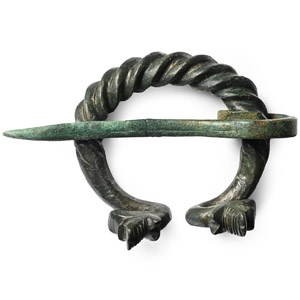
Viking Age Bronze Penannular Brooch with Dragon's Heads
10th-11th century A.D.Sold for (Inc. bp): £442
Twisted hoop with addorsed horse-head finials, round-section pin. 29 grams, 58 mm
From the private collection of a London gentleman, from his grandfather's collection formed before the early 1970s. This lot is accompanied by an illustrated lot declaration signed by the Head of the Antiquities Department, Dr Raffaele D'Amato. -
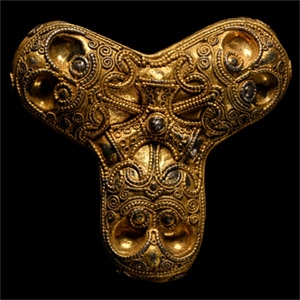
Scandinavian Viking Silver-Gilt Trefoil Brooch with Beasts
9th century A.D.Sold for (Inc. bp): £3,900
Hollow-formed Y-shaped body with applied filigree and granulation forming three radiating beast-heads, central granule in beaded-wire collar; each end with two holes each with a beaded collar, to accept the strings; straps to the reverse with bow, with beaded-wire links, and central dished circle. 21.85 grams, 57 mm
Private collection formed in Europe in the 1980s. Westminster collection, central London, UK. This lot has been checked against the Interpol Database of stolen works of art and is accompanied by a search certificate number no.12734-235601. This lot has been cleared against the Art Loss Register database, and is accompanied by an illustrated lot declaration signed by the Head of the Antiquities Department, Dr Raffaele D'Amato.
The trefoil type is based on a three-armed strap distributor for a sword-belt used by the Carolingian Franks, copied and re-modelled to Scandinavian taste and finally re-purposed as a female dress-ornament or brooch. -
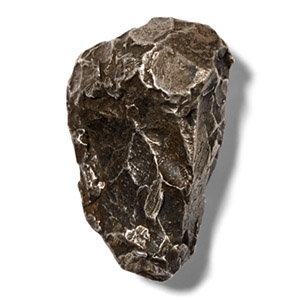
Viking Age Silver 'Currency' Ingot
Circa 9th-11th century A.D. or laterSold for (Inc. bp): £143
A hacked irregular hammered silver ingot, probably melted down loot creating a monetised piece of 'Hack' for Viking trade; X-ray Fluorescence analysis provides the following results: Ag (91.7%), Cu (4.09%), Fe (3.69%), Zn (0.19%), Au (0.19%), Pb (0.13%). 32 grams, 30 mm
Ex property of a UK gallery, early 2000s. This lot is accompanied by an illustrated lot declaration signed by the Head of the Antiquities Department, Dr Raffaele D'Amato.
Ingots of gold and silver were regularly produced in the Early Medieval period when trade took place between monetised economies (Anglo-Saxon England, Francia, Frisia) and their non-monetised neighbours in southern Scandinavia (Blackburn, 2011). Ingots were a convenient means of storing wealth which could be converted into display items (weapon fittings, clothing fasteners, tableware) or used to gild silver and bronze items (Hårdh, 1996).
